Russia Arctic Shipping Corridor and Zvezda Shipyard
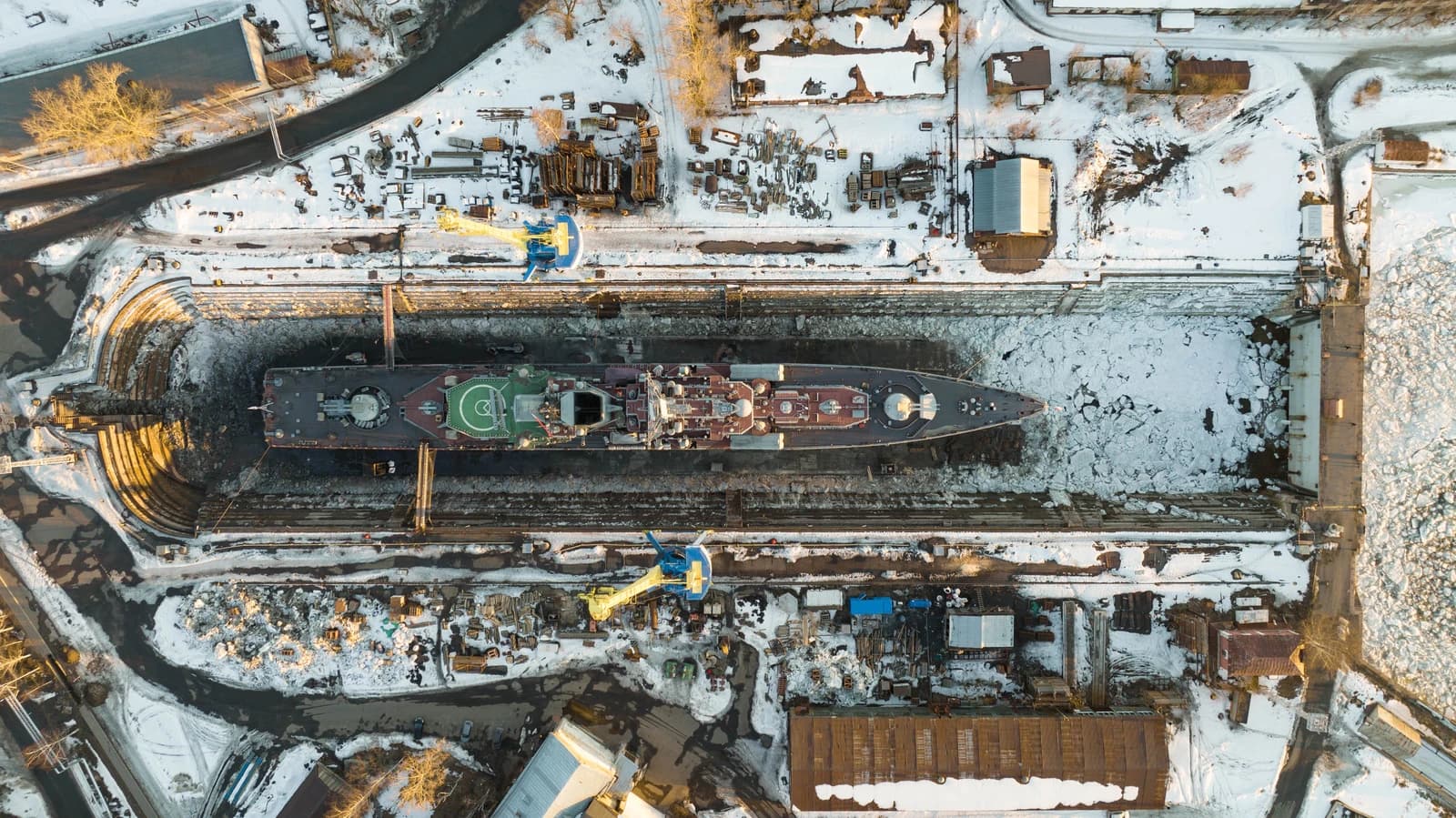
Russia’s push to turn the Arctic into a commercial and strategic shipping corridor is moving from rhetoric to capital allocation, and that matters because the route could reshape freight flows, energy exports and the economics of ice-class tonnage for years.
President Vladimir Putin’s visit to the Zvezda shipyard — Russia’s biggest for building the fleet needed in the high north — underscores that Moscow is not treating the Arctic as a distant military theater but as an industrial project tied to trade, energy and sanctions resilience. The economic logic is straightforward: as the Northern Sea Route becomes more navigable, the Kremlin wants the ships, icebreakers and support vessels in place to move cargo faster between Asia and Europe and to keep Russian exports flowing despite Western restrictions.
That is why the story is bigger than one shipyard visit. China has already started testing container traffic through the Arctic route to Europe, a passage that can cut sailing times to roughly 40 to 45 days. The upside for shippers is obvious: shorter transit, lower fuel use and a potential competitive edge on selected lanes. The catch is just as clear: Arctic weather is unpredictable, satellite navigation is less reliable and emergency infrastructure remains thin. Those bottlenecks mean the route is not a wholesale replacement for traditional lanes, but a premium corridor where capacity, insurance and ice-class capability will command pricing power.
For investors, the market is underestimating the second-order winners of this shift. The obvious beneficiaries are Russian shipbuilders, ice-class vessel operators and service providers tied to Arctic logistics. But the more investable theme is broader: any company with exposure to tanker, LNG and specialized marine transport capacity stands to benefit if Arctic commerce grows from experiment to seasonal routine. That includes operators positioned for sanctions-driven rerouting, as well as firms that can supply hulls, propulsion systems, navigation gear and ice-support infrastructure.
The stock market is already hinting at how tight this niche can become. Frontline tanker operator FRO has rallied sharply, with its shares rising to $44.32 from $22.62 in late October, while Natural Gas is up to $6.91 from $5.54 in early March. Both names have been trading well above their 50-day moving averages, and FRO’s RSI has climbed to 72.6, a sign the move is extended even as momentum remains powerful. That kind of price action tells you investors are not just buying cyclicality — they are paying for geopolitically sensitive shipping capacity that can be repriced fast when trade routes shift.
The broader macro backdrop supports the thesis. Adalytica’s Global Stability Sentiment gauge shows awareness at “Extreme Fear,” even as sentiment sits in neutral territory, a combination that usually accompanies rising geopolitical risk premia. That matters because Arctic shipping is not simply a transportation story; it is a sanctions, security and industrial-policy story wrapped into one. Russia wants control over a route that can serve both export volumes and strategic autonomy, while China is probing whether the corridor can become a viable alternative path into European markets.
The investable takeaway is simple: the Arctic is becoming a real infrastructure trade, not just a geopolitical talking point. If Putin’s Zvezda visit marks the state’s commitment to build out that fleet, investors should be looking early at the picks-and-shovels of ice-class shipping, marine equipment and specialized tanker capacity before the market fully prices in the route’s strategic value.
| Entity | Gains | Losses |
|---|---|---|
| Zvezda shipyard | ▲Fleet orders | ▼Idle capacity |
| Russia | ▲Arctic trade leverage | ▼Dependence on chokepoints |
| China | ▲Faster Europe route | ▼Navigation risk |
| Tanker and ice-class ship operators | ▲Higher freight demand | ▼Underinvested rivals |