Russia border zone move lifts oil, gold and dollar
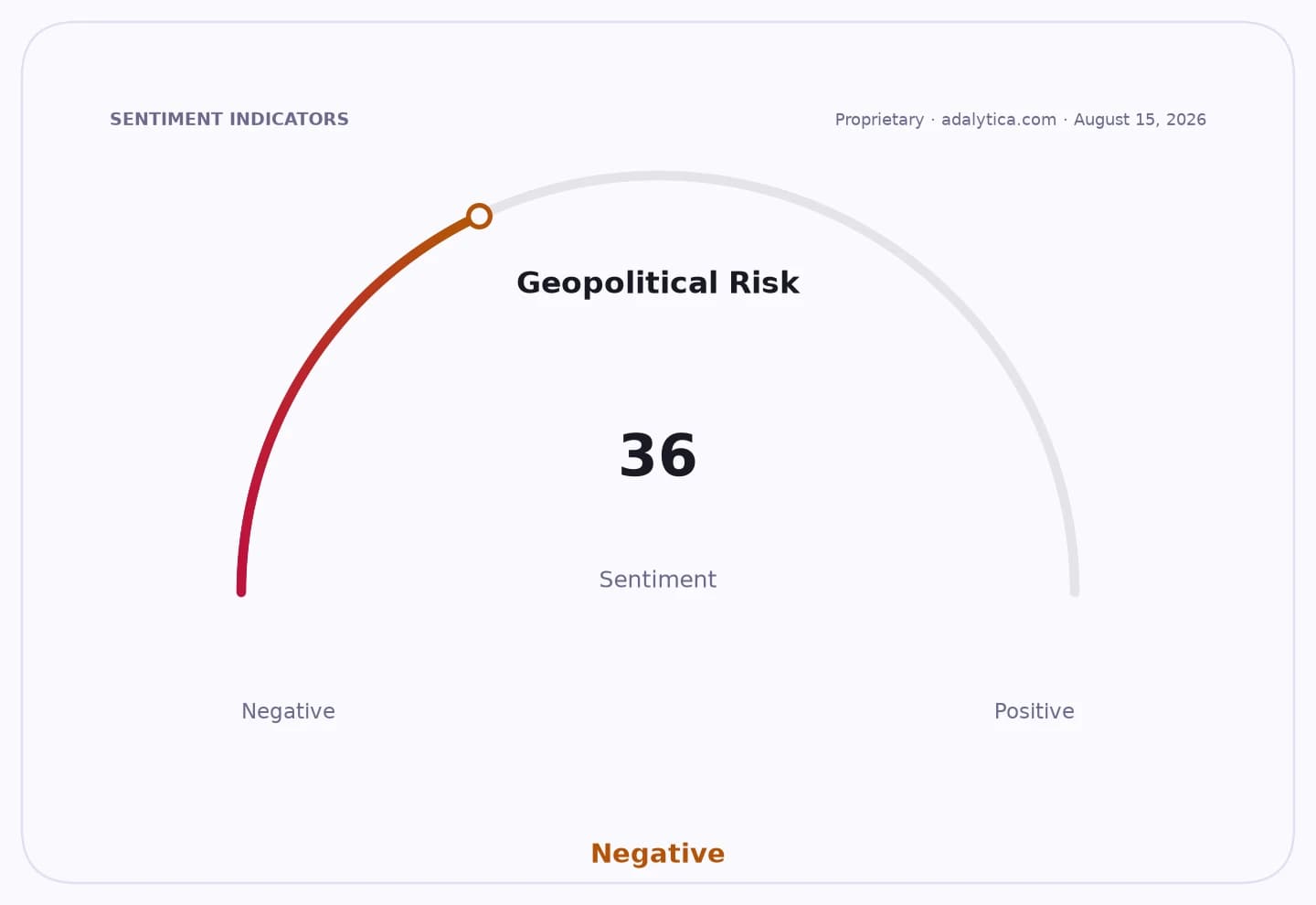
Russia’s move to shift “border zones” deeper into occupied Ukrainian territory is another sign the war is hardening into a longer, more entrenched security contest — and markets are still pricing it as a regional issue rather than a global inflation and risk-premium problem.
For investors, that matters because any escalation that complicates logistics, raises the odds of infrastructure disruption and keeps sanctions risk elevated tends to be bullish for energy and defensive assets while pressuring Europe-linked risk. The clearest market readthrough is in oil: USO, which tracks U.S. crude, has surged to 126.6 after trading as low as 112.2 in July, while Adalytica’s Oil WTI Trade Signals gauge shows greed at 78, up 62 points over 30 days. That kind of move says traders are still willing to pay up for supply-risk protection.

Gold is telling a similar story. GLD closed at 401.48, far above its 200-day moving average near 412.35 after a violent repricing this year, and Adalytica’s Gold Fear & Greed Index remains at 84, or greed, even after easing from recent peaks. The message is not that fear is gone; it is that investors are positioning for a world where geopolitical shocks arrive faster than central banks can offset them.
The dollar is also catching a bid. UUP, the dollar ETF, is holding near 28.11, above its 200-day moving average of 27.56, while its Adalytica Global Stability Sentiment remains weak at 36.0. That combination usually shows up when capital wants liquidity, dollar assets and shelter from policy and geopolitical ambiguity.
The broader narrative is simple: Moscow is trying to formalize a deeper security buffer inside occupied Ukraine, which raises the odds of a drawn-out confrontation and more friction around borders, supply lines and military logistics. Even if the immediate military implications are local, the financial implications are not. Longer wars are inflationary at the margin, supportive of commodities, and hostile to European cyclicals, transport, and any trade that depends on stable Black Sea or Eastern European routing.
The market underestimates how fast these developments can feed into energy, shipping, defense and safe-haven flows. If this border shift is the start of a more permanent occupation architecture, then the winners are the assets that monetize instability, not the ones that assume it disappears.
| Entity | Gains | Losses |
|---|---|---|
| Oil producers | ▲Higher crude prices | ▼Demand-sensitive consumers |
| Gold and safe havens | ▲Flight-to-safety bids | ▼Risk assets |
| U.S. dollar | ▲Reserve demand | ▼Euro and emerging-market FX |
| European cyclicals | ▲— | ▼Disruption and higher risk premia |