Russia Drone Strike Near Poland Border Hits Train

A Russian drone strike on a Kyiv-to-Warsaw passenger train just two kilometers from Poland’s border has sharpened fears that the war in Ukraine is edging closer to the EU and NATO frontier, raising the risk of a wider security shock for Europe.
Ukraine said the drone hit the locomotive of the train near the Yahodyn-Dorohusk crossing, forcing a temporary shutdown of the border post before traffic resumed. No one was injured, but the attack came the same morning Russian strikes damaged a gas station and set trucks on fire nearby, underscoring how close the fighting is moving to a key EU gateway.
For investors, the significance is less about the damage at the border post itself than the broader escalation risk. Attacks near Poland, Romania and Moldova routes threaten Ukraine’s remaining export corridors, complicate logistics into the European Union and raise the odds of harsher sanctions, tighter security measures and more volatility in regional assets.
Ukrainian Foreign Minister Andrii Sybiha called the assault “terrorism” that strikes “directly at the gates of the EU and NATO” and urged Western allies to impose tougher economic sanctions on Moscow. His comments reflect a growing push in Kyiv to turn battlefield pressure into additional financial punishment for Russia, even as Europe weighs the cost of further escalation.
The border strike was part of a wider wave of Russian attacks across western Ukraine, including Odesa, where at least five people were wounded and residential areas were damaged. Odesa, Ukraine’s main port hub, has repeatedly been hit in recent months, disrupting export infrastructure at a time when grain and metals shipments remain critical to the country’s external finances.
Ukraine also said it struck a refinery in Russia’s Krasnodar region overnight, targeting what it described as a key oil-processing unit and storage tanks. The tit-for-tat attacks reinforce the risk that energy infrastructure, transport routes and cross-border trade will remain under pressure, keeping European security premiums elevated.
Gold has remained the clearest market hedge. GLD, the gold ETF, was recently trading near $398.77, while its 50-day moving average sat around $391.22 and its RSI readings had eased from overbought levels, even as the broader geopolitical backdrop stayed tense. Brent-linked USO was also supported, with the fund closing at $154.90 after surging to $158.38 earlier in the week, leaving it well above its 50-day average of $127.62.
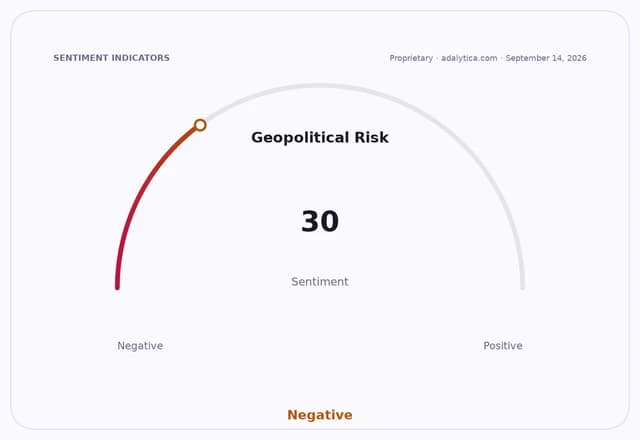
Adalytica’s Global Stability Sentiment index showed “Fear” at 30, while its Euro Trade Signals gauge flashed “Extreme Fear” on the sentiment side. That combination suggests markets are pricing in more geopolitical stress for Europe, even if the immediate disruption at the Polish border was short-lived.
The next catalyst is whether Moscow’s strikes continue to inch closer to NATO territory and whether Brussels and Washington respond with tougher sanctions or new defense measures. Any further hit to border crossings, ports or energy infrastructure would deepen the economic cost for Ukraine and keep pressure on European markets already wary of a broader regional spillover.
| Entity | Gains | Losses |
|---|---|---|
| Russia | ▲Military pressure leverage | ▼Sanctions risk rises |
| Ukraine | ▲Western diplomatic support | ▼Border/export infrastructure damaged |
| EU/NATO | ▲Security urgency | ▼Border stability worsens |
| Gold/GLD holders | ▲Safe-haven demand | ▼Risk premium may fade if tensions ease |