Russia nuclear safety remarks and uranium stocks
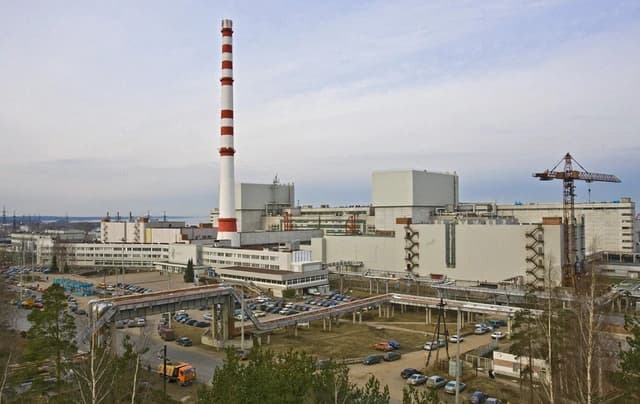
Putin’s declaration that Russia meets high standards of nuclear power safety lands at a moment when investors are still pricing the geopolitical aftershocks of the Ukraine war into uranium, reactor services and utility supply chains.
The message matters less as a technical assessment than as a signal from the Kremlin that Russia intends to defend its role in the global nuclear fuel cycle even as sanctions, export controls and political scrutiny reshape trade flows. Russia remains central to enrichment and fuel services, so any reassurance from Moscow is ultimately about preserving market access, not just public confidence.
That has direct economic consequences. Western utilities have spent the past two years trying to reduce exposure to Russian fuel, while U.S. law already bars imported Russian uranium and Russian export restrictions have added another layer of uncertainty. The result has been a more fragmented market, higher strategic stockpiling and greater interest in domestic supply chains, all of which support prices and margins for non-Russian suppliers.
The reaction in listed equities has reflected that shift. Uranium Energy Corp. has climbed from $9.42 in June to $11.23 on Aug. 20, after briefly topping $20 earlier this year, while Cameco has held near $96 after trading above $120 in February. Both stocks remain well below recent peaks, but their valuations still mirror expectations that governments and utilities will keep paying up for supply security. BWX Technologies, which supplies nuclear components and fuel-handling systems, has eased to about $160 from a July low near $157 after trading above $220 in March, suggesting investors remain selective even within the sector.
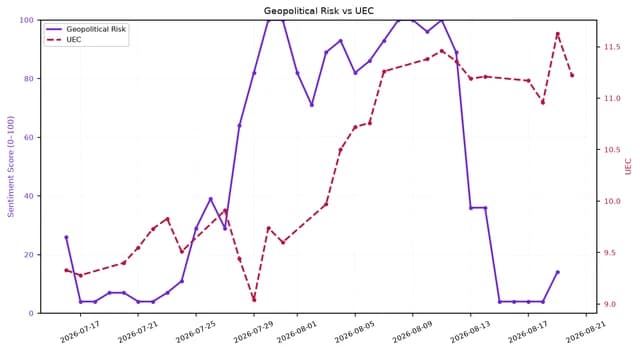
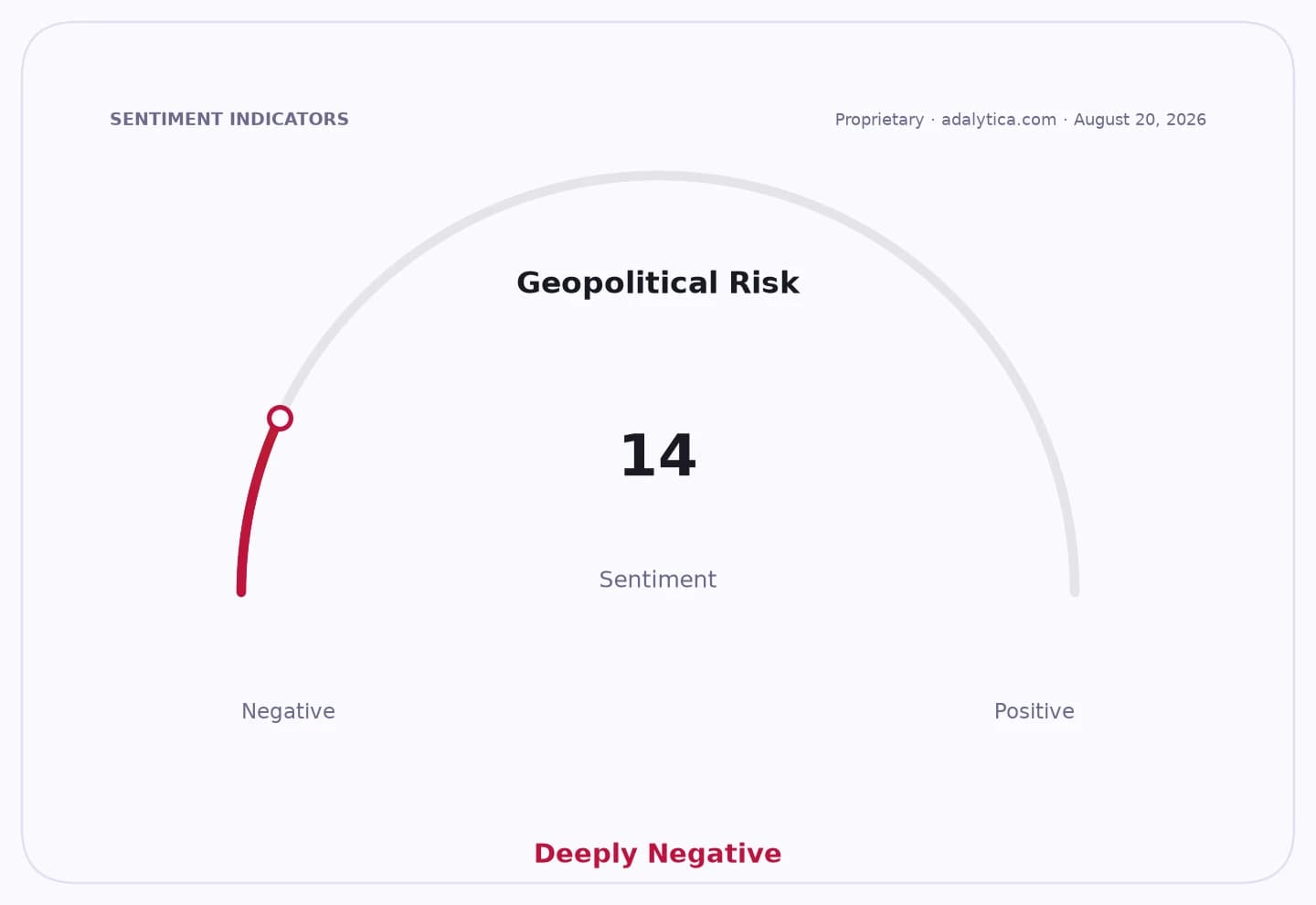
The macro backdrop also matters. U.S. Treasury yields have stayed elevated, with the 10-year note near 4.71% and the 2-year around 4.19%, keeping financing costs high for capital-intensive energy projects. That makes established nuclear operators and fuel suppliers more attractive than long-dated development plays, especially if policy support remains strong. Adalytica’s Global Stability Sentiment gauge, meanwhile, sits at 14, in “Extreme Fear,” underscoring how quickly geopolitics can reprice energy and defense-linked assets.
For investors, the key question is whether Putin’s remarks are merely rhetorical or part of a broader effort to reassure buyers that Russia will remain a reliable supplier despite sanctions pressure. Bullish investors in uranium and nuclear services will argue that continued uncertainty around Russian supply strengthens the case for Western stockpiles, domestic enrichment, and reactor life extensions. Bears will counter that if geopolitical tensions ease, speculative premiums in uranium names could unwind quickly, especially after the sector’s sharp swings this year.
The most important implication is that nuclear power is becoming less of a pure energy theme and more of a geopolitical trade theme. As long as Russia remains embedded in global fuel markets, statements about safety and reliability will be read not just as political messaging, but as attempts to preserve leverage in a market where supply security is increasingly the asset investors are really buying.
| Entity | Gains | Losses |
|---|---|---|
| Russia/Rosatom | ▲Market leverage | ▼Trust deficit |
| Western utilities | ▲Supply diversification case | ▼Russian fuel dependence |
| Uranium Energy, Cameco | ▲Higher pricing power | ▼Volatility if tensions ease |
| BWX Technologies | ▲Nuclear spending cycle | ▼Project delays and margin pressure |