Russia ruble weakens as inflation risks stay elevated

The Central Bank of Russia is warning that pro-inflationary risks remain elevated just as the ruble has weakened back toward 84.4 per dollar, a reminder that Moscow’s battle to restore price stability is still far from won.
That matters because inflation is now the key constraint on Russian growth, credit conditions and fiscal flexibility. When the currency weakens, imported goods get more expensive, companies face higher input costs and households lose purchasing power. For the central bank, that leaves little room to ease policy aggressively, even if domestic activity is slowing.
The ruble’s latest move is a timely warning. The currency has traded as low as 85.0 this month and remains well above its 200-day average near 77.9, while technical momentum is mixed, with the 50-day moving average at 81.5 and the RSI near 52.7, suggesting no decisive trend break yet. In other words, the market is not pricing in a stable anti-inflation regime.
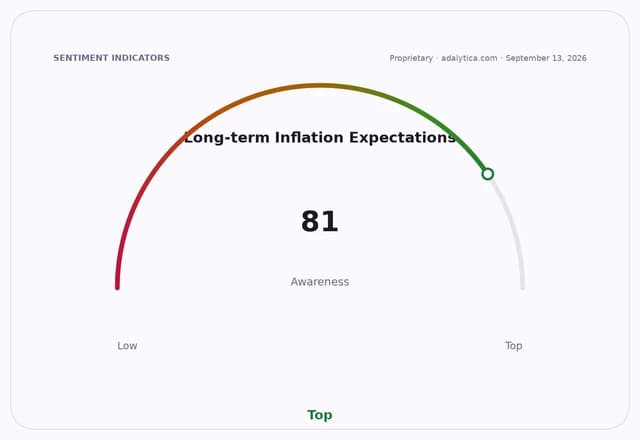
Inflation data reinforce the concern. U.S. dollar-priced comparisons are not the point here; the bigger signal is that Russia’s policy backdrop is still dominated by price pressure rather than disinflation. Adalytica’s long-term inflation expectations gauge sits in fear territory at 30, while confidence in a 2% inflation target is only 41, showing investors and consumers remain skeptical that price stability is near. That skepticism is toxic for asset valuation because it raises the risk premium on local bonds, discourages duration exposure and keeps funding costs elevated across the economy.
The economic narrative is straightforward: the central bank is trying to defend real returns and the ruble at the same time. That usually means a restrictive stance for longer, even if officials would prefer to support credit and investment. For equities, that is a headwind for domestically focused sectors reliant on cheap financing and consumer demand. For exporters, a weaker ruble can help revenues in local currency terms, but sanctions, import dependence and financing constraints blunt the benefit.
Investors should read this as a confirmation that Russia remains an inflation-and-currency story, not a growth story. Until the ruble steadies and expectations improve, the central bank is likely to stay cautious, and any hopes for a faster easing cycle look premature. The trade is still defensive: favor hard-currency earners and balance-sheet strength over rate-sensitive domestic names.
| Entity | Gains | Losses |
|---|---|---|
| Russian exporters | ▲More local-currency revenue | ▼Higher import costs |
| Central bank hawks | ▲Policy credibility | ▼Growth support |
| Imported-goods retailers | ▲— | ▼Margin pressure |
| Ruble bulls | ▲— | ▼Currency volatility |