Russia Strikes Kyiv Infrastructure Again

Russia’s latest strike on Kyiv has underscored how the war is increasingly targeting the infrastructure that keeps Ukraine functioning, with an attack on the National University of Food Technologies adding to a week of damage to rail lines, depots and power assets around the capital and in Odesa.
The immediate economic significance is less about one damaged campus than about the widening reach of Russia’s campaign against civilian and logistical nodes. A strike that destroys part of a university in Kyiv reverberates well beyond education: it signals that neither urban centers nor technically important facilities are insulated from attack, raising the cost of operating businesses, moving goods and maintaining basic services across Ukraine.

That matters because the conflict’s drag on output has always come through infrastructure. Railways move exports, imports and military supplies. Electricity keeps factories, storage facilities and public services running. When those systems are hit repeatedly, the impact compounds — repairs are expensive, rerouting slows commerce, and the risk premium for operating in Ukraine rises.
The latest attacks also fit a clear escalation pattern. In the Kyiv region, a separate strike on an ammunition depot was reported to have caused at least 38 deaths, while Russian strikes on railway infrastructure in Kyiv and Odesa killed seven at a railway depot and cut power in the Odesa region. The cumulative effect is to pressure Ukraine’s logistics network at a time when resilience is already stretched by years of bombardment and repair costs.
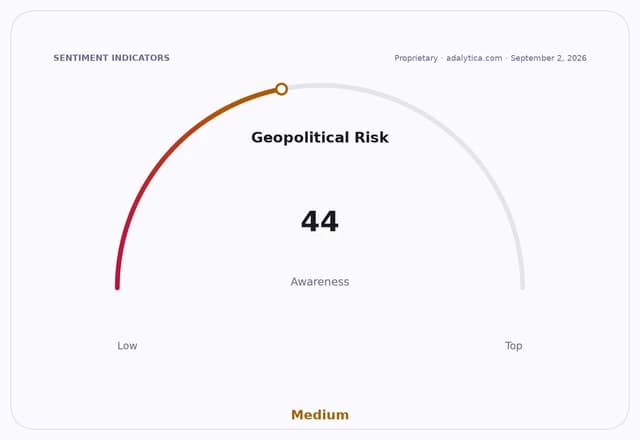
For investors, the direct market impact is most visible through higher geopolitical risk rather than through a single asset price move. European risk sentiment tends to worsen when attacks intensify around critical infrastructure, especially when rail and energy assets are involved. The euro’s broader trade and sentiment backdrop remains neutral, but sustained escalation on Europe’s eastern flank can keep a floor under safe-haven demand, support defense-related names and complicate the outlook for regional assets exposed to energy, freight and cross-border trade.
There is also a secondary economic channel through reconstruction. Each strike raises future rebuilding needs, but it simultaneously destroys the capacity needed to carry out repairs efficiently. That can prolong war damage and delay any postwar rebound, making Ukraine more dependent on external financing and military support.
The bull case for markets is that these attacks, however severe, reinforce Western support for Ukraine and for Europe’s defense-industrial buildout. The bear case is that repeated hits on power and transport infrastructure deepen the war’s economic scars, keep inflationary pressures alive in parts of the region and extend uncertainty for firms with supply chains tied to eastern Europe.
For now, the message from Kyiv is that Russia is not only targeting military assets but the systems that sustain civilian life and economic continuity. That makes the conflict more than a battlefield story: it is a test of infrastructure resilience, reconstruction capacity and investor tolerance for prolonged instability on Europe’s border.
| Entity | Gains | Losses |
|---|---|---|
| Russia | ▲Tactical pressure on infrastructure | ▼International condemnation |
| Ukraine | ▲Western support narrative | ▼Logistics and civilian capacity |
| European defense firms | ▲Higher demand outlook | ▼Broader regional stability |
| Ukrainian households/businesses | ▲— | ▼Safety, power, transport continuity |