Russia Fires VEB Chief Economist After Ukraine Remark

Russia’s removal of VEB’s chief economist after he said Moscow “will not win” in Ukraine underscores how the Kremlin is tightening control over economic messaging as the war grinds on and sanctions bite harder.
The dismissal matters because state banks are not just lenders in Russia’s system: they are instruments of industrial policy, war finance and political signaling. When a senior economist at a Kremlin-linked institution is punished for publicly questioning the war’s trajectory, it suggests the authorities are less willing to tolerate frank assessments of deteriorating economic and social risks.
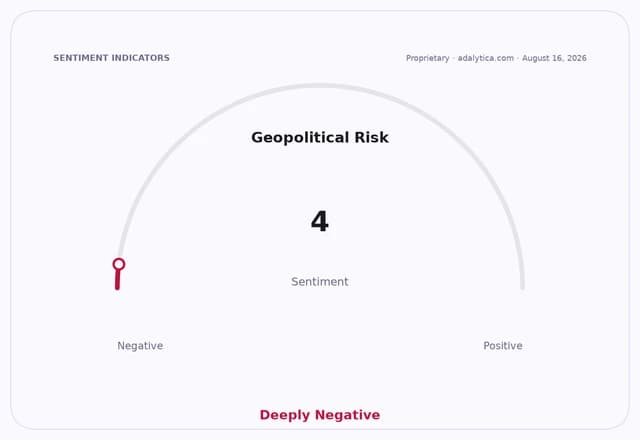
That is economically significant because Russia’s war economy is already under strain from elevated military spending, sanctions, labor shortages and disrupted trade flows. The economist’s warning that attacks on Ukrainian ports were lifting transport costs and prices points to a broader inflationary burden that can erode real incomes and complicate monetary policy, even if headline activity is still being supported by state demand. His call for structural reform and tax incentives also highlights the gap between the Kremlin’s wartime priorities and the investment climate needed for longer-term growth.
For investors, the episode is another reminder that policy transparency in Russia remains limited and that official rhetoric may diverge sharply from underlying fundamentals. In a market where price discovery is already impaired, the firing of a prominent economist reinforces the risk that adverse developments in fiscal strain, inflation or social stability will be harder to detect early. It also suggests that any internal debate over the sustainability of the war effort is likely to remain private, reducing the chances of a rapid policy pivot.
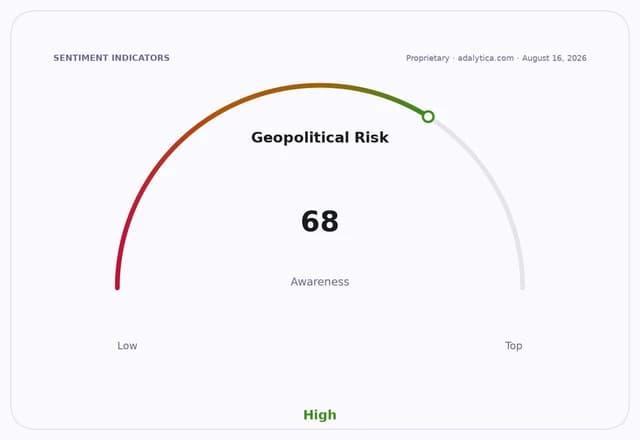
The broader narrative is one of a state that is trying to preserve cohesion by suppressing dissent, even as the economic costs of a prolonged conflict accumulate. That may buy time politically, but it does not remove the pressure on growth, prices or living standards. The key question for markets is whether the Kremlin responds with more controls and spending, or with reforms that could restore some confidence. For now, the dismissal points to more control, not more flexibility.
| Entity | Gains | Losses |
|---|---|---|
| Kremlin | ▲tighter narrative control | ▼policy credibility |
| VEB and state banks | ▲political alignment | ▼analytical independence |
| Russia’s war economy | ▲short-term discipline | ▼long-term investment climate |
| Investors in Russia-linked assets | ▲— | ▼visibility on policy and risk |