Russia war support falls as ruble trades near 82.59
Only a minority of Russians now describe the war in Ukraine as successful, a sign that three years of battlefield attrition, sanctions and domestic economic strain are finally eroding public confidence in the Kremlin’s central narrative.
That shift matters beyond opinion polling. Support for a prolonged conflict is the political fuel that keeps Russia’s wartime economy running, sustains mobilization and gives President Vladimir Putin room to absorb heavy losses. If that backing weakens, it raises the cost of escalation at home, complicates recruitment and makes any future negotiations more politically sensitive for Moscow.
The erosion in mood comes as the war shows no sign of easing. Recent mutual attacks have killed five people, underscoring that the front remains volatile and that neither side is close to a breakthrough. At the same time, Russian officials and analysts are warning of a more radical war economy taking shape in Moscow, a sign that the state is preparing for a longer confrontation even as public patience appears to be thinning.
For investors, the most immediate relevance is not a near-term peace trade but a reminder that Russia’s war premium is becoming more binary. Any deterioration in domestic support could eventually tighten the room for fiscal expansion, increase pressure on labor and supply chains, and force the Kremlin to lean even harder on sanctions evasion, price controls and state-directed spending. That would be bullish for defense and logistics tied to the war effort, but bearish for consumer confidence, real incomes and any asset exposed to a prolonged sanctions regime.
Currency and Russian-risk assets are already reflecting a conflicted picture. The ruble has been volatile, with the dollar-ruble pair recently trading around 82.59 after moving as low as 70.12 earlier in the period and above 86 in March, according to the supplied price data. The 50-day moving average sits below the 200-day average, while the RSI and MACD have swung sharply, consistent with a market still pricing policy intervention, war headlines and sanctions risk rather than a clean macro trend.
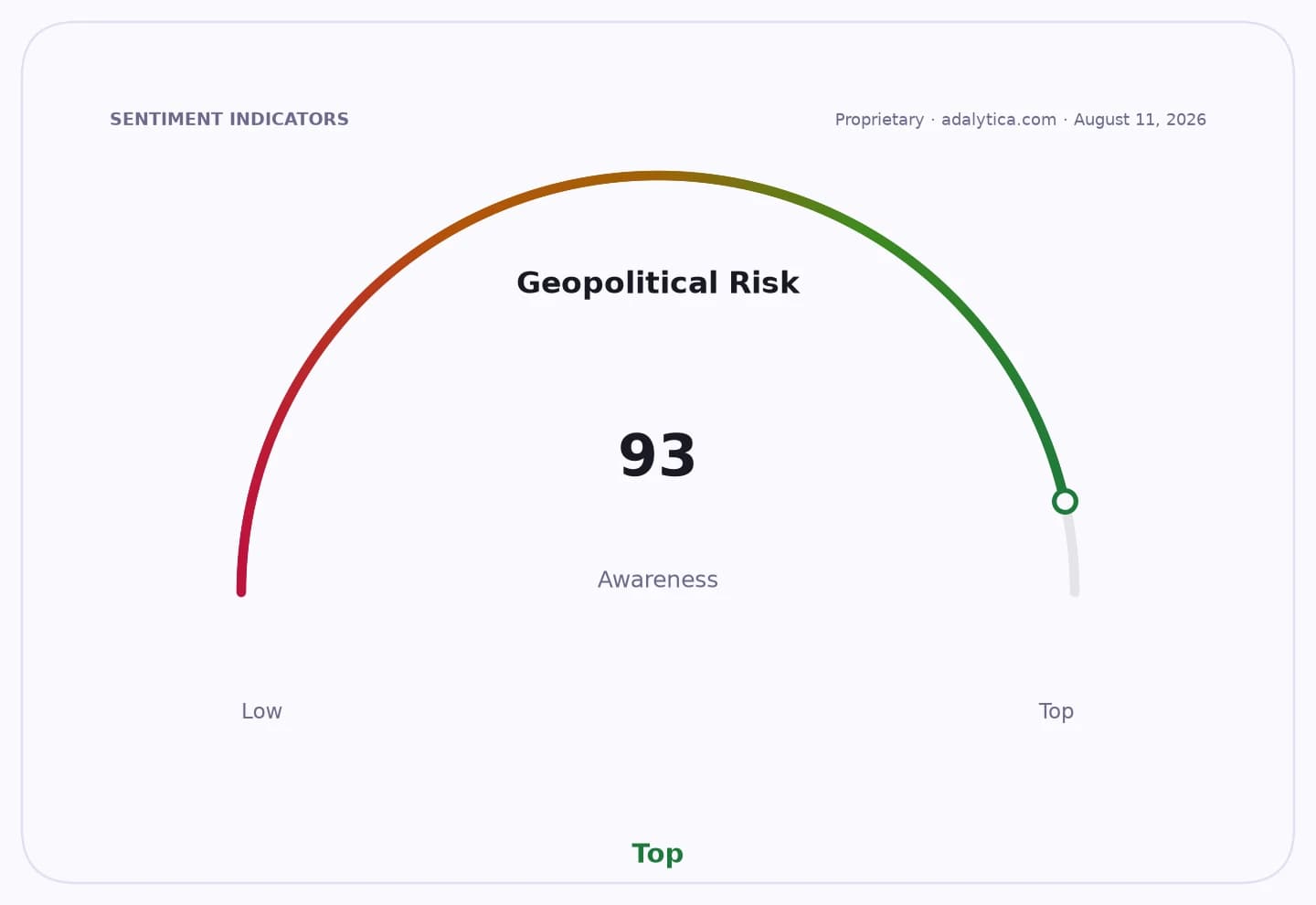
Adalytica’s Global Stability Sentiment gauge also points to a world that remains unusually complacent about geopolitical risk, with the score at 100 and labeled “Extreme Greed.” That disconnect can matter for assets exposed to a sudden escalation in the Russia-Ukraine conflict, because sentiment can turn faster than positioning when domestic political constraints or battlefield shocks change the calculus.
The broader narrative is that Russia is entering a more fragile phase of the war: military confrontation remains intense, the state is committed to sustaining the campaign, but the social bargain that has helped normalize the conflict is showing signs of wear. If that fatigue deepens, it will not end the war quickly, but it could shape how aggressively Moscow can prosecute it and how markets should price the chances of escalation, stalemate or eventual settlement.
| Entity | Gains | Losses |
|---|---|---|
| Kremlin war economy | ▲More state control | ▼Public patience |
| Russian hardliners | ▲Stronger mobilization case | ▼Popular support |
| Ukraine and allies | ▲Signs of Russian fatigue | ▼Little immediate relief |
| War-exposed assets | ▲Volatility opportunities | ▼Stability and risk premia |