Russian coking coal prices hit 3-year high
China and India have driven Russian coking coal prices to their highest level in three years, tightening a key input for steelmakers and adding fresh pressure to margins across Asia’s industrial supply chain.
The move matters because metallurgical coal is a critical feedstock for blast-furnace steel production, and higher delivered prices flow straight into costs for mills already dealing with uneven demand, volatile freight markets and constrained supply from other exporting regions. For China, where steel output has been restrained at times by policy and property weakness, dearer imported coal can blunt any rebound in mill profitability. For India, where steel demand is still tied to infrastructure and power-intensive growth, it raises the cost base just as several coal-fired plants are running low on inventories and energy security remains a concern.
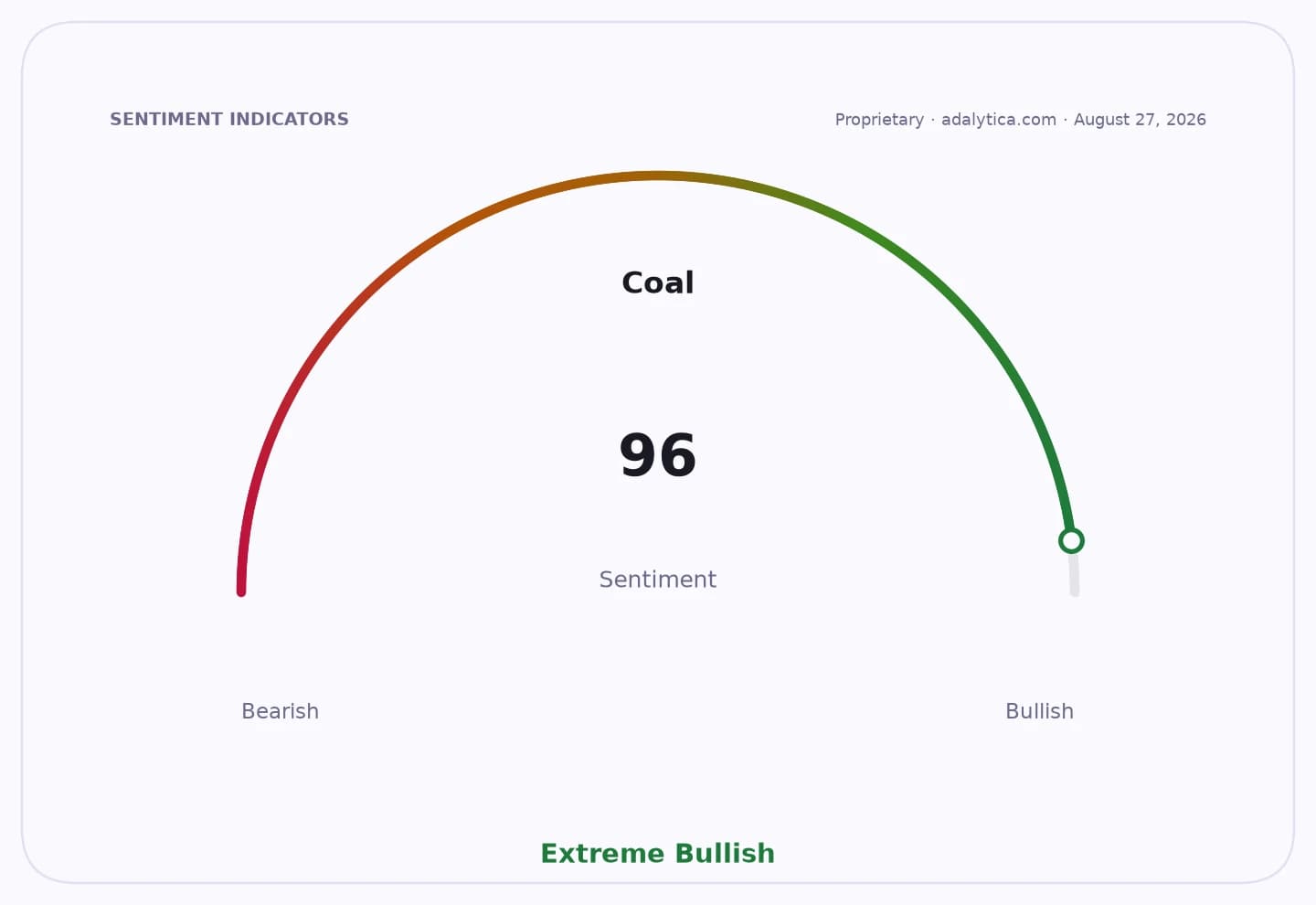
The price spike reflects a squeeze in seaborne supply as disruptions in Australia and China intersect with geopolitics and stronger buying from the two biggest growth markets in Asia. Russia has benefited from that demand even as trade routes and sanctions-related frictions complicate flows. Adalytica’s Coal Fear & Greed Index is at 96, or “Extreme Greed,” underscoring the intensity of the move in the coal market.
Investors are watching the impact on miners, steelmakers and commodity-sensitive industrials. U.S.-listed coal names have already responded, with Peabody Energy up to $29.44 on Aug. 27 from $27.46 two days earlier, while Cleveland-Cliffs edged higher to $11.83 from $11.52 over the same period. Shares in Arch Resources have also risen to $108.26, reflecting renewed trading interest in metallurgical coal.
The larger story is that Asia’s steel cycle is being shaped less by demand alone and more by supply fragility, trade constraints and policy risk. If Russian supply stays tight and Chinese and Indian buying remains firm, met coal prices could stay elevated into the next round of steel contract negotiations, keeping pressure on mills and supporting miners.
| Entity | Gains | Losses |
|---|---|---|
| Russian coal exporters | ▲Higher selling prices | ▼Less pricing power if supply normalizes |
| Coal miners | ▲Stronger met coal revenue | ▼Demand risks if mills cut output |
| Steelmakers in China and India | ▲— | ▼Higher input costs and margin pressure |
| Consumers of steel | ▲— | ▼Higher steel prices if costs are passed through |