Russian Households Shift to Marketplaces as Budgets Tighten
Russian households are already changing how they shop as rising pressure on budgets pushes them to split purchases, chase discounts and shift more spending to marketplaces — a sign that consumer demand is becoming more defensive and that discretionary categories may stay under strain well into 2028.
That matters because when families stop buying in one trip and start hunting for cheaper channels, it is usually a late-cycle behavior that tells you real incomes are being squeezed and confidence is weakening. The Central Bank’s observation points to a consumer who is still spending, but more selectively: essentials are being protected while larger, less urgent purchases are being delayed, fragmented or traded down.
For investors, the message is not simply that Russian retail is softening. It is that purchasing power is being repriced across the chain. Marketplaces and low-price formats gain share when consumers become value-driven, while traditional retailers with weaker digital reach, less pricing power and more exposure to nonessential goods tend to lose traffic and basket size. That shift favors platforms that can aggregate demand, offer deep assortments and monetize logistics and payments, even in a slower-growth environment.
The behavior change also helps explain why some expenses remain sticky. Consumers are usually last to cut spending on food, household basics, medicine, transport and utility-type necessities. What they resist giving up is not spending itself, but convenience and repeat essentials. What gets cut first are big-ticket discretionary items, branded upgrades, restaurant spending, and any purchase that can be postponed or replaced with a cheaper substitute.
That creates a clear economic narrative: Russia’s domestic demand is moving from broad-based consumption to a more selective, price-sensitive pattern. It is less inflationary than a boom, but it is also less supportive of margin expansion for sellers dependent on premium pricing. The market underestimates how long this kind of cautious behavior can persist once households adapt to it.
The clearest public-market read-through is that consumer-facing leaders with scale and discount credibility are outperforming weaker discretionary names. In the U.S. tape, that pattern is visible in Walmart’s relative resilience versus Amazon and Target’s more mixed share performance. Amazon has rebounded sharply to $271.58 from recent weakness, but Walmart’s ability to hold up near $144.49 reflects exactly the kind of trade-down dynamic investors should watch. Target, at $144.49, has also recovered, but its path has been more volatile, underscoring how selective consumers become when budgets tighten.
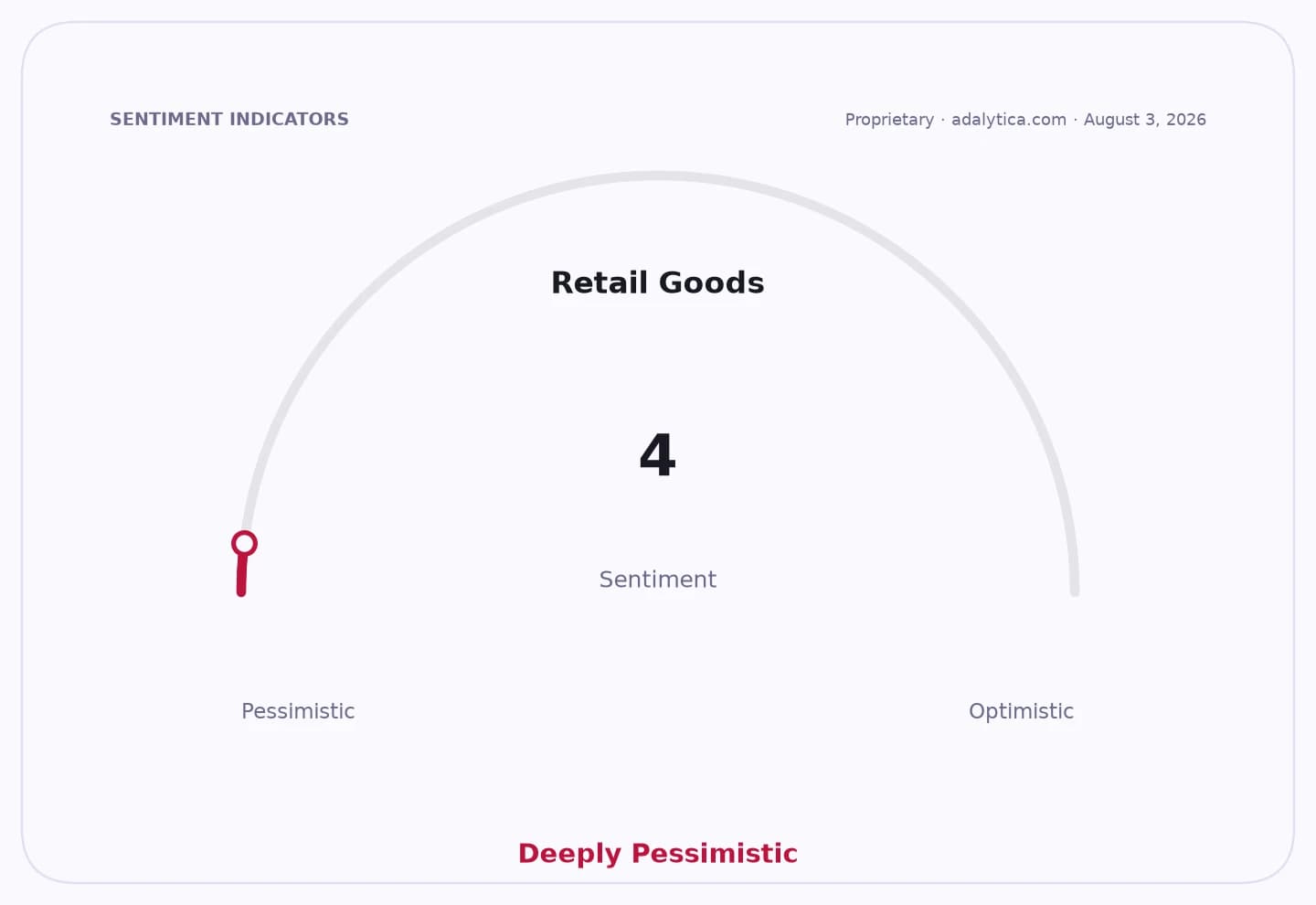
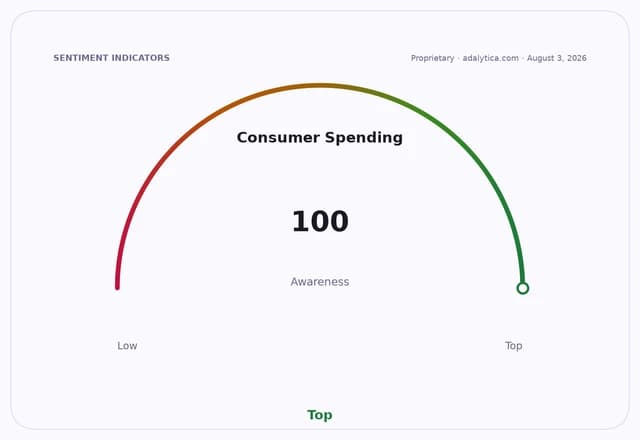
Using Adalytica’s Consumer Spending Sentiment, the broader spending backdrop is still in a neutral zone at 68, but retail-goods spending sentiment is in extreme fear at 4, suggesting that the market is already pricing a more cautious consumer. That divergence is important: consumers may still be spending in aggregate, but the mix is shifting fast toward value, convenience and necessity.
My thesis is that this is an inflection point for the next phase of retail competition. The winners are not the brands that depend on aspirational demand; they are the platforms, discounters and logistics networks that profit when shoppers become rational, fragmented and price-led. If you want exposure to that regime, own the toll roads of consumption — marketplaces, discount chains, and the fulfillment infrastructure that sits between them and the buyer. That is where the asymmetric opportunity is as the consumer keeps tightening the basket.
| Entity | Gains | Losses |
|---|---|---|
| Marketplaces | ▲More traffic, bigger share | ▼Traditional stores |
| Discount retailers | ▲Trade-down demand | ▼Premium brands |
| Essentials sellers | ▲Stable volumes | ▼Discretionary goods |
| Consumers | ▲Lower prices, more choice | ▼Convenience, quality mix |