Samjeonix, SMH Slip as Treasury Yields Rise

Foreign investors are likely to keep dumping U.S. government bonds whenever yields spike, and the latest leg higher in Treasury rates is again testing whether South Korea’s so-called “Samjeonix” trade — the concentrated bet on Samsung Electronics, SK Hynix and the broader semiconductor complex — can hold up.
The trigger is a sharp global bond selloff that has pushed the U.S. 10-year Treasury yield to 4.75%, with a forecast for 4.777%, while the 2-year sits at 4.34% and the curve remains only modestly inverted. The move reflects a broader repricing of inflation and fiscal risk as oil prices jump on Middle East tensions, forcing investors out of duration and into cash-like assets.
That matters because higher U.S. yields raise the discount rate on growth stocks and pull capital toward fixed income, a double hit for the AI and chip trade that has been one of the market’s main momentum engines. In South Korea, the “Samjeonix” basket is especially exposed: foreign selling in local equities tends to intensify when U.S. rates rise, since global investors can get better risk-adjusted returns in Treasuries and other dollar assets.
The pressure is showing up across the semiconductor complex. Nvidia rose to $227.33 on Sept. 2 after a volatile week, while Taiwan Semiconductor Manufacturing slipped to $412.86 from recent highs. The VanEck Semiconductor ETF, SMH, fell to $552.44, with its conventional technical indicators weakening as the stock sits below its recent peak and its 50-day moving average trend has softened.
The macro backdrop is also turning less friendly for Asia risk assets. Japan’s 30-year government bond yield touched 3%, its highest in three decades, while the yen weakened and Tokyo floated a record $895 billion budget for fiscal 2027. That combination points to rising global borrowing costs, firmer inflation expectations and a harder environment for leveraged or long-duration trades.
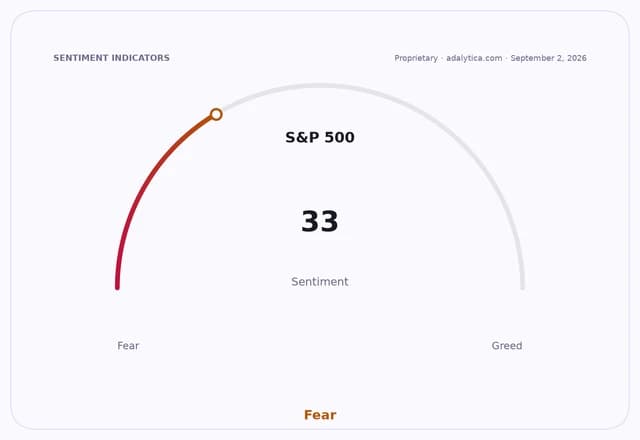
Adalytica’s U.S. dollar trade signals remain neutral, but FX volatility readings show fear, underscoring how quickly cross-asset stress can spill into equities. For investors, the key question is whether AI-led chip names can keep outperforming as Treasury yields climb — or whether a further rise in U.S. rates turns foreign demand into a headwind for Korea’s market darling.
The next catalyst is the bond market itself: if Treasury yields break higher again, foreign selling pressure on U.S. debt and high-beta Asian tech could accelerate, while any pullback in oil or easing Middle East risk may give the “Samjeonix” trade room to stabilize.
| Entity | Gains | Losses |
|---|---|---|
| Treasury buyers | ▲Higher yields | ▼Lower bond prices |
| Foreign bond sellers | ▲Cash and yield reallocation | ▼Treasury price exposure |
| AI/chip longs | ▲Earnings upside if rally resumes | ▼Valuation pressure from rising rates |
| Samjeonix bears | ▲Weakness in Korea chip names | ▼Losses if foreign buying returns |