A U.S. judge’s time-served sentence for a gold trader in the Iran sanctions case that rattled Washington and Ankara underscores how quickly geopolitical risk can spill from courtrooms into currencies, commodities and capital flows.
Sanctions Risk Reprices Gold and Energy Trades
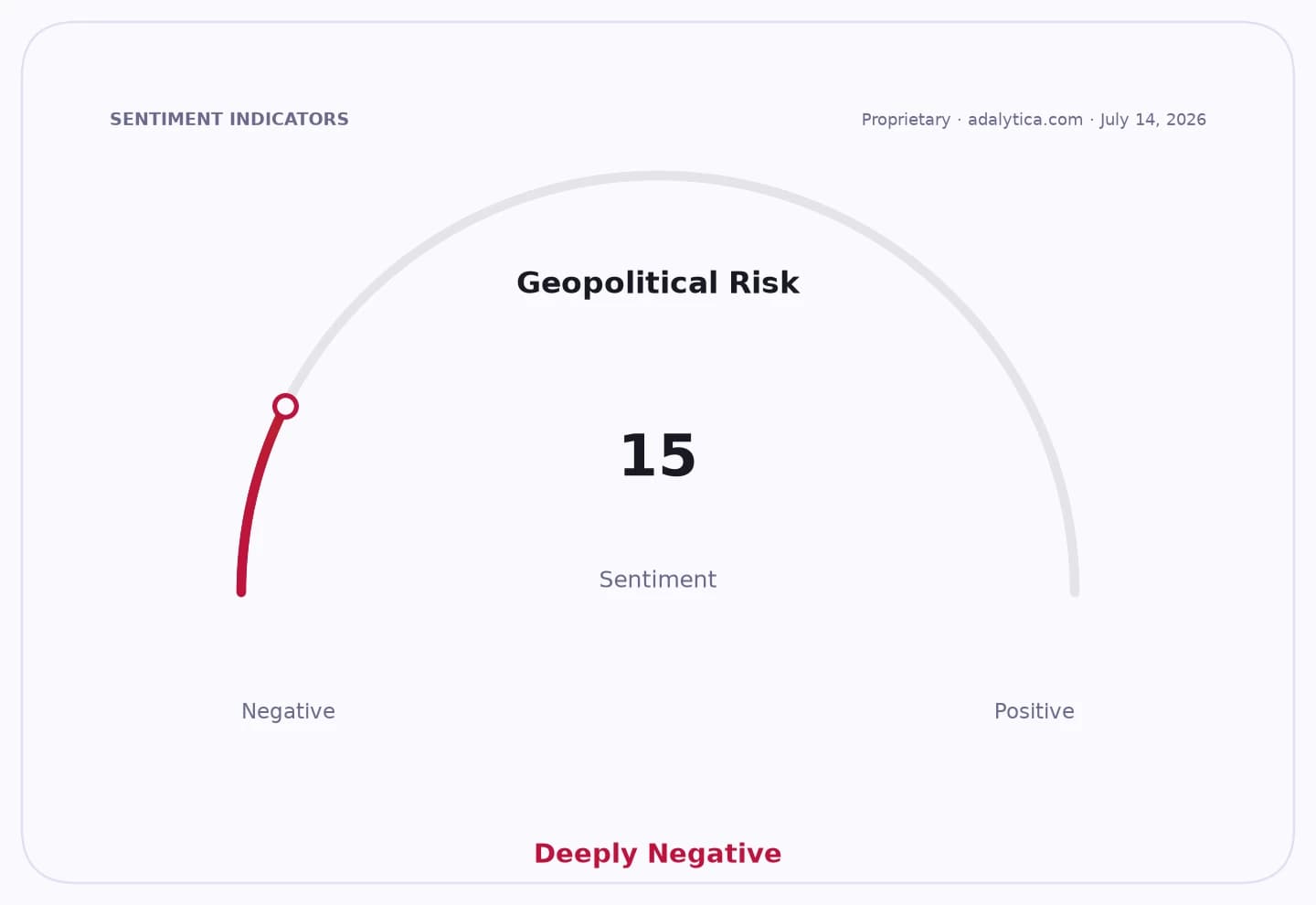
The ruling matters far beyond one defendant. The case became a symbol of the clash between U.S. sanctions enforcement and Turkey’s commercial ties to Iran, and it exposed how a single precious-metals trade route can turn into a diplomatic fault line. For investors, that is the real signal: sanctions risk is not just a legal issue, it is a pricing mechanism for gold, energy and emerging-market assets whenever the U.S. tightens the screws on a geopolitical adversary.
Sentiment IndicatorsⓘProprietary · adalytica.com · July 14, 2026
This is a snapshot — live sentiment, awareness and momentum for 130+ markets update continuously in the dashboard.Open AlphaPulse
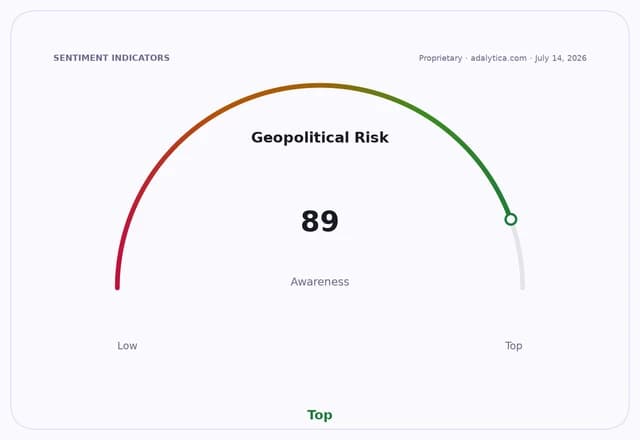
Gold has already been acting like a macro stress gauge. The metal surged earlier this year and then gave back ground as markets reassessed the odds of higher-for-longer U.S. rates, even as tensions with Iran flared and the U.S. carried out strikes and fresh sanctions. That mixed reaction is telling. Safe-haven demand is still alive, but it is colliding with the stronger pull of real yields and the dollar, which remains under pressure in sentiment gauges even as geopolitical fear spikes.
The commodity backdrop shows how investors are being forced to separate headline risk from actual supply disruption. WTI crude has slid back to around $68.69 a barrel in the latest forecast after a volatile run that saw it spike above $120 on the data set, then retreat sharply. Gold, meanwhile, has pulled back from its highs, with GLD slipping back below its 50-day average and sitting under its 200-day trend, a sign that the market is no longer buying every geopolitical scare as a one-way bet for bullion. Technicals do not drive the macro story, but they confirm it: momentum has cooled even as fear remains elevated.
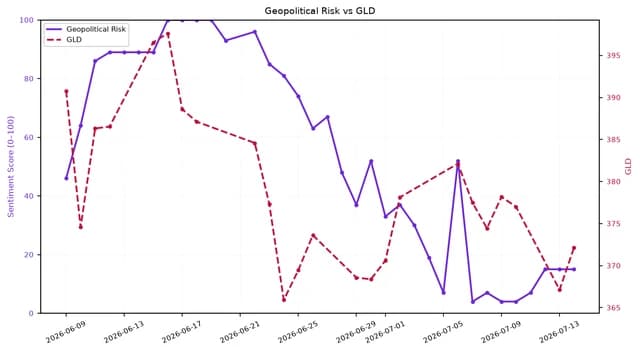
That divergence creates opportunity. The market underestimates how sanctions regimes tend to reprice the entire trade stack: bullion producers with low-cost ounces, royalty names with leverage to higher metal prices, and energy names that benefit when Middle East risk keeps a floor under oil. It also reminds investors that Turkey remains a key transit point for trade and finance when sanctions enforcement tightens, so banks, shippers and commodity intermediaries with exposure to cross-border payment chains can see their risk premium rise fast.
The better investment thesis is not to chase every spike in gold or oil. It is to own the infrastructure around geopolitical uncertainty: diversified miners, select precious-metals ETFs, and energy producers with resilient balance sheets and free cash flow. If U.S.-Iran tensions remain elevated and sanctions enforcement broadens, the next move is likely not a straight-line rally in bullion, but a rotation into the businesses that monetize volatility.
For investors, the takeaway is simple: sanctions cases are policy events, but they are also market events. The time-served sentence may close one chapter, yet the larger message is that U.S.-Turkey-Iran frictions still have the power to move commodities, currencies and safe-haven assets. I believe the smartest capital now should be positioned for the second-order winners, not the headline trade.
| Entity | Gains | Losses |
|---|---|---|
| Gold miners | ▲Higher volatility premium | ▼Lower bullion momentum |
| Oil producers | ▲Geopolitical risk floor | ▼Demand shock risk |
| GLD holders | ▲Safe-haven exposure | ▼Rate-driven pullbacks |
| Turkey-linked traders/banks | ▲Lower legal uncertainty | ▼Higher sanctions scrutiny |




