Santa Fe survey finds rising food insecurity
Half the families using popular soup kitchens and community kitchens in Santa Fe now routinely spend a day without eating, underscoring a social crisis that is becoming an economic problem as much as a humanitarian one.
A new survey of community food centers in the city found that 50% of households relying on these networks face severe food insecurity, while another 25% are in moderate distress and 25% in a milder category. The findings point to a collapse in basic purchasing power for a large slice of low-income households, with implications for labor markets, public health and local consumption.
The report says the situation is not confined to adults: severe food insecurity affects 60% of adults and 40% of children in the sample. That matters because chronic undernutrition raises the risk of poorer school attendance, lower productivity and higher future health costs, locking in poverty across households and neighborhoods.
The kitchens and soup runs have become a first line of defense. Half of the families surveyed said they could not guarantee one daily meal without them. That makes these community sites less a supplement than a substitute for a broken safety net, especially in a city where 61% of households interviewed had at least one unmet basic-needs indicator such as precarious housing, lack of a bathroom, overcrowding or school absenteeism.

Employment weakness is at the center of the problem. The survey found no worker in 25% of households and no job at all for 42% of individuals questioned. Among those employed, 70% had temporary work, a pattern that helps explain why food insecurity is persisting despite headline unemployment remaining relatively low. In other words, the issue is not only whether people have jobs, but whether those jobs pay enough and last long enough to cover essentials.
The timing is also politically sensitive. The report says 70% of families began using a soup kitchen or milk kitchen for the first time since Javier Milei took office, a detail likely to intensify scrutiny of the government’s adjustment program and its effect on real incomes. For investors and policymakers, the message is that the social cost of disinflation and fiscal tightening is being felt most sharply at the bottom of the income distribution, where even modest price gains can still overwhelm irregular wages.
Women are carrying much of the burden. They account for 65% of people seeking food and 90% of those who keep the kitchens running, while in half of the households the main income earner is a woman. In 72% of single-parent homes with children, the household is headed by women. That makes the food crisis a gender issue as well as an economic one, with added pressure on labor participation, unpaid care work and household resilience.
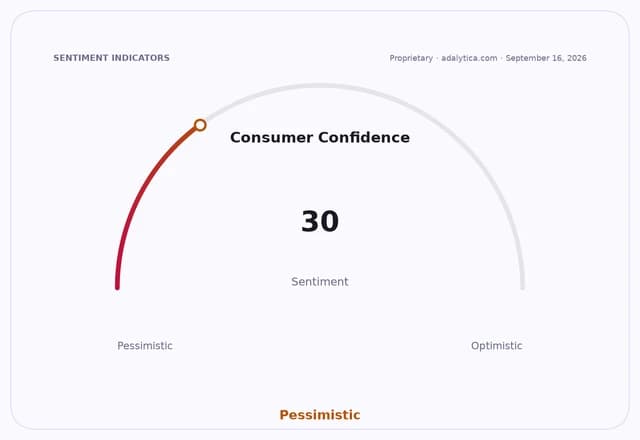
The broader macro backdrop remains fragile. Santa Fe’s food emergency comes as consumers across Argentina continue to face strained purchasing power, with the latest local and sentiment data pointing to fear around consumer confidence and extreme caution in retail spending. Even where inflation is easing on paper, the real economy is still adjusting to a prolonged squeeze on wages, employment quality and access to credit.
For households, the immediate risk is hunger. For authorities, it is the possibility that community kitchens become permanently embedded as a parallel welfare system. For markets and investors, the story is a warning that Argentina’s stabilization effort is only sustainable if the recovery reaches informal workers, temporary employees and female-headed households fast enough to prevent social deterioration from feeding back into political and economic instability.
| Entity | Gains | Losses |
|---|---|---|
| Community kitchens in Santa Fe | ▲Greater role as safety net | ▼Higher demand, strained capacity |
| Low-income households | ▲Immediate meal access | ▼Ongoing food insecurity |
| Women and single mothers | ▲Central role in support networks | ▼Heavier care burden, income stress |
| Government and policymakers | ▲Opportunity to target aid | ▼Pressure over social fallout |