Saudi Aramco refinery drone claim lifts WTI near $78

The Houthis said they launched a drone at Saudi Aramco’s refinery in the Jizan region, raising the risk of fresh disruption to Middle East energy supplies and adding a new bid to crude prices that were already trading near $78 a barrel.
The claim matters because Jizan sits close to a key Saudi oil corridor on the Red Sea, where attacks have repeatedly forced the market to price in supply interruptions, shipping rerouting and higher insurance costs. Even when strikes do not materially hit output, they can lift risk premiums across crude benchmarks and fuel products.
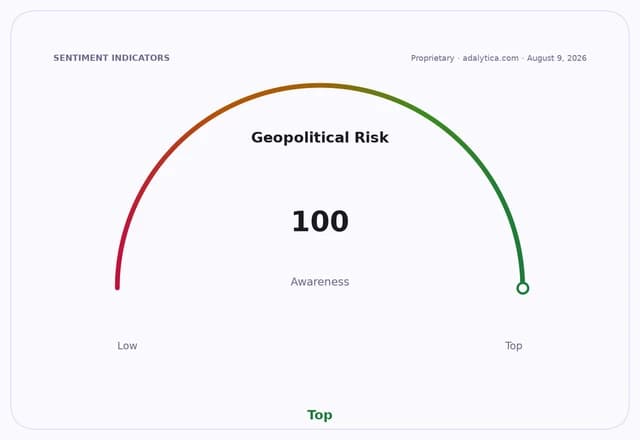
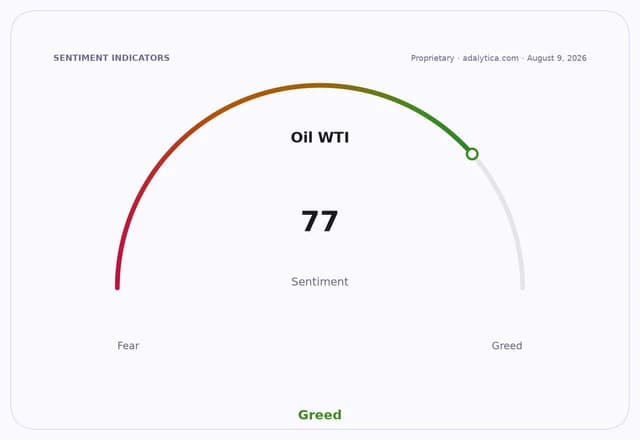
Brent and U.S. oil have been volatile on the back of regional tensions, with West Texas Intermediate recently rebounding to $78.18 a barrel after touching $75.22 earlier in the week. Adalytica’s oil trade signals flag elevated bullish positioning, with WTI sentiment at 77, labeled “Greed,” while its global stability gauge is at 100, or “Extreme Greed,” underscoring how quickly geopolitical shocks can reset market mood.
Energy equities have also been leaning on the same backdrop. The XLE energy ETF was at $57.50 on Friday, near its 50-day moving average of $56.48, while U.S. Oil Fund units closed at $117.98, still below the 50-day average of $121.17. That leaves room for another leg higher if traders conclude the latest strike threat threatens supply more than previous incidents.
The market is also coming into the news with oil already supported by a tighter global balance. U.S. crude futures have been climbing from a $75.22 close on Aug. 5, and the 10-year Treasury yield, at 4.69%, suggests investors are still wrestling with the inflation consequences of any further energy shock.
Saudi Arabia has so far shown it can absorb damage without a sustained shutdown, but repeated attacks keep the kingdom’s export infrastructure, tanker routes and downstream operations in focus. For investors, the key question is whether the latest claim proves to be another contained episode or the start of a broader escalation that forces a repricing of oil, refiners and shipping stocks.
| Entity | Gains | Losses |
|---|---|---|
| Oil bulls | ▲Higher risk premium | ▼Less room for price pullbacks |
| Saudi Aramco | ▲Higher security urgency | ▼Operational disruption risk |
| Refiners and shipping insurers | ▲More pricing power on risk | ▼Higher claims and costs |
| Importers and airlines | ▲Short-term hedging opportunity | ▼Fuel-cost pressure |