Saudi Aramco Extinguishes Fire at Jazan Refinery
Saudi Aramco said it extinguished a fire at its refinery in Jazan, easing immediate concern over disruption to one of the kingdom’s key fuel-processing assets just as crude trades near its highest levels in months and global energy sentiment stays sharply bullish.
The incident matters because refinery outages can tighten regional product supplies even when crude output is unaffected, adding another layer of volatility to an already fragile oil market. With Brent-linked sentiment elevated and WTI futures around $85-$87 a barrel, any prolonged loss of processing capacity in Saudi Arabia risks supporting margins for competitors while pressuring fuel availability across the Middle East and beyond.
Oil markets have already been trading with a strong risk premium. WTI settled at $85.37 on Aug. 23 after reaching $87.83 on Aug. 20, while USO, the oil ETF, closed at $134.64 on Aug. 21 and remains well above its 50-day and 200-day moving averages, a sign of persistent investor demand for energy exposure.
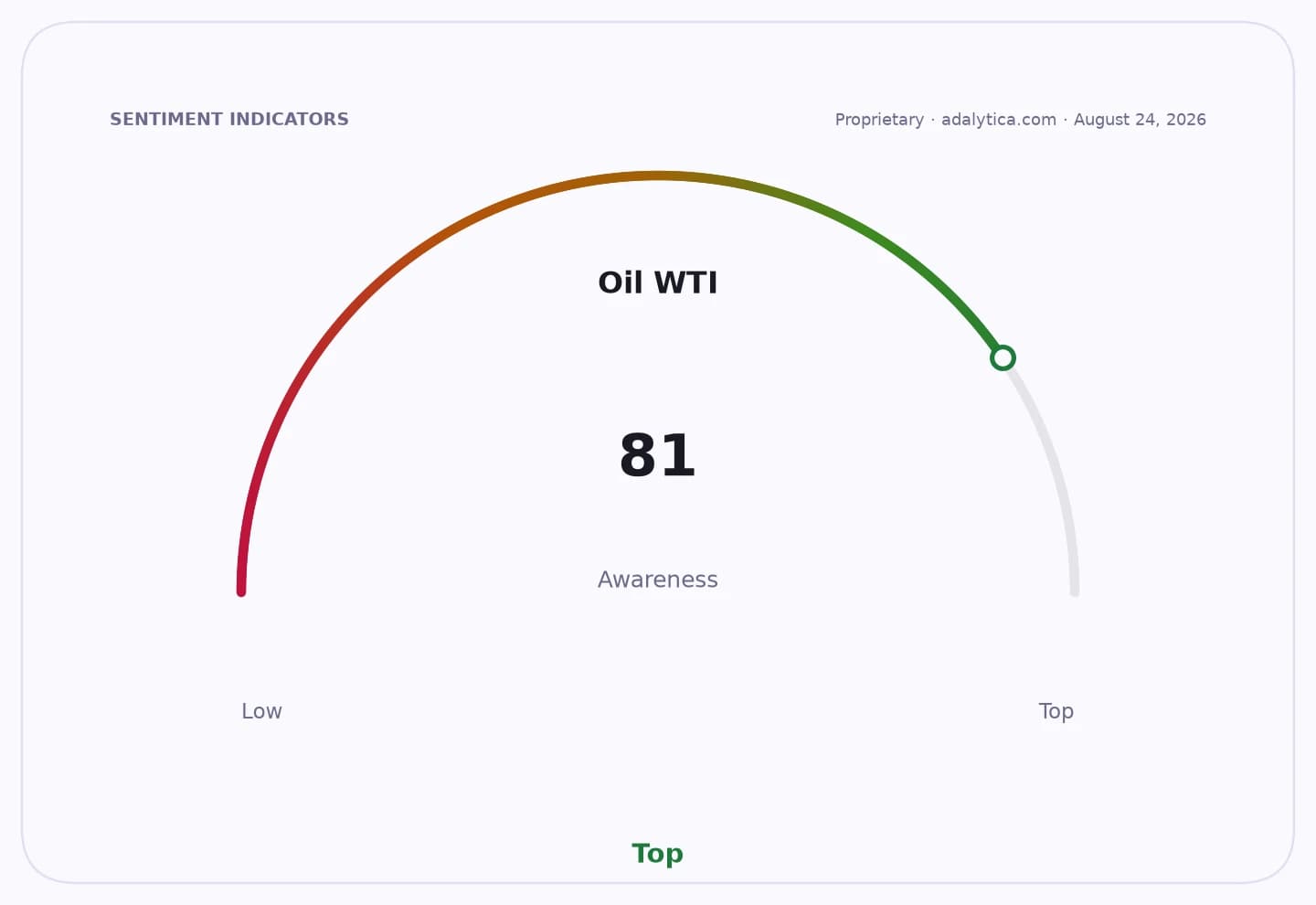
The technical backdrop is still firm rather than euphoric: WTI’s RSI readings sit in the mid-70s, while USO’s are in the high-60s, levels that typically reflect strong momentum without yet indicating a full reversal. Adalytica’s Oil WTI Trade Signals snapshot also shows extreme greed, with sentiment at 99 and awareness at 81, underscoring how quickly traders are pricing supply risk.
The fire comes amid a broader pattern of refinery interruptions and fuel-market strain, with outages and suspensions in other producing regions helping keep gasoline and diesel markets tight even when crude supply is ample. That makes the Jazan incident relevant not just for Saudi Aramco, but for refiners, product traders and governments watching inflation-sensitive fuel costs.
For investors, the immediate readthrough is that any confirmed production loss would be bullish for crude-linked equities and oil ETFs, but bearish for airlines, shippers and industrial users if it lifts refined-product prices further. The key next catalyst is whether Aramco details the cause of the fire and the extent of any impact on refinery runs or export schedules.
| Entity | Gains | Losses |
|---|---|---|
| Oil producers | ▲Higher crude and product prices | ▼None |
| Refiners with spare capacity | ▲Better margins, more throughput demand | ▼Supply disruption risk |
| Airlines and fuel users | ▲Lower fuel costs if disruption fades quickly | ▼Higher jet-fuel and diesel costs |
| Saudi Aramco | ▲Faster normalization if damage is limited | ▼Repair costs, temporary output loss |