Saudi Arabia’s benchmark stock index slipped on Wednesday as selling spread across the market, underscoring a cautious tone even after recent support from regional liquidity and deal activity.
Saudi Tadawul Falls as Breadth Weakens
The Tadawul All Share Index fell 20.53 points to close at 11,015.72, with 160 stocks declining against 90 gainers. Turnover reached 3.8 billion riyals, showing there was still plenty of trading interest, but not enough to prevent a broad-based pullback.
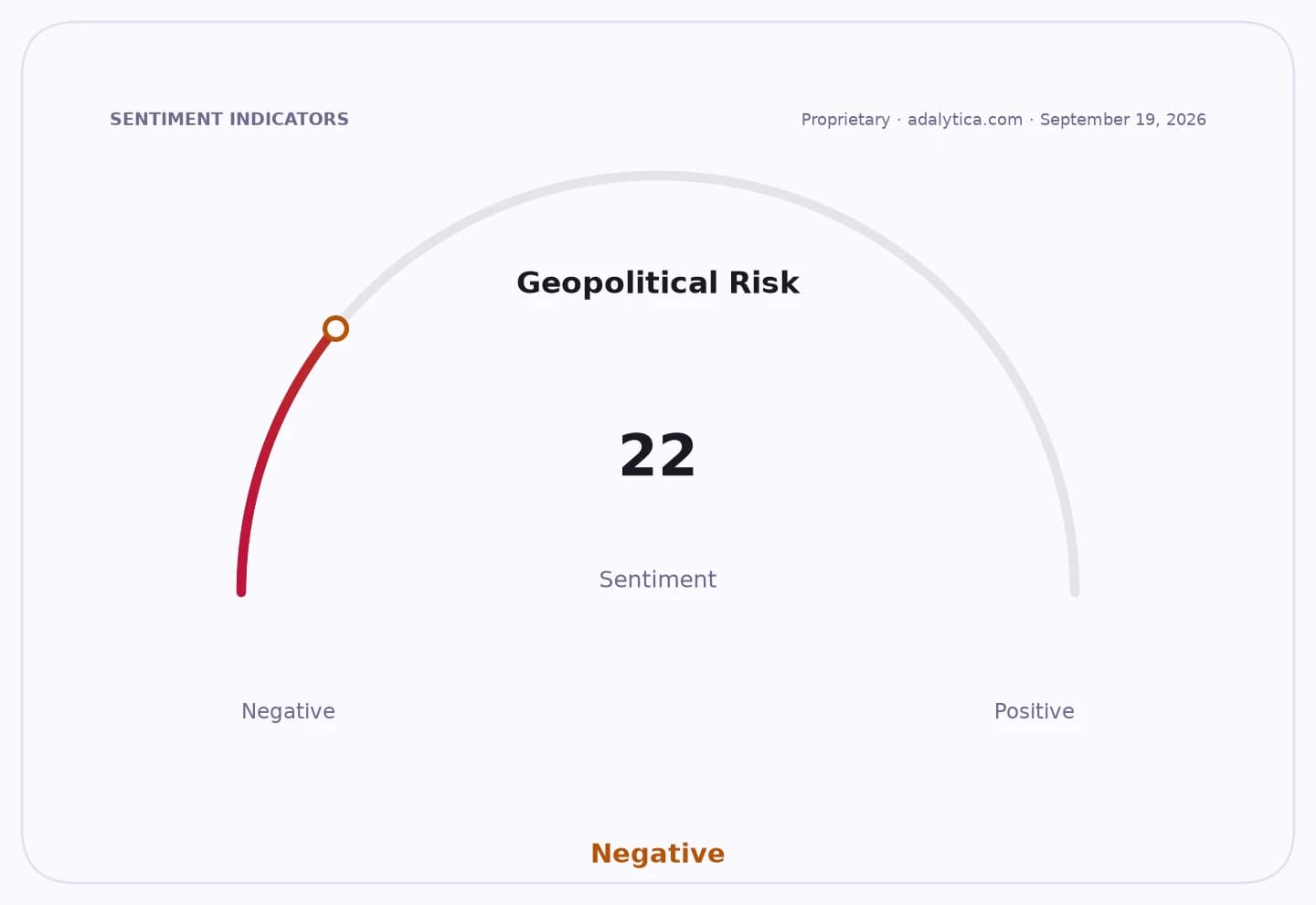
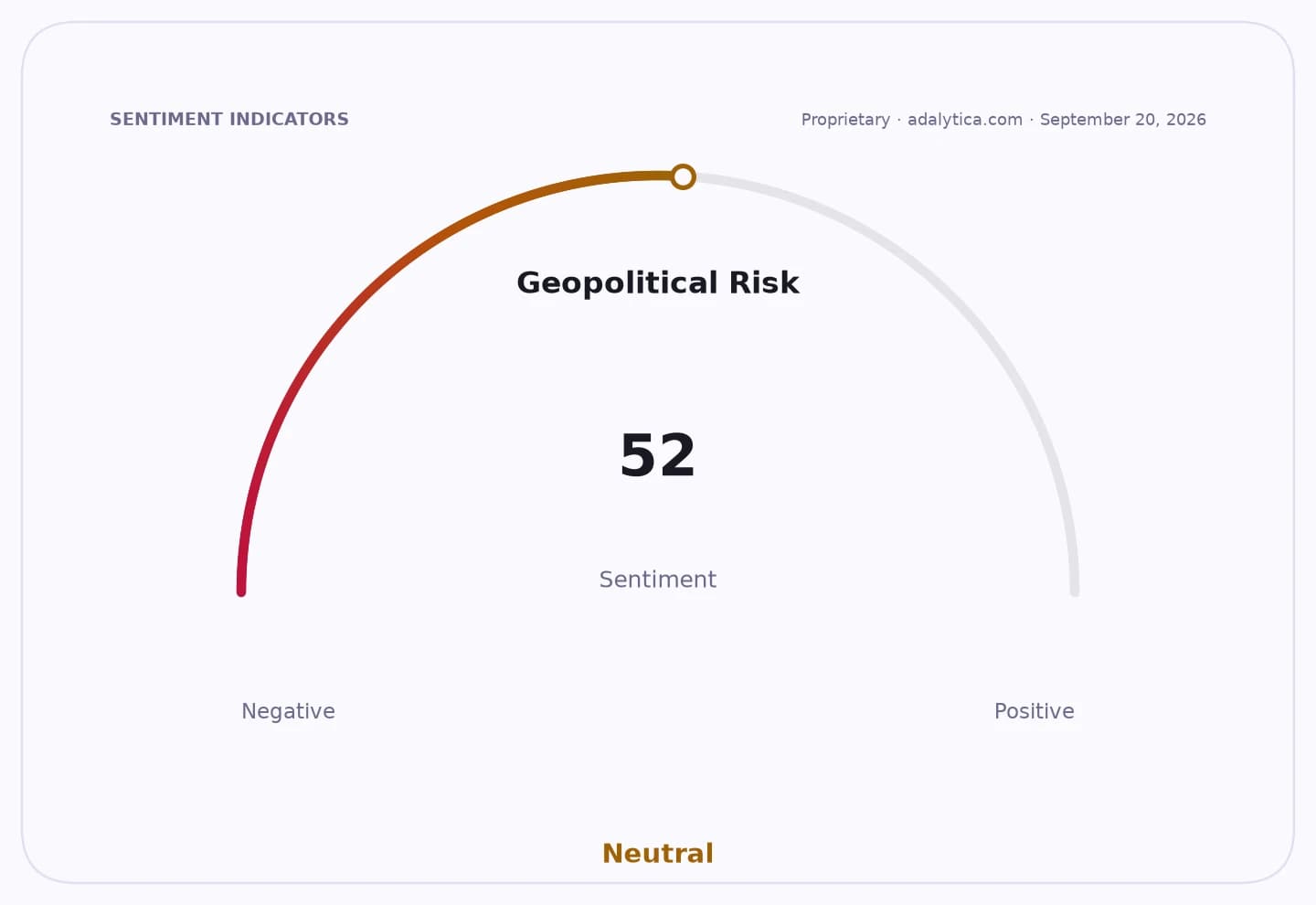
Sentiment IndicatorsⓘProprietary · adalytica.com · September 10, 2026
This is a snapshot — live sentiment, awareness and momentum for 130+ markets update continuously in the dashboard.Open AlphaPulse
That matters because the Saudi market is still trying to consolidate after a run of mixed sessions, and this kind of breadth weakness often tells you more than the headline index move. When losers outnumber gainers by nearly two to one, investors are showing less appetite for risk across sectors, not just rotating out of a few names. For a market that has been leaning on domestic liquidity, government-linked activity and selective corporate deals, broad selling suggests traders remain wary of chasing higher prices without a fresh catalyst.
The session’s biggest decliners included insurance names such as Walaa and Amanat, alongside United Cooperative Insurance and Banan. On the upside, Armah, Bahrain Arab, the Fishs, Yansab and L’azurde were among the best performers. The most active stocks by volume included Americana, Chemical, Petro Rabigh, Saudi Aramco and Al Rajhi Bank, while Al Rajhi, Al Ahli, Aramco, Petro Rabigh and stc led by value.
The move comes after the index had closed marginally higher in the prior session, helped by pharmaceutical stocks and special trades. It also lands against a regional backdrop that has been more supportive: Gulf equities have recently taken cues from firmer economic data in Saudi Arabia and the UAE, while a 1.43 billion riyal sale of a 50% stake in American Express Saudi Arabia highlighted ongoing appetite for financial-sector transactions.
For investors, the message is straightforward: Saudi equities still have liquidity and domestic support, but the market is not yet in a clean breakout. That creates an opportunity for selective positioning rather than broad index exposure. Banks, telecoms and large-cap energy names remain the market’s anchor, while beaten-down cyclicals and deal-linked stocks may offer the better asymmetric setups if risk sentiment stabilizes and capital keeps rotating into the kingdom.
The parallel decline in the parallel Nomu market, which fell 46.87 points to 21,659.80, reinforces that the softness was not isolated to blue chips. If the next leg higher is to be sustained, investors will need either stronger economic confirmation or another round of corporate catalysts to pull buyers back in. Until then, this remains a market to trade selectively, not one to own indiscriminately.
| Entity | Gains | Losses |
|---|---|---|
| Gainers | ▲Stock-specific buying | ▼Market breadth |
| Insurance shares | ▲Select names rebound | ▼Sector sentiment |
| Large-cap blue chips | ▲Liquidity support | ▼Broad momentum |
| Active sellers | ▲Opportunity to reset prices | ▼Near-term upside capture |