ServiceNow and Booking gain on AI efficiency
ServiceNow and Booking Holdings look positioned to keep benefiting from AI-driven efficiency gains even as U.S. rates remain elevated, supporting the case for both stocks as long-term holds despite a still-challenging macro backdrop.
The macro setup is still mixed for risk assets: the federal funds rate is steady at 3.63%, the 10-year Treasury yield is around 4.7%, and U.S. consumer prices are still running well above the Fed’s target, with CPI at 332.8 on the latest reading. That keeps financing conditions restrictive and explains why investors remain selective about expensive growth names.
For investors, the key point is that AI is increasingly being framed not just as a revenue driver but as a margin lever. Across software and internet platforms, companies are using automation to do more with fewer people, faster workflows and lower operating costs — a combination that can protect earnings even when demand is uneven.
ServiceNow has been the more direct beneficiary on the AI software side. The stock closed at $124.94 on Aug. 12, up sharply from $83 on April 10, and its 50-day moving average has climbed back above the 200-day line, a sign of improving momentum. RSI readings are elevated at 82.1, while MACD remains firmly positive, reflecting a strong rebound after a brutal spring selloff.
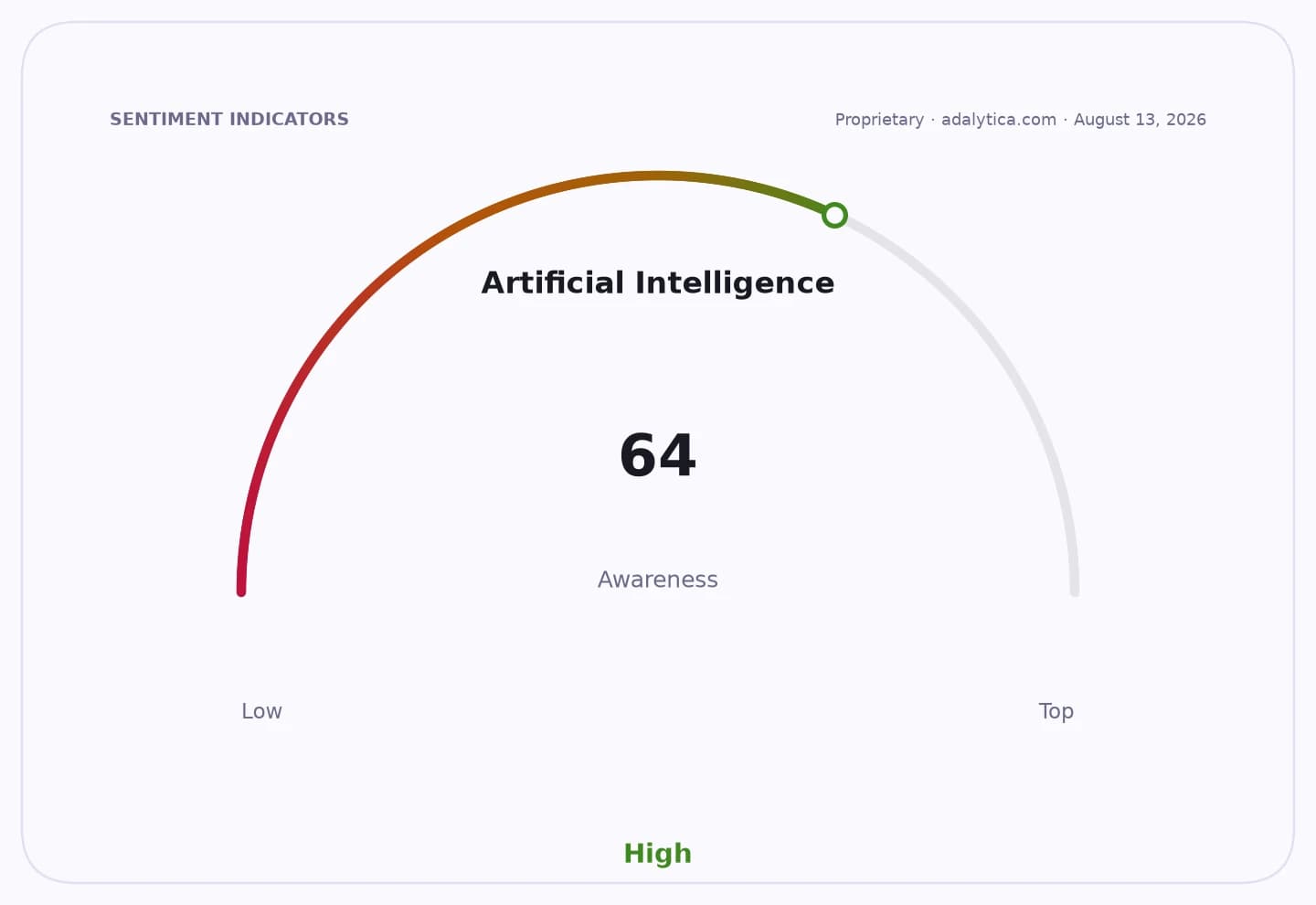
The company’s own filing points to the ServiceNow AI Platform as a core part of its workflow automation strategy, and that fits a broader industry pattern: businesses are leaning on AI agents to raise productivity rather than simply add headcount. Adalytica’s AI sentiment snapshot remains neutral, but awareness around the theme has held up, underscoring continued investor focus.
Booking Holdings is playing a different version of the same story. The travel platform ended Aug. 12 at $212.26, near its highs and well above its 50-day moving average of $181.45, with its 200-day average at $184.98. RSI at 82.4 suggests the shares are overbought in the near term, but the trend points to strong conviction after the company posted second-quarter results showing constant-currency average daily rates up about 2%, helped by stronger pricing in Europe and the U.S.
Booking is also expanding merchant services and its long-term “Connected Trip” strategy, which should give it more ways to monetize bookings and tighten the customer relationship. In a sector where AI can speed search, personalize recommendations and cut support costs, the investor appeal is clear: higher efficiency can support both margins and customer conversion without relying entirely on a softer macro backdrop.
Microsoft fits the same broad narrative. The stock has surged back to $492.43 from a June low near $352.83, and the 10-K again flags cloud and AI as a capital-intensive but strategically important battleground. For investors, that means the trade-off is straightforward: near-term spending pressure remains real, but the payoff from AI at scale could be substantial.
The next test is whether these companies can keep translating AI adoption into durable profit expansion when rates stay restrictive and growth stays uneven. If they can, the market is likely to keep rewarding them as structural winners rather than cyclical trades.
| Entity | Gains | Losses |
|---|---|---|
| NOW | ▲AI workflow automation, margin expansion | ▼Labor-intensive rivals |
| BKNG | ▲Pricing power, merchant-service growth | ▼Online travel laggards |
| MSFT | ▲Cloud AI monetization, ecosystem lock-in | ▼Capital-light software peers |
| Higher-rate environment | ▲Cash-generative, efficient platforms | ▼Long-duration, unprofitable growth stocks |