Social Security 2027 COLA Seen Near 3.5%
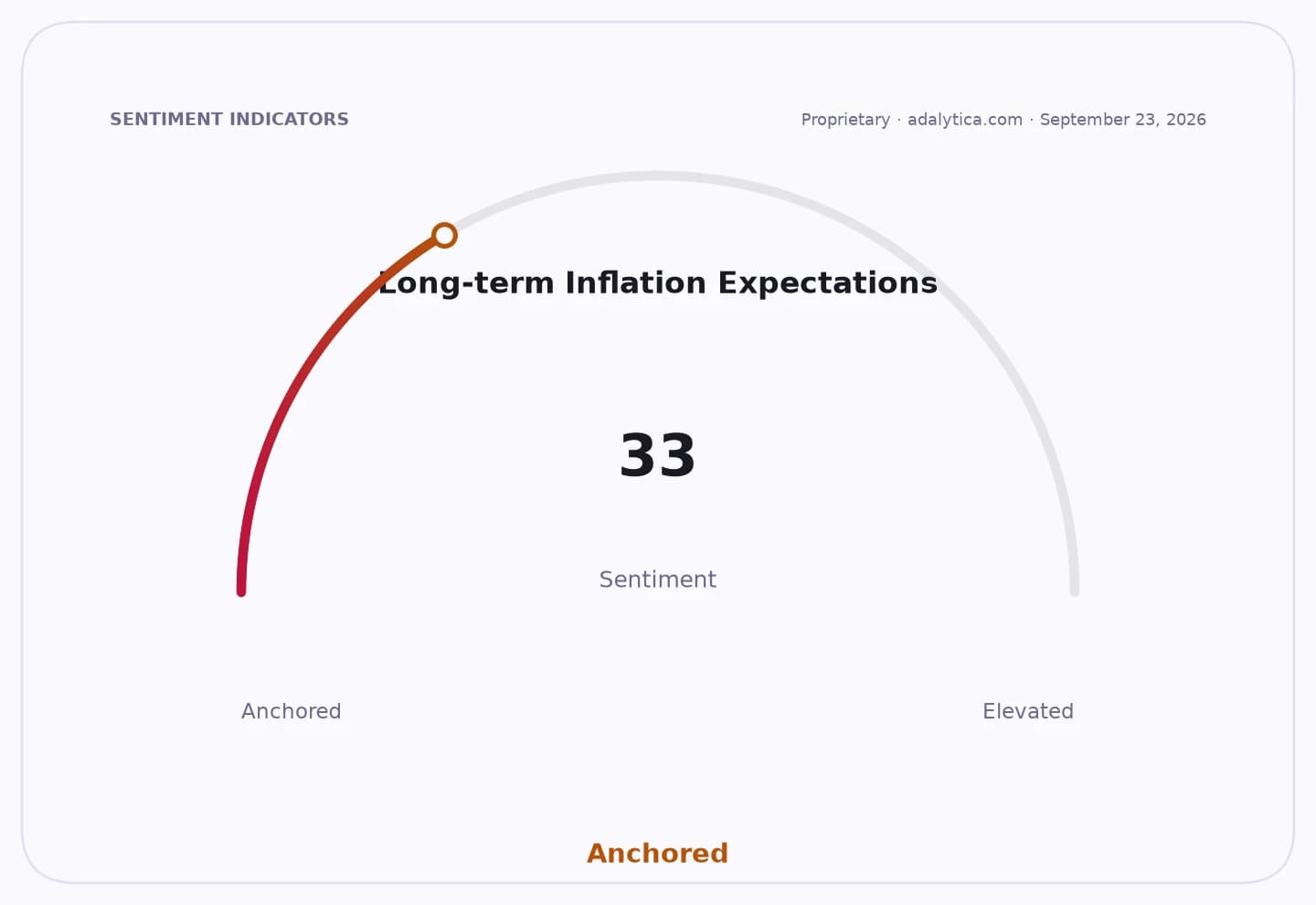
Two of the three inflation readings that determine Social Security’s 2027 cost-of-living adjustment are already pointing to a bigger check next year, but not necessarily a bigger standard of living for retirees.
That’s the key investment story here, because the COLA is less about generosity than it is about whether benefits can keep pace with the cost of being retired. Based on the first two months of third-quarter data, the adjustment is tracking in the mid-3% range, with estimates ranging from 3.4% to 3.6%. If that holds, it would be the largest increase since 2022 and would lift the average retired worker’s monthly benefit by roughly $75 under AARP’s estimate.
For investors, that matters well beyond Social Security recipients themselves. A larger COLA can ripple through consumer spending, healthcare demand, and the broader inflation debate. It also reinforces a simple but important truth: even when nominal benefits rise, retirees often don’t feel much richer if Medicare Part B premiums, housing, groceries and energy keep rising faster than their checks.
The Social Security Administration will lock in the 2027 COLA on Oct. 14 after the Labor Department releases September inflation data. But the latest numbers already give a strong preview. July and August CPI-W readings — the inflation gauge used for the calculation — are in hand, and they imply a meaningful bump from the 2026 adjustment. The Committee for a Responsible Federal Budget sees 3.4%, The Senior Citizens League and independent analyst Mary Johnson are both near 3.5%, and AARP is at 3.6%.
September could still move the figure a bit, but probably not enough to change the broad outcome. Higher oil prices, driven in part by fighting in the Middle East and attacks on Russian energy infrastructure, may feed through to other prices with a lag. Even so, shelter costs have climbed 3% over the past year, which makes a drop below the mid-3% range unlikely. In other words, the direction is already set.
That’s the part retirees and long-term investors should focus on. The COLA is calculated from the Consumer Price Index for Urban Wage Earners and Clerical Workers, not from a measure tailored to older Americans’ spending patterns. That means the formula can miss the inflation seniors actually feel most acutely: healthcare, housing, food and energy. As TSCL and senior policy experts note, those are the very categories where fixed-income households have the least flexibility.
There’s also a market angle worth watching. The latest estimates suggest inflation is still sticky enough to keep pressure on interest rates and Treasury yields, even as bond prices like those of long-duration funds remain sensitive to every new reading. Meanwhile, the broader stock market has held up well, with the S&P 500 continuing to trade near record territory, but retirees living off portfolios are still forced to balance growth assets against income needs that inflation keeps eroding.
The long-term takeaway is straightforward: a bigger COLA is good news, but it is not a full solution. Social Security remains a valuable inflation hedge, yet it is an imperfect one. For investors planning for retirement, the lesson is to build a diversified portfolio that can compound over years, not just months, and to assume that benefits, savings and dividends will all need to work together to preserve purchasing power.
The 2027 COLA should give seniors a little more breathing room. It probably won’t give them real relief. That makes this a story worth watching, but also a reminder to invest with inflation in mind.
| Entity | Gains | Losses |
|---|---|---|
| Social Security recipients | ▲Bigger monthly checks | ▼Still face higher living costs |
| Senior advocates | ▲Stronger case for benefit hikes | ▼Limited relief for retirees |
| Treasury-bond holders | ▲None | ▼Yields may stay pressured by sticky inflation |
| Inflation-sensitive consumers | ▲Some support from COLA | ▼Higher fuel, food and healthcare costs |