The Dow Jones gained after June inflation came in below expectations, reinforcing the view that the US economy is cooling without cracking and giving investors fresh reason to price in a less restrictive Federal Reserve.
Soft CPI Lifts Dow, Eases Fed Pressure

That matters because inflation remains the key constraint on how far the central bank can cut rates, and a softer reading eases pressure on policymakers at a time when growth is still holding up. The narrative echoed by Kevin Wash that the US economy is strong but not overheating fits the market reaction: investors are looking for disinflation that can support earnings and valuations without forcing a recession trade.
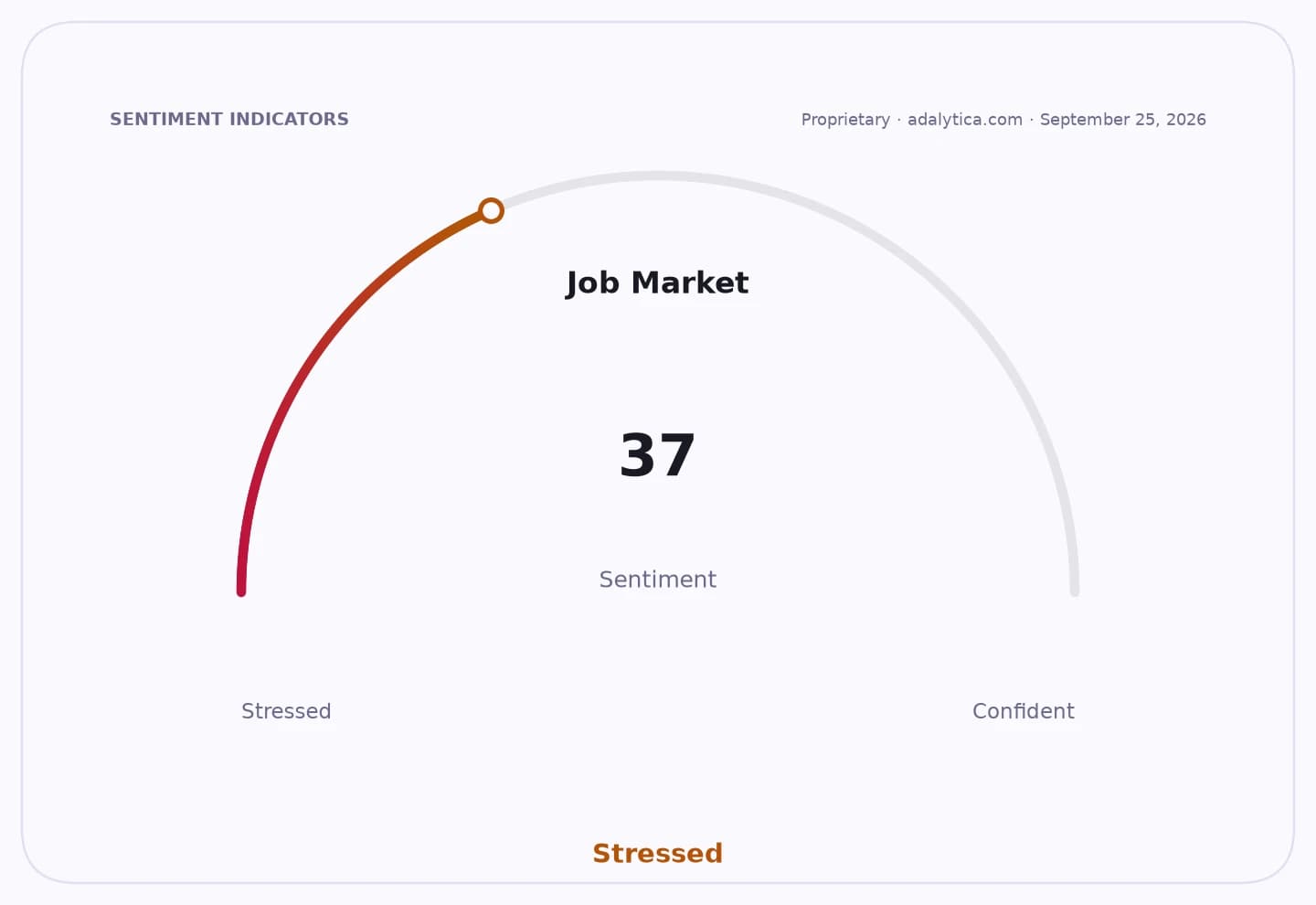
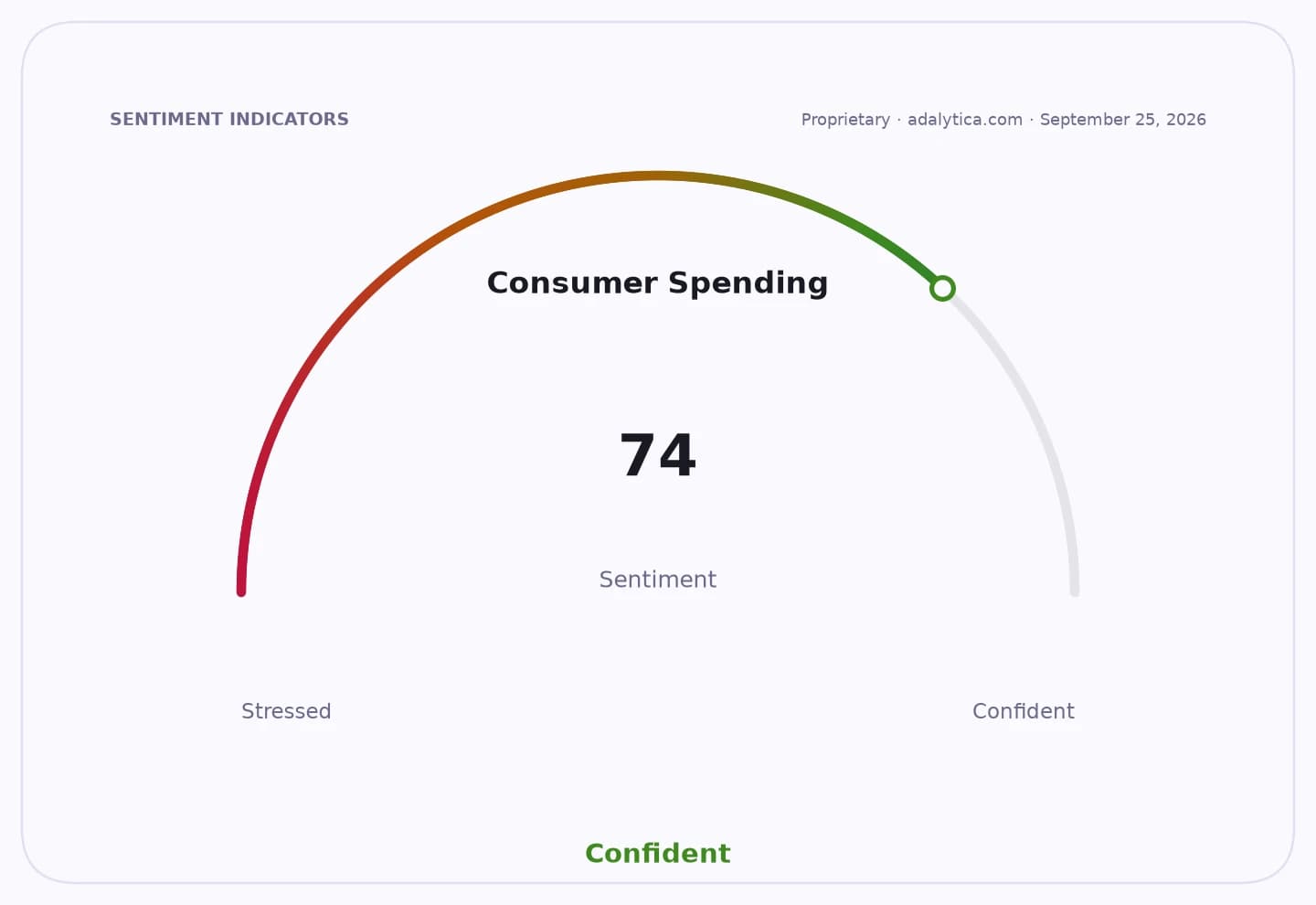
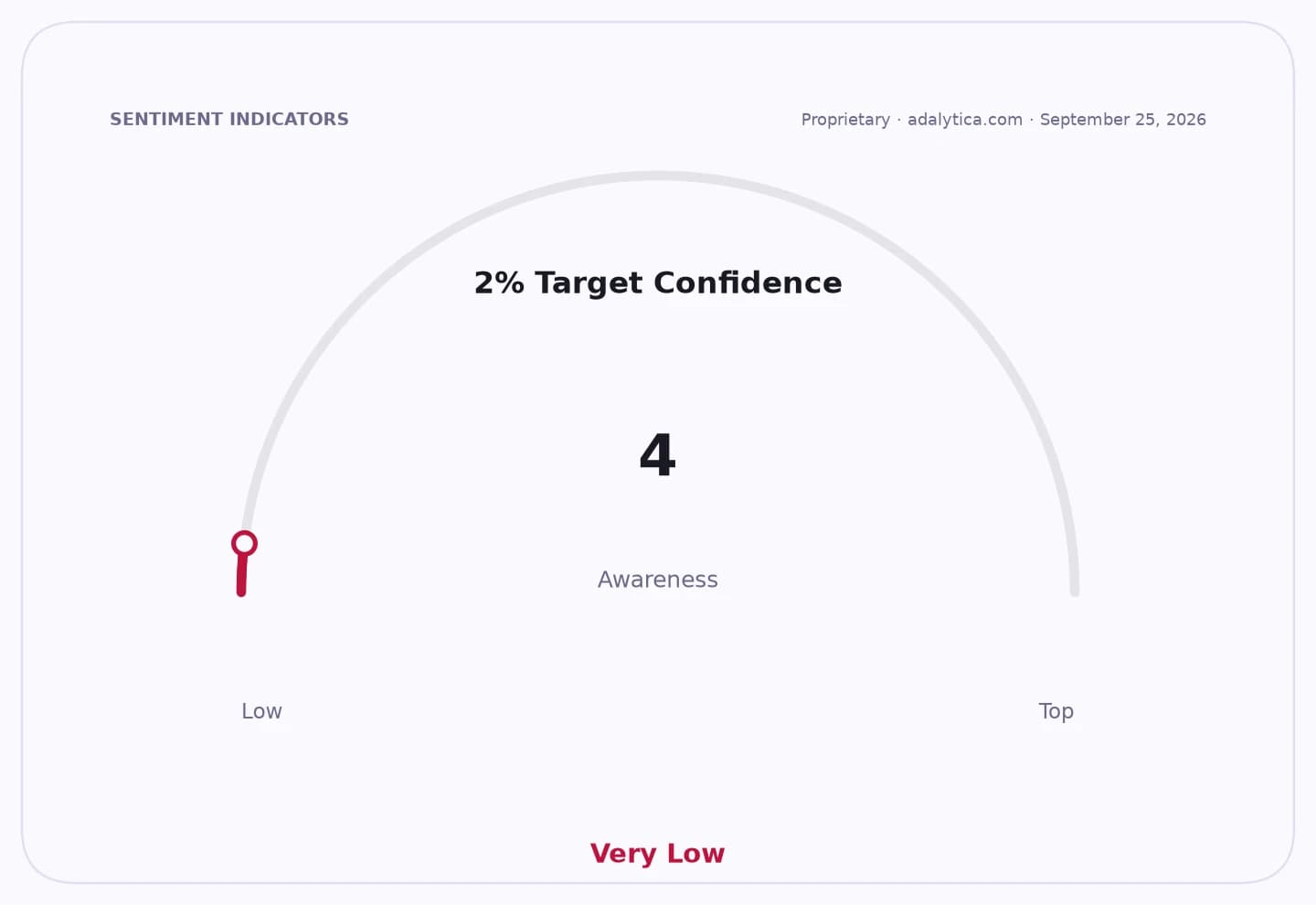
Sentiment IndicatorsⓘProprietary · adalytica.com · July 14, 2026
This is a snapshot — live sentiment, awareness and momentum for 130+ markets update continuously in the dashboard.Open AlphaPulse

The benchmark 10-year Treasury yield, around 4.56%, suggests bond investors are also leaning toward a more benign inflation backdrop, even if yields remain elevated by historical standards. A steadier rate environment is especially important for equities that have struggled when borrowing costs rise or stay higher for longer, including rate-sensitive sectors and companies with stretched valuations.
The Dow’s move came with the index near 52,436, just below its recent highs, while the S&P 500 held around 7,547. The Dow’s relative strength reflects a market still favoring large, established industrials, financials and consumer names that can absorb slower price growth better than more duration-sensitive or richly valued growth stocks. Technical positioning also points to resilience: the Dow remains above its 50-day and 200-day moving averages, while its RSI is elevated but not yet in extreme territory, indicating momentum remains constructive.
CPI vs ^DJIadalytica.com
Explore this data interactively — full history, time series and cross-market comparisons.Open AlphaPulse
Yet the message from the inflation data is not unambiguously bullish. If price pressures ease too quickly, it can also be a warning sign that demand is softening. For investors, that leaves the market balancing two competing interpretations: a soft landing that allows rate cuts, or the early stages of a broader slowdown that eventually hits earnings.
For now, lower-than-expected CPI supports the case for a more favorable mix of growth, inflation and monetary policy. The next test will be whether upcoming inflation reports confirm the trend and whether the Fed treats the moderation as durable enough to justify a gentler stance on rates.
| Entity | Gains | Losses |
|---|---|---|
| Dow Jones bulls | ▲Easier rate-cut bets | ▼Inflation hedge urgency |
| Treasury bond holders | ▲Lower inflation risk | ▼Higher real-rate fear |
| Fed doves | ▲More room to ease | ▼Pressure to stay restrictive |
| Rate-sensitive equities | ▲Valuation support | ▼Higher-for-longer discounting |