Solana’s latest price action shows why scam tokens on the network remain a live risk for traders: liquidity is still deep enough to attract speculators, but not deep enough to protect them when a project’s sell pressure turns one-way.
Solana Price Rises as Scam Token Risk Stays High
SOL-USD was last at $120.80 on Sept. 26, after swinging from $78.19 in early February to as high as $120.80 this week, a move that underscores how quickly capital can rush into and out of the chain’s token market. At the same time, the technical picture suggests the rally is stretched rather than durable: the token is trading just below the upper end of its Bollinger Band range, with a 14-day RSI of 69.7, while momentum remains positive but not explosive. That combination matters because meme and scam tokens typically thrive when retail activity is hot and order books are thin enough for insiders to engineer sharp pumps before dumping supply.
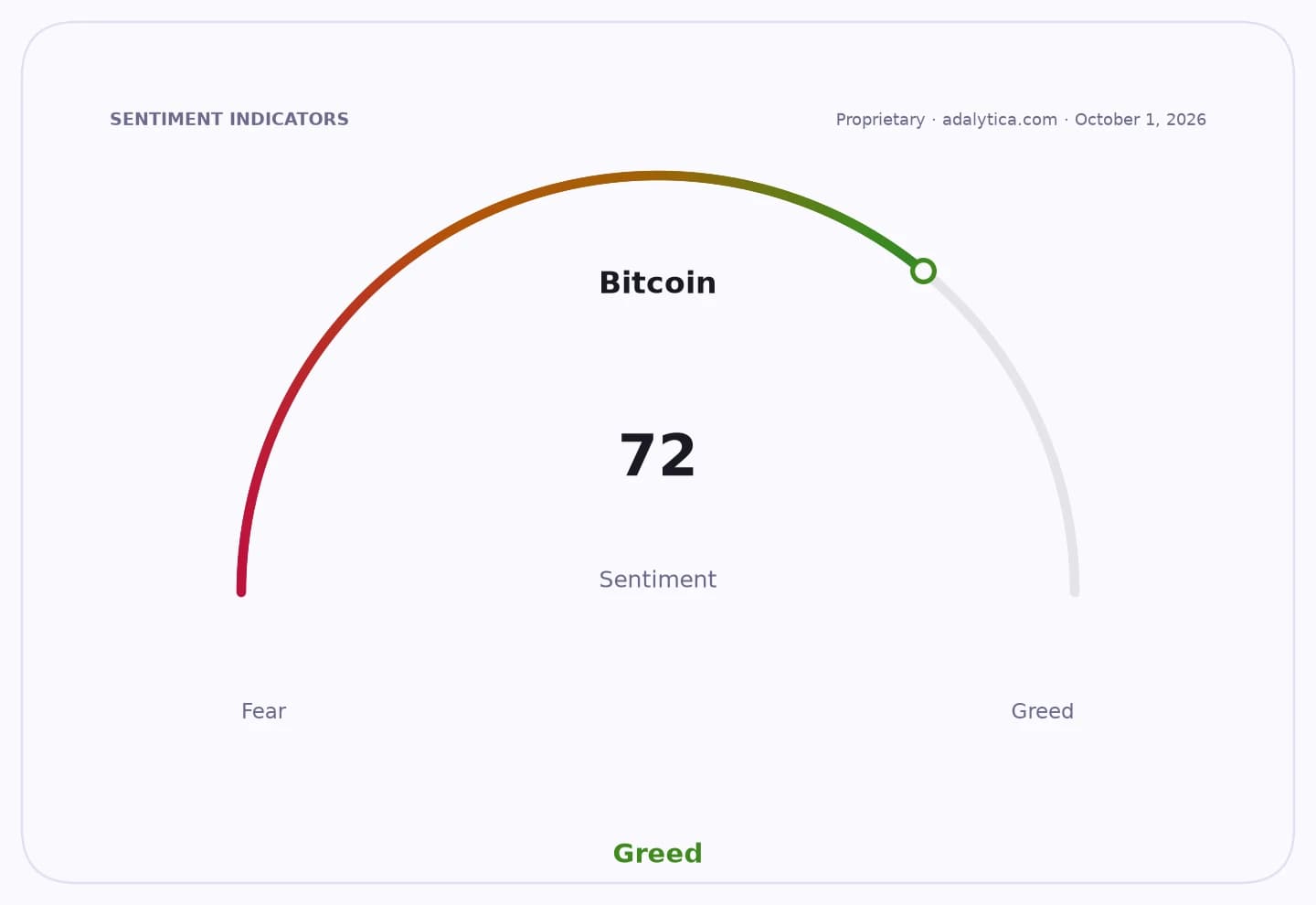
Sentiment IndicatorsⓘProprietary · adalytica.com · September 26, 2026
This is a snapshot — live sentiment, awareness and momentum for 130+ markets update continuously in the dashboard.Open AlphaPulse
The economic issue is not just price volatility in SOL itself. Solana’s market structure has become a magnet for fast-moving capital chasing new launches, and that creates fertile ground for “rug pull” dynamics, where developers or early holders drain liquidity after drawing in buyers. In practice, the same conditions that make Solana attractive to traders — low fees, fast settlement and easy token creation — also make it easier for bad actors to spin up disposable assets, hype them through social channels and exit before most buyers can react.
That tension helps explain why investors keep watching Solana’s native token as a proxy for risk appetite across the ecosystem. SOL has outperformed Bitcoin over the latest stretch, with BTC-USD at $83,986.81 on Sept. 26 after its own rebound from a February low near $62,702.10, but the broader crypto backdrop still looks selective rather than euphoric. Bitcoin’s fear-and-greed gauge from Adalytica.com stands at 92, in “Extreme Greed,” while Ethereum’s equivalent has eased to 67, or neutral. For Solana, that means attention is high, liquidity is active and the probability of speculative blowups rises alongside participation.
From an investor’s perspective, the key question is not whether scam tokens exist — they do — but whether the chain’s growth is being accompanied by better screening, stronger surveillance and faster withdrawal of liquidity from obvious traps. The recent market levels suggest the answer is still mixed. A healthy SOL price can support legitimate development and trading volume, yet it also improves the camouflage for fraudulent launches by making the ecosystem look vibrant.
The narrative here is straightforward: Solana’s speed and retail appeal remain its advantage, but those same features keep making it the preferred venue for opportunistic scams. As long as liquidity rotates quickly and speculative demand stays elevated, traders will keep needing to distinguish genuine launches from setups designed to rug them.
| Entity | Gains | Losses |
|---|---|---|
| Legit Solana builders | ▲More attention and capital | ▼Reputational spillover |
| Scam token promoters | ▲Easy access to retail flow | ▼Higher scrutiny |
| SOL holders | ▲Stronger ecosystem activity | ▼Fraud-driven volatility |
| Retail traders | ▲More opportunities | ▼Higher rug-pull risk |