Sony, TSMC plan $6.4 billion Japan sensor venture
Sony and TSMC are set to invest about $6.4 billion in a Japanese image sensor venture, a move that could tighten control over a crucial part of the semiconductor supply chain as demand for advanced sensors and AI-linked hardware stays strong.
The project matters because image sensors sit at the center of smartphones, automotive systems and increasingly industrial and AI devices, making them a strategic component rather than a niche electronics part. A larger, Japan-based manufacturing footprint also gives Sony and TSMC a way to reduce reliance on outside suppliers and add capacity in a market where supply security has become a boardroom priority.
Sony plans to contribute roughly 465 billion yen through cash and asset transfers, while TSMC will put in about 282 billion yen, according to filings. The companies said the joint venture is aimed at accelerating commercialization of customer-driven image sensor products while strengthening manufacturing capacity.
For Sony, the deal builds on its position as a dominant image sensor supplier and gives it another route to protect a business that feeds both consumer electronics and high-value industrial customers. For TSMC, which is already the world’s most important contract chipmaker, the investment extends its influence deeper into Japan’s semiconductor revival and broadens its strategic ties with a key customer ecosystem.
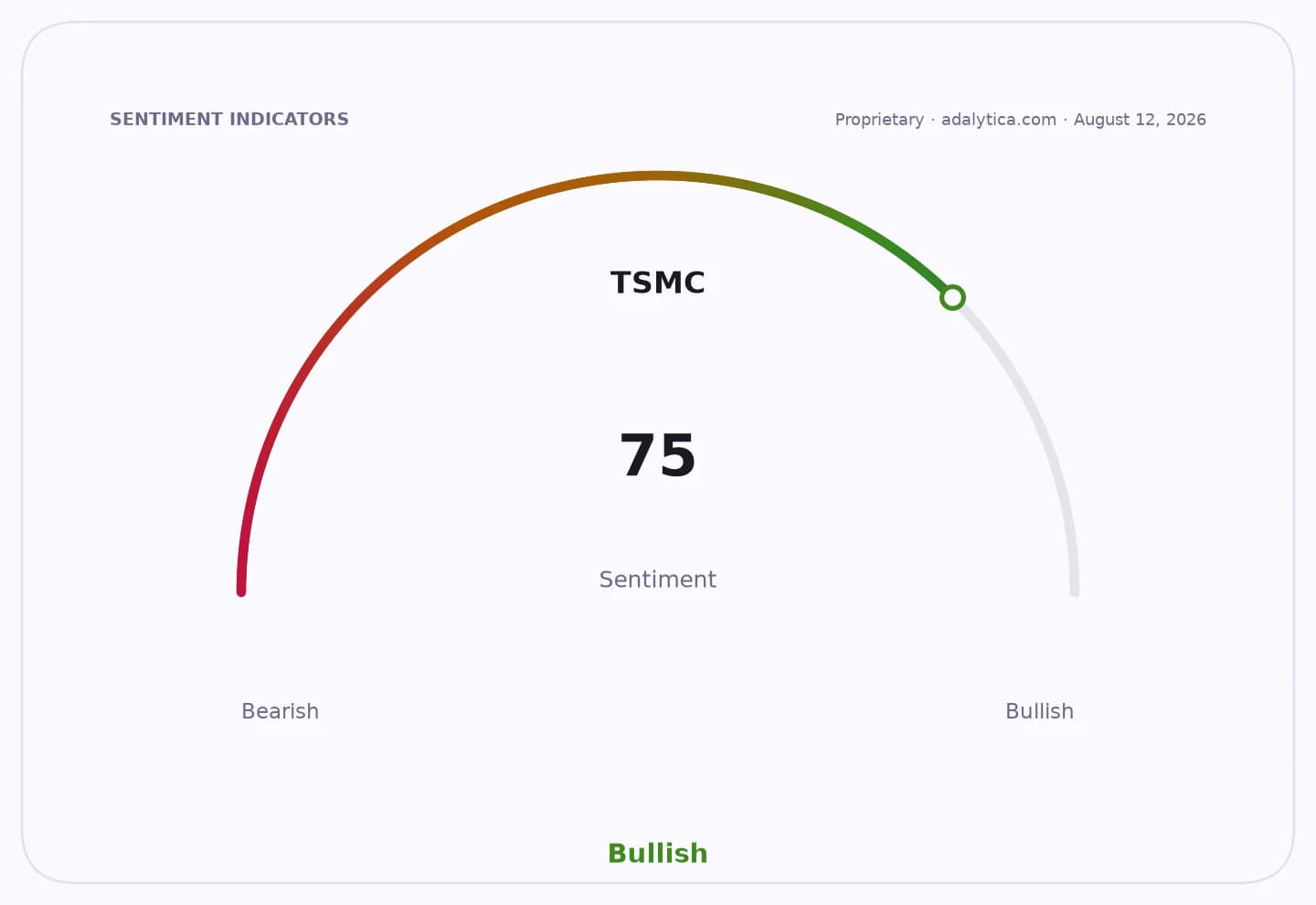
The announcement lands as Sony shares trade above their 50-day moving average and TSMC stock remains above both its 50-day and 200-day moving averages, with technical momentum still firm. Adalytica’s TSMC earnings sentiment gauge shows “Greed” with awareness at “Extreme Greed,” underscoring investor focus on the company’s growth pipeline, while NVIDIA’s sentiment reading sits in “Fear,” highlighting how competitive pressure and supply-chain shifts remain in view across the sector.
Japan has been pushing hard to rebuild domestic chipmaking capacity, and a high-profile Sony-TSMC venture fits that industrial policy push while also supporting local jobs, capital spending and downstream equipment demand. The move could also matter to global buyers looking for more diversified supply after years of bottlenecks and geopolitical strain around advanced semiconductors.
Investors will now watch for regulatory approvals, final project timing and whether the plant meaningfully adds output for next-generation sensors. The bigger question is whether the collaboration becomes a template for more Japan-based semiconductor partnerships across the supply chain.
| Entity | Gains | Losses |
|---|---|---|
| Sony | ▲More sensor capacity | ▼Less reliance on external supply |
| TSMC | ▲Deeper Japan foothold | ▼Capital tied up in JV |
| Japan semiconductor ecosystem | ▲Investment and jobs | ▼Less if approvals slow |
| Rival sensor makers | ▲— | ▼Stronger Sony-TSMC competition |