South Carolina textile makers adopt automation and AI
Technology is starting to change where the textile industry makes its money in South Carolina, and the shift matters because productivity gains in cut-and-sew and finishing can flow quickly into margins, pricing power and investment plans across apparel supply chains.
The economic significance is straightforward: if automation and AI-enabled workflow tools can raise output without a commensurate jump in labor or capital spending, they can offset some of the wage pressure, inventory volatility and tariff-related cost swings that have dogged the sector. For a state such as South Carolina, where textile and apparel activity is tied to manufacturing jobs, supplier networks and export competitiveness, the adoption of production-stage technology could determine whether more work stays local or migrates to lower-cost regions.
That is why investors are watching the broader apparel complex, including Gildan and PVH. Gildan’s shares have been volatile but remain above their 200-day moving average, while PVH has recovered from a sharp drawdown earlier in the year and is also trading above that long-term trend line. Both names have seen technical support improve as the market looks for evidence that efficiency initiatives can protect earnings even in a slow-growth consumer backdrop. The stocks’ recent swings also show how sensitive investors remain to any sign that productivity gains are translating into durable margin expansion rather than temporary cost relief.
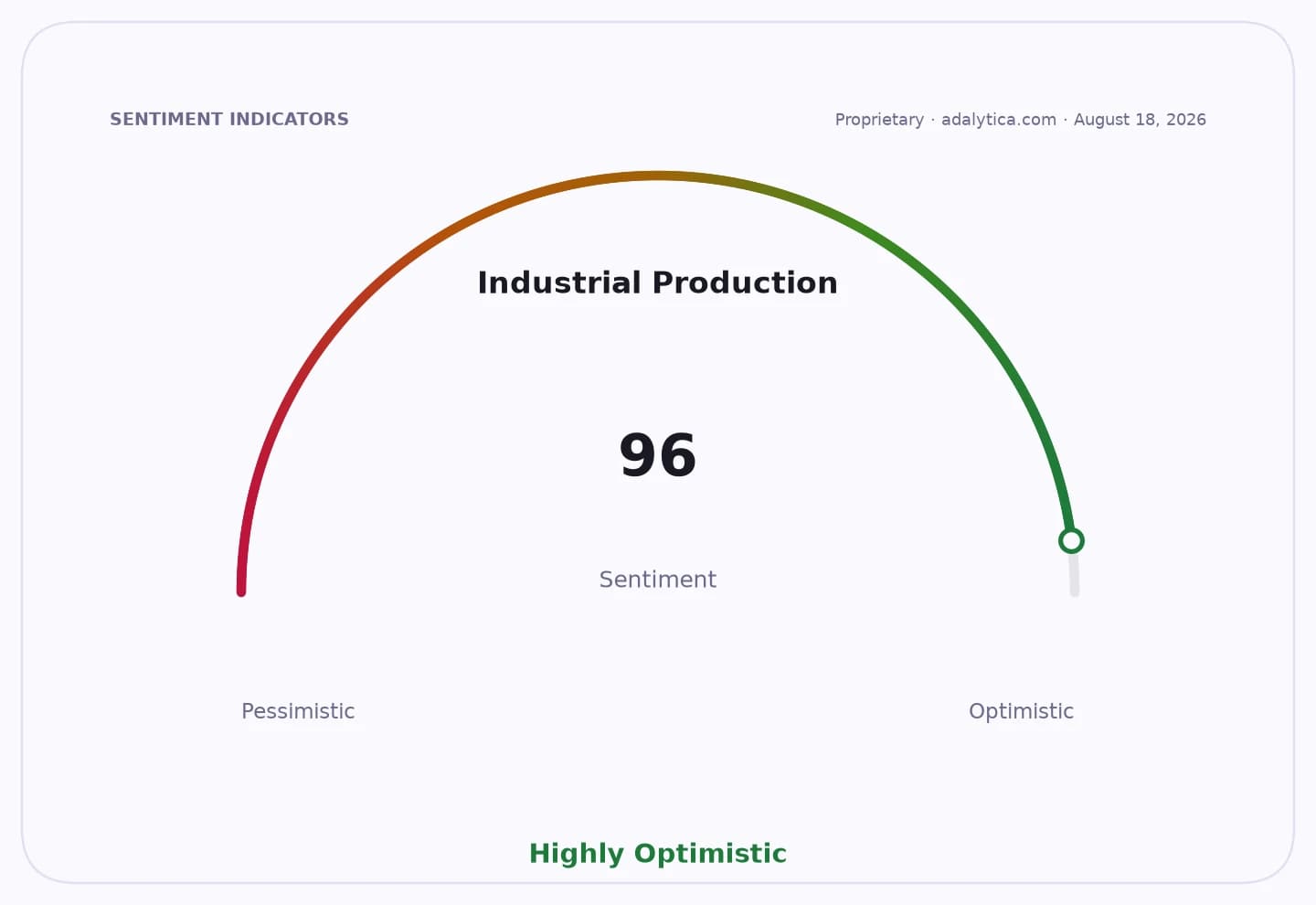
The macro backdrop is not weak enough to force the issue, but it is not strong enough to let manufacturers ignore it. U.S. industrial production is projected to rise 0.3% in July to 102.94, extending a gradual climb from 99.22 at the start of 2024. The unemployment rate is expected to edge down to 4.09% in August from 4.2% in July, suggesting labor markets remain relatively tight. That combination usually pushes employers toward automation as a hedge against higher labor costs and staffing risk, particularly in labor-intensive industries such as textiles.
Job openings data reinforce the point. U.S. vacancies fell to 7.359 million in June from 7.585 million in April, a reminder that hiring conditions have cooled even as firms still need to maintain throughput. In textiles, where production-stage bottlenecks can be costly and margins are often thin, even modest efficiency improvements can have an outsized effect. AI agents and automation systems that streamline existing infrastructure, rather than requiring a full factory rebuild, are especially relevant because they lower the upfront hurdle for adoption.
For branded apparel companies, the bull case is that smarter production raises gross margin and improves supply-chain resilience. That would help companies cope with promotions, retailer caution and shifting consumer demand. Newell Brands has already pointed to productivity, procurement savings and digital and AI-enabled tools as part of its operating strategy, while Kontoor Brands has cited margin gains from its own efficiency program. The bear case is that the savings may be absorbed by higher reinvestment, weaker demand or competitive price pressure, leaving little benefit for shareholders.
The investor takeaway is that textile technology in South Carolina is less about a single factory upgrade than about the next phase of industrial competition: one where labor, software and equipment are increasingly bundled together. If adoption spreads, the winners are likely to be operators that can standardize production and defend margins. The losers are the firms that fail to modernize fast enough, or that face a labor-cost structure that can no longer compete with more automated peers.
| Entity | Gains | Losses |
|---|---|---|
| South Carolina textile makers | ▲Higher productivity | ▼Legacy labor models |
| Gildan, PVH and peers | ▲Margin support | ▼Cost inflation |
| Workers and local suppliers | ▲More stable output | ▼Routine tasks |
| Automation vendors | ▲New demand | ▼Manual-process providers |