South China Sea Tensions Support Defense Spending
On the 10th anniversary of the Hague ruling on the South China Sea, the U.S. and Japan have sharpened a message that matters far beyond diplomacy: China’s sovereignty claims are groundless, and the region is drifting deeper into a long-cycle military standoff that should keep defense spending rising.
That matters because the South China Sea is not just a sovereignty dispute. It is a choke point for global trade, energy flows and military access across the Indo-Pacific. When Washington and Tokyo publicly reject Beijing’s claim on an anniversary that Beijing would rather erase, they are signaling that the contest over shipping lanes, bases and deterrence is not easing into compromise. It is hardening into policy. For investors, that usually means one thing: more procurement, more replenishment, more surveillance and more spending on ships, missiles, sensors and command systems.
The market should read this as a structural tailwind for defense primes and naval suppliers rather than a one-day geopolitical headline. The U.S. is already pushing to reinforce allied capabilities in Asia, while Japan is steadily expanding its security role and defense budget. That creates a multi-year capex cycle across the weapons chain, from shipbuilders to missile makers to electronic warfare and undersea systems. In an era when the market often chases AI and forgets hard power, defense remains one of the cleanest ways to invest in geopolitical fragmentation.
The stock action reflects that tension. Lockheed Martin has remained resilient, with shares recently trading above their 50-day moving average and holding a technically constructive pattern even after volatility. Huntington Ingalls, a key naval shipbuilder, has swung sharply lower from earlier highs, but that weakness is exactly what long-term investors should watch for if global naval procurement accelerates. Great Lakes Dredge & Dock has also stayed firm, a reminder that maritime security, harbor work and coastal infrastructure can benefit when strategic competition spills into physical assets and logistics routes.

This is the market underestimating second-order winners. A tougher U.S.-Japan line on the South China Sea doesn’t just support the obvious names in missiles and warships. It also strengthens the case for maritime domain awareness, satellite surveillance, secure communications, maintenance, and repair capacity across the Indo-Pacific. Those are the toll roads of modern deterrence. They can compound for years as governments move from speeches to spending.
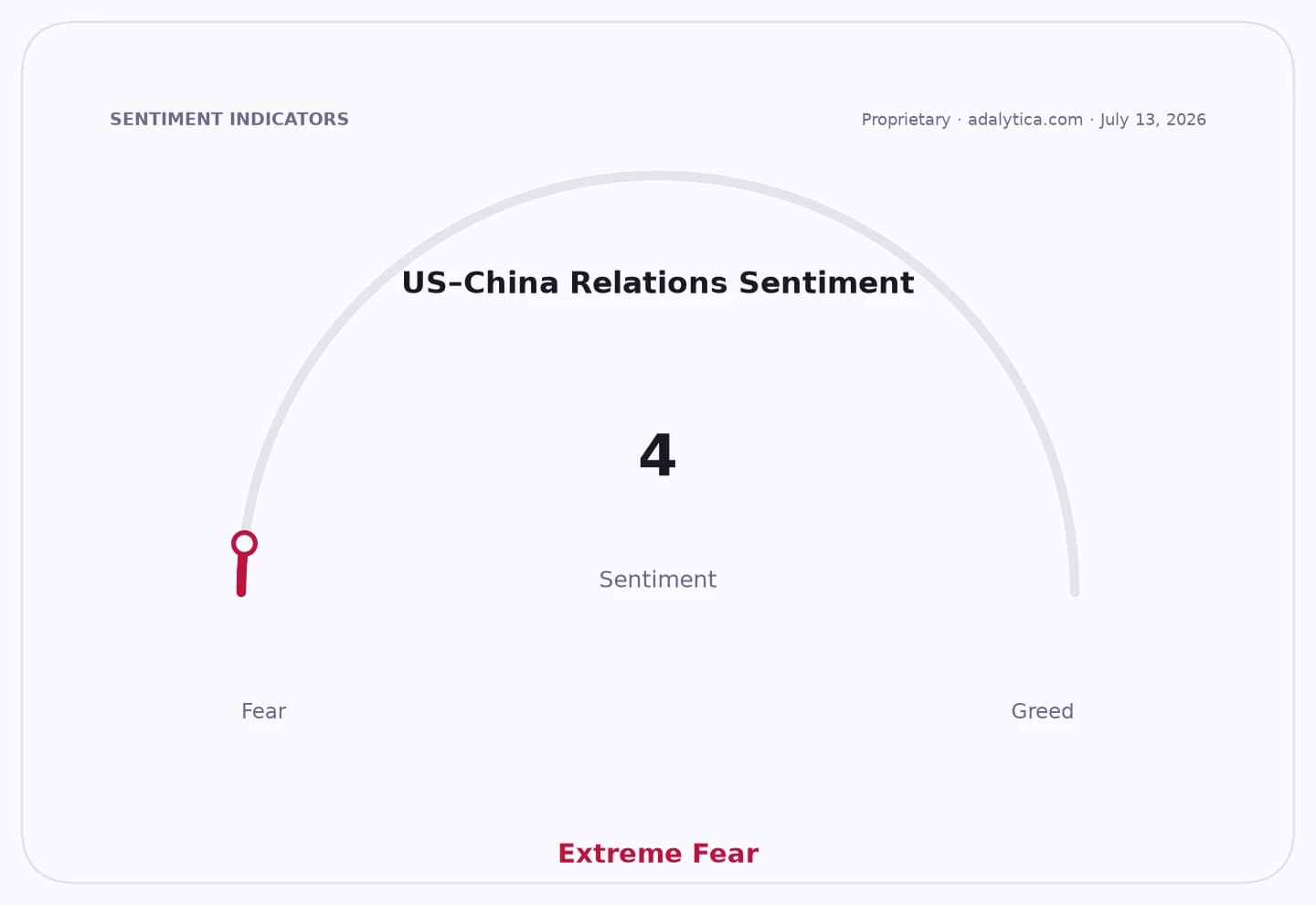
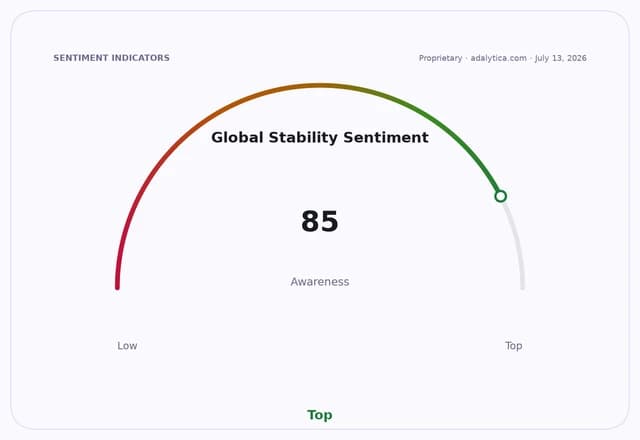
Adalytica’s US–China Relations Sentiment gauge shows extreme fear even as awareness remains elevated, a classic setup for investors to miss the durability of the theme because the headline feels familiar. But familiar does not mean priced out. The real shift is that strategic competition is no longer episodic. It is becoming embedded in budgets, alliances and procurement plans.
The conclusion is simple: the South China Sea dispute is not a fading legal quarrel, but an enduring catalyst for defense outlays and maritime-security investment. I believe investors should stay positioned in high-quality defense names and the naval supply chain before the next round of budget announcements and alliance commitments makes the trend more expensive to own.
| Entity | Gains | Losses |
|---|---|---|
| U.S. and Japan defense contractors | ▲More procurement demand | ▼— |
| China | ▲Strategic leverage at sea | ▼Diplomatic standing |
| Naval shipbuilders and missile makers | ▲Longer budget cycle | ▼— |
| Global trade and importers | ▲— | ▼Higher geopolitical risk |