South China Sea Tensions Keep Asia Risk Premium Elevated
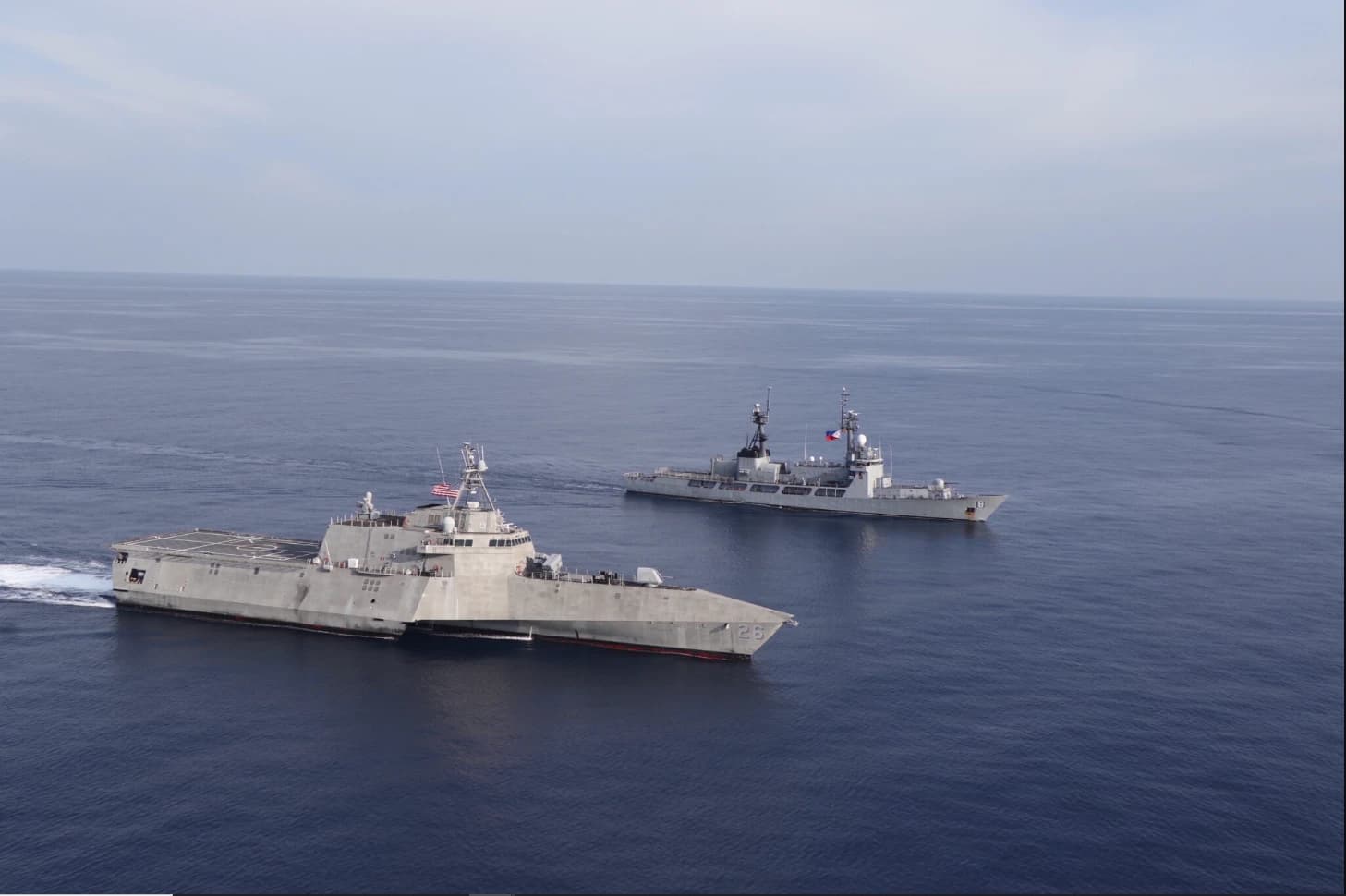
The U.S., the European Union and 13 other countries have used the 10th anniversary of a landmark arbitration ruling to again reject Beijing’s expansive South China Sea claims, a diplomatic move that keeps pressure on China and reinforces the risk of prolonged military and trade friction in one of the world’s busiest shipping lanes.
The joint statement, backed by countries including Japan and Romania, says China’s maritime assertions have “no legal basis” and are inconsistent with the 2016 ruling that invalidated the sweeping claims. That matters economically because the South China Sea carries a large share of global seaborne trade and remains central to energy flows, commodity shipments and regional supply chains that feed factories from Northeast Asia to Europe.
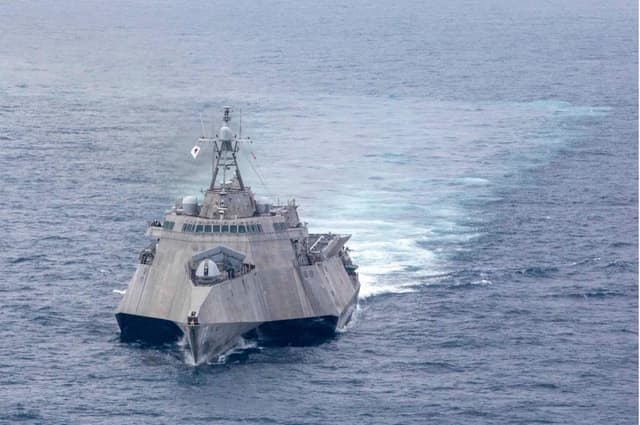
For investors, the bigger issue is not the statement itself but the signal that the geopolitical standoff is not easing. Higher military tension in the region can lift risk premiums across Asian shipping, insurance, defense and energy markets, while also complicating cross-border investment decisions for companies exposed to China, the Philippines, Taiwan and broader ASEAN supply chains.
The statement also underscores how little the 2016 ruling has changed behavior on the water. China has continued to build out artificial islands and push enforcement around disputed areas, while claimant states and their allies keep returning to international law as their main diplomatic tool. Beijing dismissed the latest declaration as interference, suggesting the dispute will stay a recurring source of headline risk.
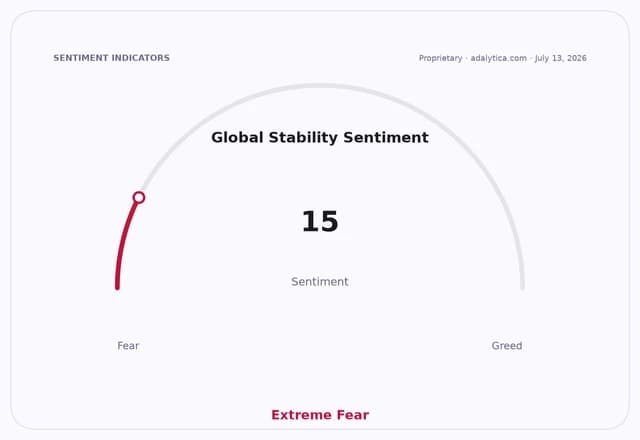
Adalytica’s Global Stability Sentiment gauge points to extreme fear, while its US–China Relations Sentiment index is also in extreme fear territory, reflecting how quickly geopolitical stress can cascade into markets. That kind of backdrop tends to favor defensive positioning and raises attention on sectors with direct exposure to regional trade routes, port traffic and government procurement.
With no sign of a breakthrough, the South China Sea remains a live geopolitical risk for shipping, semiconductors, energy and regional equities, and investors will be watching for any escalation involving patrols, joint exercises or new sanctions language from Washington, Brussels or Tokyo.
| Entity | Gains | Losses |
|---|---|---|
| US, EU and allies | ▲Legal backing for stance | ▼No immediate de-escalation |
| China | ▲None | ▼More diplomatic pressure |
| Shipping and insurers | ▲Higher pricing power | ▼Greater route risk |
| Regional investors | ▲Clarity on risk | ▼Higher volatility and premiums |