South China Sea Tensions Raise Asia Trade Risks
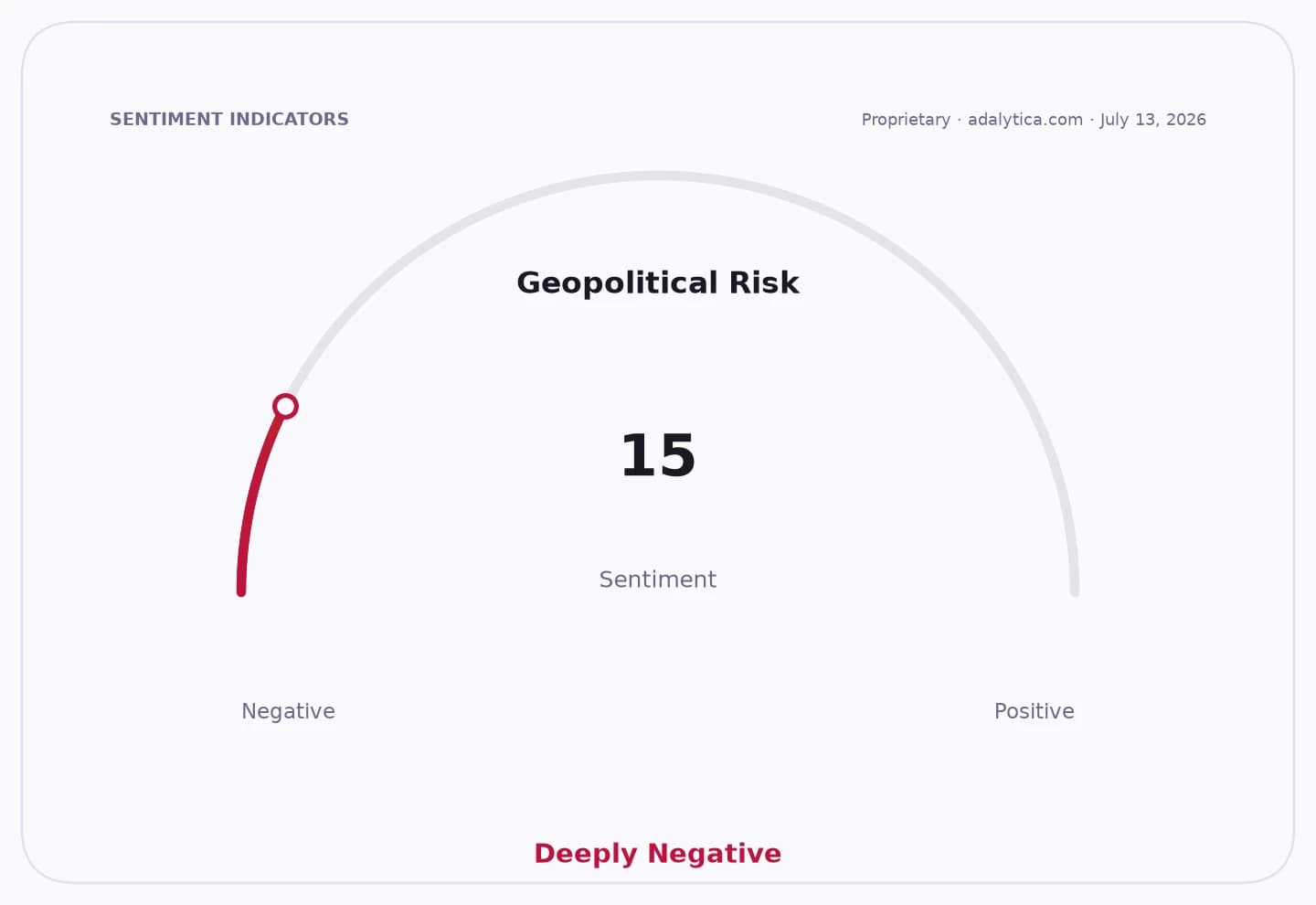
China’s rebuff of a 14-country statement backing a landmark South China Sea ruling keeps alive a dispute that has become a broader risk factor for Asian trade, supply chains and investor sentiment across the region.
Beijing’s foreign ministry said it lodged representations against Japan’s “words and deeds” after Tokyo joined the declaration, which marked the 10th anniversary of the 2016 arbitration award that invalidated China’s expansive maritime claims. The statement, backed by the Philippines, the U.S. and other nations, urged China to abide by international law and called its claims baseless.
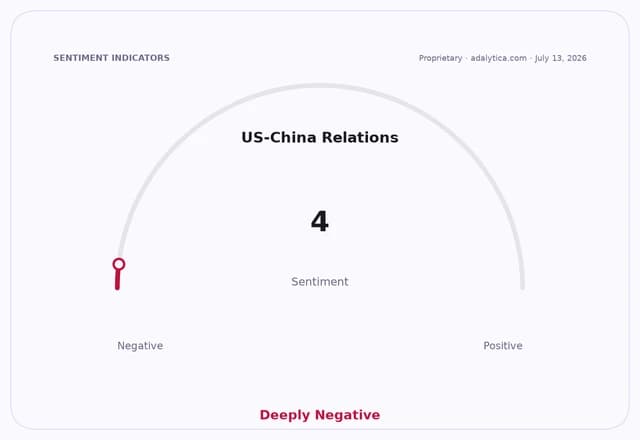
The economic significance is less about the diplomatic wording than the practical risk: the South China Sea remains one of the world’s most important shipping lanes, and any escalation raises the odds of higher insurance costs, tighter logistics and more disruption to trade flows across Asia. China’s rejection also underscores how far the dispute has moved beyond bilateral friction into a wider contest involving the U.S., Japan and Southeast Asian states.
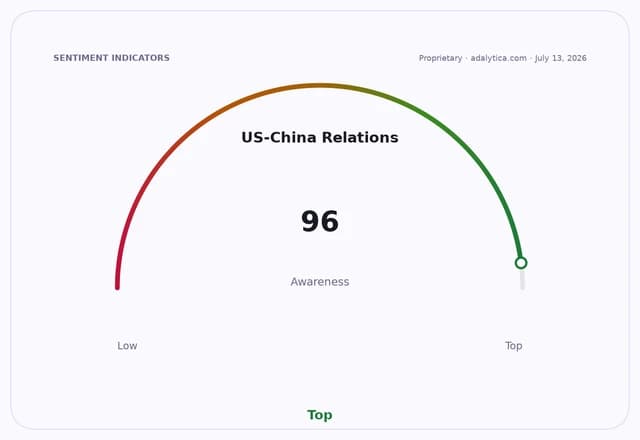
For investors, the immediate read-through is to regional risk assets, defense contractors, shipping-linked names and companies with heavy exposure to China, Taiwan and the wider Indo-Pacific. The tension adds another layer of uncertainty to already fragile US-China relations, where sentiment on Adalytica’s CN-USRX gauge sits at “Extreme Fear,” while its Global Stability Sentiment also points to acute stress.
That matters for multinational companies because geopolitical shocks can quickly turn into operating risks. Samsung Electronics and other exporters in the region are exposed to any deterioration in trade corridors and cross-strait stability, while Japan-focused equities, as tracked by the EWJ ETF, tend to react to shifts in regional security perceptions even when the direct economic impact is indirect.
The dispute also lands against a backdrop of persistent legal and strategic disagreement over the 2016 tribunal ruling. China has repeatedly refused to recognize the award, while Manila and its allies argue the decision is central to preserving maritime order and keeping the South China Sea open to commerce.
For markets, the key catalyst is whether the latest diplomatic clash stays verbal or spills into coast guard activity, joint exercises or new trade-related measures. Any sign of escalation would likely keep investors tilted toward safety, while a de-escalation could ease pressure on Asia-facing equities and transport-sensitive sectors.
| Entity | Gains | Losses |
|---|---|---|
| China | ▲Claims harden at home | ▼Diplomatic isolation |
| Japan | ▲Security ties reinforced | ▼Tensions with Beijing |
| Philippines/U.S. allies | ▲Legal stance amplified | ▼Higher confrontation risk |
| Asian trade and shipping | ▲Little immediate gain | ▼Higher disruption risk |