S&P 500 Highs vs. 10-Year Treasury Yield Near 4.8%

Equity prices and dividend income are moving in opposite directions again, with the S&P 500 pressing to record highs even as the 10-year Treasury yield hovers near 4.8% and the index’s cash payout remains far below the return available in government bonds.
That gap matters because it is reshaping how investors value stocks. When the risk-free rate sits near the highest levels in more than a decade, the market can no longer justify rich equity multiples on dividends alone. It also raises the hurdle for companies that rely on yield to support valuations, from utilities and real estate investment trusts to steady-payout funds such as Realty Income and dividend ETFs.

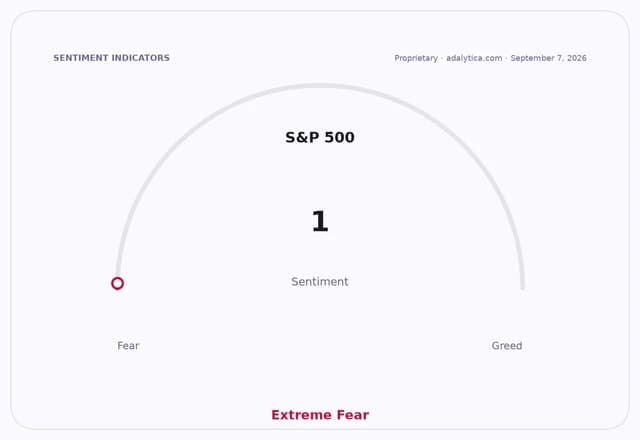
The 10-year Treasury yield was around 4.77% on Sept. 3 and was forecast to edge to 4.802% in the next session, while the two-year note traded near 4.34%. Those levels are high enough to compete directly with equity income strategies. By contrast, the S&P 500’s recent gains have been driven more by earnings growth, margin resilience and enthusiasm for large-cap technology than by payout yield. SPY closed at 770.19 on Sept. 4, near its highs, even as Adalytica’s S&P 500 trade signals showed extreme fear, underscoring how fragile sentiment can be beneath the surface of a rising market.
The disconnect is particularly important for asset pricing because dividend yield is still one of the simplest anchor points in valuation models. As Treasury yields rise, the relative appeal of future equity cash flows falls unless profits accelerate enough to offset the higher discount rate. That is why the market has rewarded balance-sheet strength and free-cash-flow generation over pure income stories. It is also why bond proxies have struggled to regain leadership: TLT, the long-dated Treasury ETF, has only recently stabilized around 82.21, but its technicals remain mixed, with the fund still below its 200-day moving average.
For investors, the consequence is a more selective market. High-yield stocks can still attract capital, but only if the payout looks durable and the balance sheet can withstand a slower economy. Realty Income’s 5.3% yield and 674th consecutive monthly dividend remain appealing to income buyers, yet that premium is less compelling when short-dated Treasuries and money-market alternatives offer comparable returns without equity risk. The same logic supports demand for dividend-growth funds, which can combine income with the prospect of earnings compounding rather than relying on yield alone.
The bull case for equities is that earnings continue to outrun rates and that the market’s largest companies can keep generating enough cash to justify elevated valuations. The bear case is that the current rally is being priced as if the discount rate does not matter, leaving income sectors and longer-duration assets vulnerable if yields stay near current levels or rise further.
For now, the message from the market is not that dividend stocks are broken, but that yield is no longer scarce enough to anchor broad equity pricing. Until Treasury yields retreat or corporate profits accelerate materially, investors are likely to keep demanding more than a payout check to own stocks.
| Entity | Gains | Losses |
|---|---|---|
| Treasury bond buyers | ▲Higher income from yields | ▼Lower price upside |
| Dividend stock investors | ▲Steady cash payouts | ▼Valuation compression risk |
| Growth stocks | ▲Relative appeal from earnings growth | ▼Higher discount-rate pressure |
| Bond proxies / REITs | ▲Income-focused demand | ▼Competition from Treasuries |