Spain Ceuta Crisis Raises Fiscal and Risk Concerns
Spain’s sudden political and financial response to the Ceuta crisis is a reminder that migration pressure can quickly become a sovereign-risk issue, not just a domestic law-and-order problem.
Madrid has framed the influx into the North African enclave as an “attack” on Spain’s territorial integrity, a sharper line than ordinary border rhetoric and one that raises the stakes for relations with Morocco, the management of the EU’s external frontier and the stability premium investors attach to southern Europe.

The economic significance is bigger than the headlines suggest. Spain is already committing an additional 300 million euros to Ceuta, underlining that the crisis is forcing real fiscal outlays at a time when governments are still juggling high debt, higher rates and stretched social spending. If the situation hardens into a more persistent border confrontation, the cost will not stop at emergency aid: it could widen security spending, complicate tourism and trade flows across the Strait of Gibraltar and inject fresh uncertainty into Spanish assets that are normally treated as a low-volatility European exposure.
That is why investors should pay attention. Spain sits inside the euro zone’s core policy architecture, but Ceuta is a pressure point on one of Europe’s most sensitive geopolitical seams. A prolonged dispute with Morocco would matter for the country risk premium, for banks with domestic lending exposure, for defense and border-security contractors, and for the broader European debate over migration enforcement. In markets, that often translates into a bid for safety over cyclicality and for assets tied to security infrastructure rather than open-border growth assumptions.
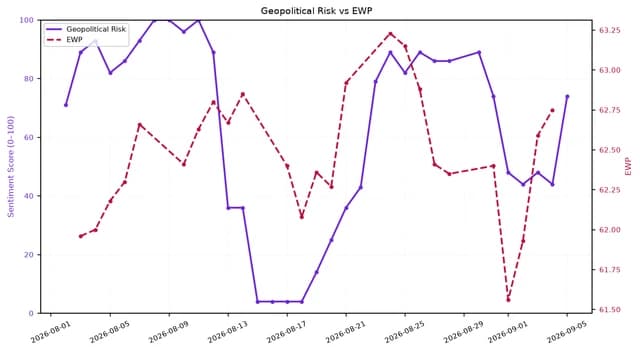
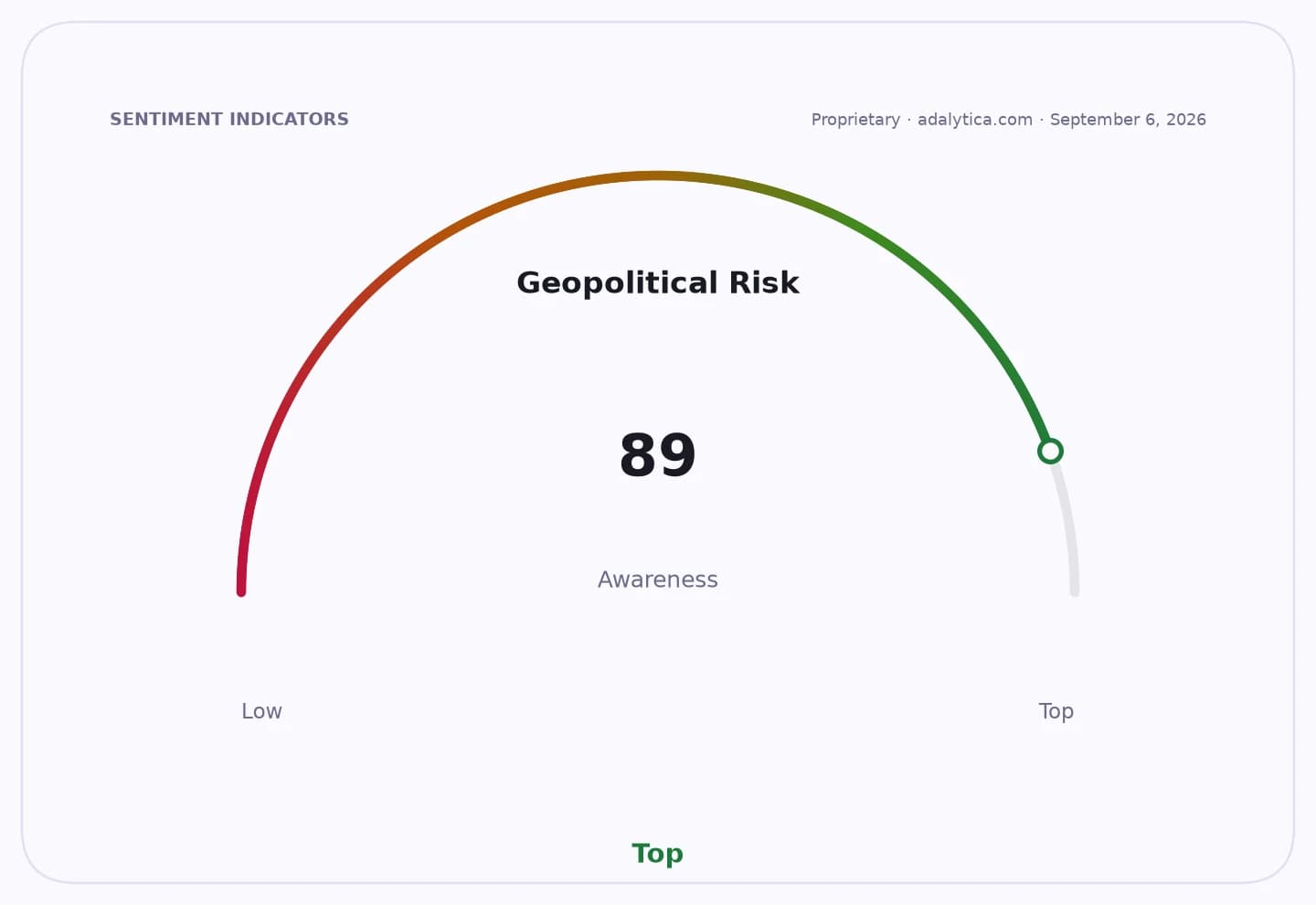
The move also comes as global geopolitical nerves are already elevated. Adalytica’s Global Stability Sentiment gauge is in “Greed” territory at 74, with awareness at an extreme 89, suggesting markets are alert to fast-moving political shocks even if they are not yet fully pricing them. That matters because episodes like Ceuta tend to hit when complacency is highest: investors ignore them until they spill into fiscal policy, bilateral trade and the front line of EU politics.
The clearest takeaway is that Ceuta is not a local flare-up. It is a stress test for Spain’s border regime, its relationship with Morocco and the market’s assumption that southern Europe can absorb geopolitical shocks without repricing. The smart trade is to look beyond the headlines toward the beneficiaries of more border spending, more security investment and a more defensive policy posture across Europe.
| Entity | Gains | Losses |
|---|---|---|
| Spain’s border-security budget | ▲Higher funding | ▼Fiscal flexibility |
| Defense and surveillance contractors | ▲More contracts | ▼None immediate |
| Morocco-Spain diplomatic ties | ▲Limited leverage | ▼Trust and stability |
| Spanish risk assets | ▲Defensive attention | ▼Repricing pressure |