Spain Housing Prices 12% Above 2008 Peak
Spain’s housing market is now 12% above its pre-2008 bubble peak, underscoring how a chronic supply shortage has turned the country’s property crunch into a wider economic and political risk.
The gap matters because it shows the current surge is not just a cyclical rebound. Home prices are rising into an environment already defined by scarce rental stock, strained affordability and shifting demand away from major cities, making housing a more persistent inflationary pressure point for households and policymakers.

That backdrop is feeding debate over whether Madrid’s current intervention-heavy approach will ease the crunch or make it worse. Property specialist Mark Stucklin argues the government’s policies are likely to deepen supply constraints rather than fix them, while young Spaniards continue moving from expensive urban markets to villages and smaller towns in search of cheaper options.
The strain is most visible in high-demand urban areas such as Terrassa, L’Hospitalet and Sabadell, where tight supply and strong demand keep rents elevated. For investors, that keeps Spain’s housing sector in focus as a structural story rather than a short-term trade: affordability pressure can support landlord pricing power in the near term, but it also raises the odds of heavier regulation, slower transaction volumes and broader economic drag.
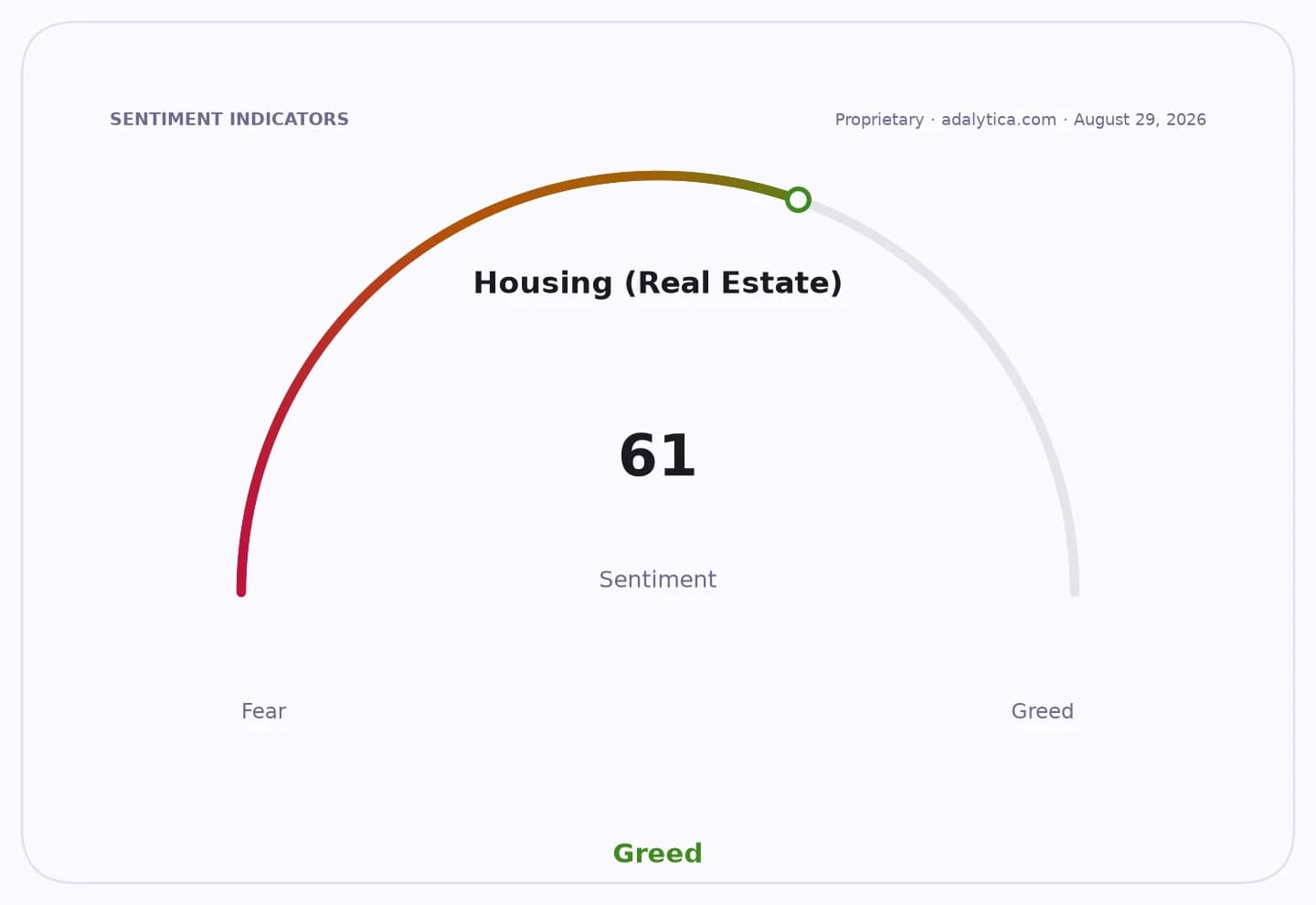
That tension is echoed in housing-related market gauges. Adalytica’s Housing Fear & Greed Index shows sentiment at 61, still neutral, after a sharp 54-point rise over the past 30 days, while its Housing and Rent Inflation gauge remains in neutral territory at 32, with awareness in fear. Technical indicators on U.S.-listed housing names also show mixed conditions: apartment REIT American Homes 4 Rent has pulled back to $33.44, below its 50-day moving average of $33.69, while industrial giant Linde has slipped to $485.35 after losing momentum from earlier highs.
The next catalyst is policy. If Spain’s government leans harder into rent controls or landlord restrictions, investors will watch closely for the effect on supply, construction and rental yields. If it pivots toward measures that unlock new building, the market could finally test whether this cycle is another bubble — or a structurally higher price regime.
| Entity | Gains | Losses |
|---|---|---|
| Existing landlords | ▲Higher pricing power | ▼Policy risk |
| Renters and first-time buyers | ▲None | ▼Affordability squeeze |
| Spanish government | ▲Political leverage | ▼Credibility if supply worsens |
| Housing developers | ▲Potential demand for new supply | ▼Regulation and higher costs |