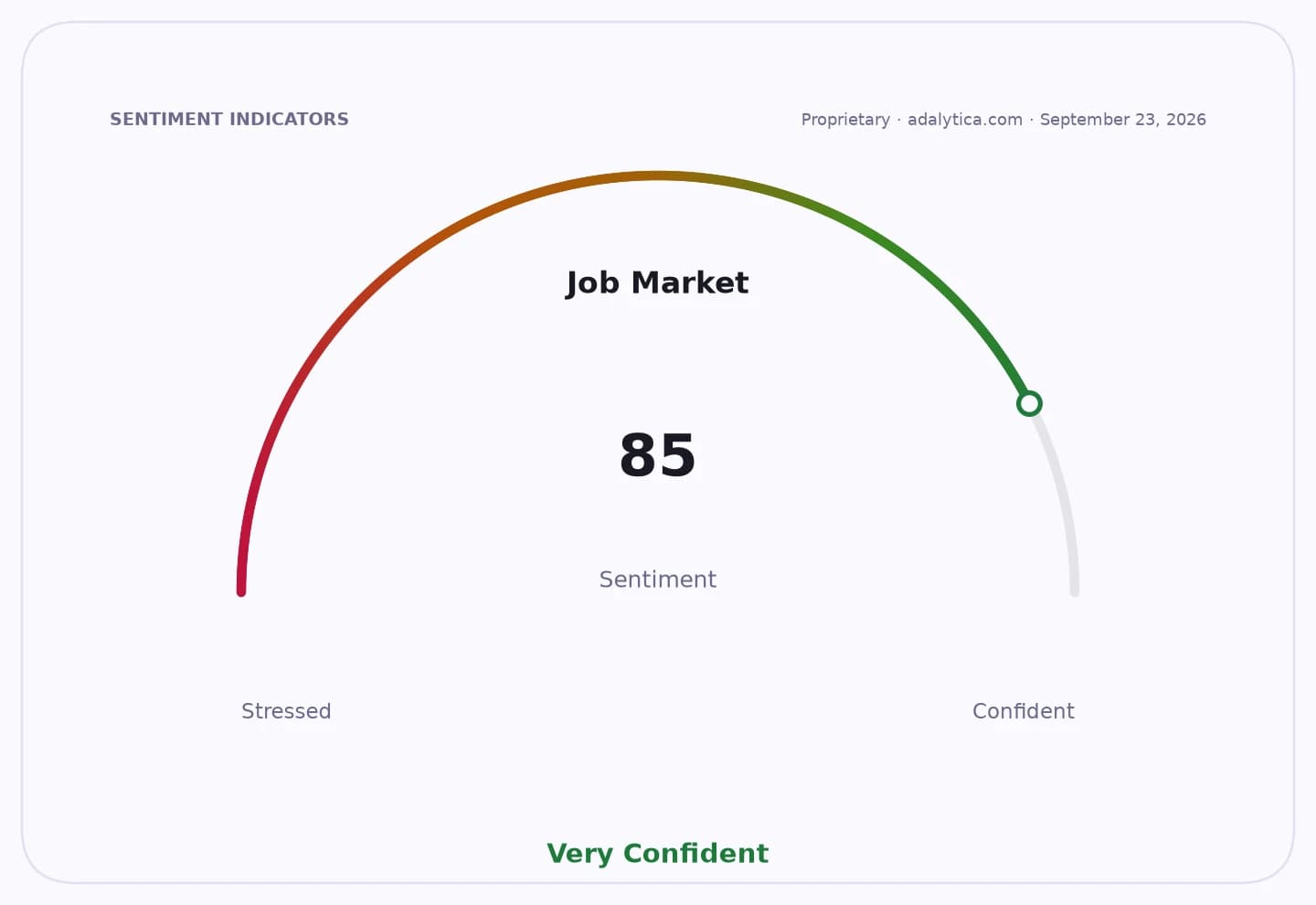
Spain’s labor market took its usual summer hit in August, with 162,840 social security affiliates disappearing from the rolls, but the bigger story is that foreign workers are increasingly propping up employment in one of Europe’s most resilient economies.
Spain labor market stays strong as foreign workers rise

That matters because Spain is still adding jobs on a year-over-year basis even after the seasonal reset, a sign the labor market is not merely recovering from the pandemic but structurally expanding. The loss in August was the smallest for that month since COVID-19, while the economy still added about 680,000 jobs over the past year. For investors, that combination argues against the idea that Spain is sliding into a labor downturn; instead, it points to an economy that can absorb seasonal volatility while maintaining momentum in consumption, tax receipts and domestic demand.
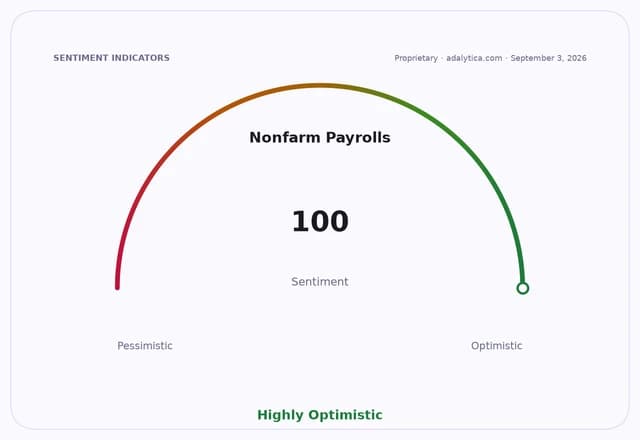
Sentiment IndicatorsⓘProprietary · adalytica.com · September 3, 2026
This is a snapshot — live sentiment, awareness and momentum for 130+ markets update continuously in the dashboard.Open AlphaPulse
The unemployment rate tells the same story. Spain’s jobless rate fell to 9.87% in the second quarter, the lowest since early 2008 and well below expectations, even after summer hiring softened. Total unemployment at 2.356 million was the lowest for an August since 2007. Those figures matter for markets because they support the case for steady wage income, firmer retail spending and better credit performance in a country that remains one of the stronger growth stories inside the euro zone.
The most important second-order effect is the role of foreign labor. More than 3.5 million foreign workers are now registered with social security, about 15.9% of the workforce, and nearly 338,000 were regularized by the end of August under an ongoing legalization process. That is cushioning the usual summer drop in employment, especially after the tourism season peaks and temporary contracts unwind. In other words, Spain is not just creating jobs; it is widening the base of who fills them, which helps offset demographic weakness and labor shortages in key sectors.
Education absorbed the biggest seasonal blow, with more than 78,000 teachers and education staff dropping off social security records as the school year ended. Tourism also faded, as it always does in August. But the underlying message is that Spain’s labor model is becoming less fragile than it was a decade ago, when summer swings often exposed a much weaker employment base.
For investors, that is a reminder to lean into Spain’s domestic-growth winners rather than fade every soft monthly payroll print. Consumer-facing names, banks with Spanish loan books, utilities and the broader Iberian equity complex can continue to benefit if job creation stays intact and foreign labor keeps easing labor constraints. The risk is not a collapse in employment; it is assuming the August decline is a trend when it still looks mostly like seasonality.
The market underestimates how much Spain’s labor expansion is being reinforced by immigration and regularization. If that continues, it should support growth, limit wage inflation pressures from labor scarcity and keep Spain among the euro zone’s more investable economies into year-end.
| Entity | Gains | Losses |
|---|---|---|
| Foreign workers | ▲More jobs and formalization | ▼None materially |
| Spain’s economy | ▲Stronger labor base, demand support | ▼Seasonal employment volatility |
| Employers in tourism/education | ▲Easier staffing via migrant labor | ▼Short-term contract churn |
| Seasonal workers | ▲Continued demand over time | ▼August contract resets |