Spain Rent Costs More Than Mortgage Payments
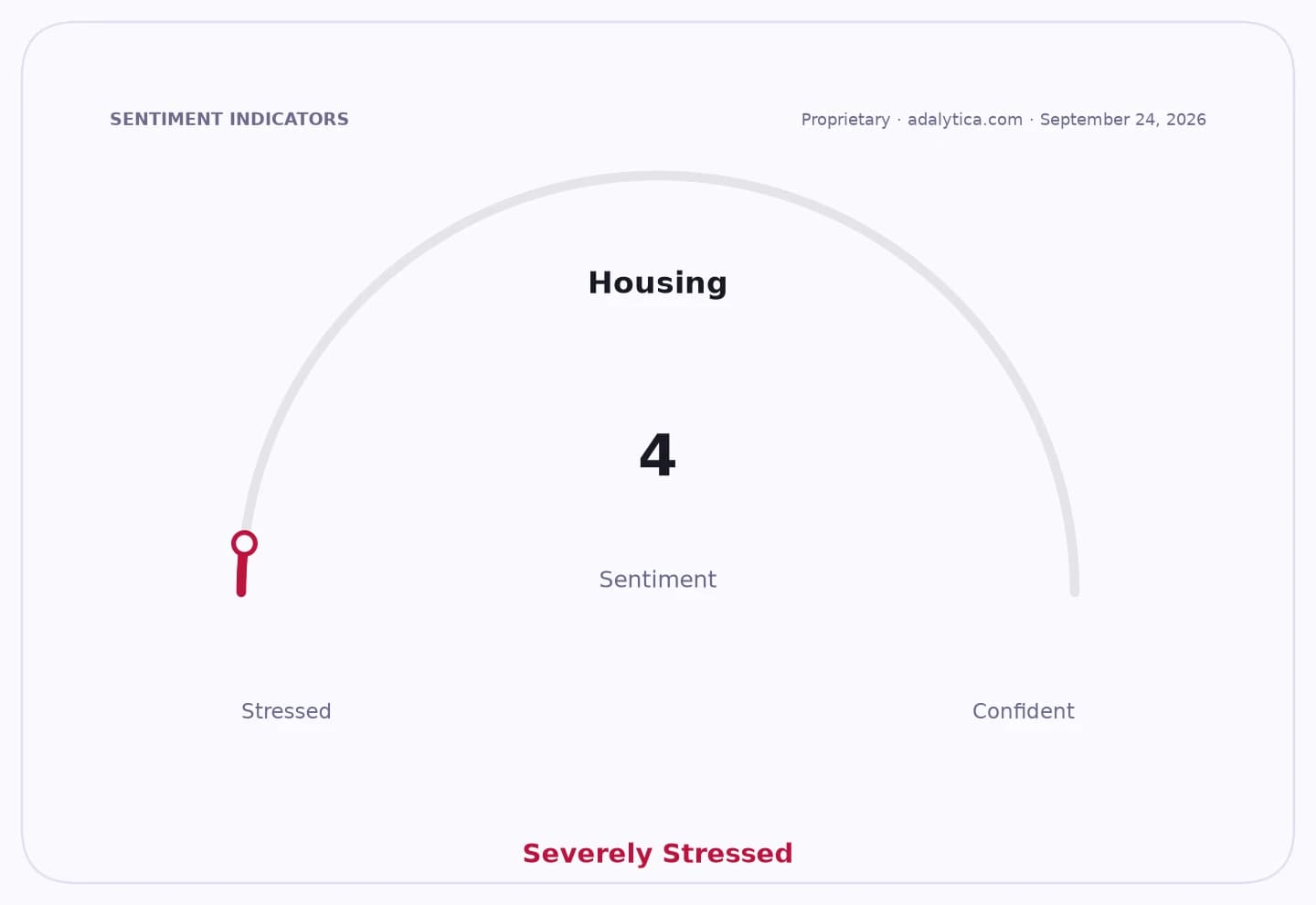
Renting is now materially more expensive than buying in Spain, turning the housing market into a savings trap for younger households and deepening a generational wealth divide that matters for consumption, mobility and household formation.
The average monthly rent for a standard flat is 1,204 euros, compared with an average mortgage payment of 825 euros, according to data cited by Idealista and Spain’s registrars. That 379-euro gap means tenants pay more each month for the same roof over their heads while building no equity — and often without the savings buffer needed to enter the ownership market in the first place.
Over a 25-year mortgage term, the difference can add up to about 113,700 euros in extra outlay for a tenant, before factoring in any rise in home values or the upfront deposit required to buy. For young adults, that arithmetic is becoming central to the broader housing debate: renting gives immediate access, but it also locks in a high monthly burden that reduces the ability to save for a down payment.
The squeeze is sharpest in regions where housing costs have detached from incomes and local labor markets. In the Valencian Community, the average rent exceeds the mortgage payment by 484 euros a month; in the Canary Islands the gap is 405 euros and in Catalonia 403 euros. Even in Madrid, where mortgage payments average 1,311 euros and rent 1,519 euros, tenants are still paying 208 euros more a month, underscoring how expensive Spain’s major urban markets remain.
The economic significance goes beyond household budgets. EAE Business School, in a recent report based on a survey of more than 1,000 people aged 25 to 45, said rental housing has become an “impossible savings trap” because it absorbs income without building wealth. It found that 66% of mortgage holders say they probably could not buy their current home if they had to purchase it today, a sign that affordability is already outpacing even many owners’ finances.
The report also points to a growing reliance on family wealth as a hidden support system in the housing market. About 75.3% of respondents said buying a home without help from relatives is “practically impossible,” while 71.6% said inheritance is one of the few realistic paths to ownership. That shifts Spain’s housing market from one that rewards income and savings to one that increasingly depends on parental balance sheets, with implications for inequality and social mobility.
For investors, the story reinforces the structural appeal of rental landlords and housing-linked assets, even as affordability becomes a political issue. Single-family rental operators such as American Homes 4 Rent and Invitation Homes derive revenue from tenants who are effectively stuck renting longer, supporting occupancy and pricing power in tight markets. But the same affordability pressure also raises the risk of regulatory backlash, especially if policymakers move to constrain rents or expand affordable housing supply.
The strain is already visible in life-cycle decisions. The average age of emancipation in Spain is 30.2 years, two years later than in 2009 and well above the 26.3-year EU average. EAE said 65.6% of young respondents have delayed major life decisions such as moving out or starting a family because of housing costs, while 57.1% believe high rents restrict career opportunities and 58.3% have considered moving city because of the price of housing.
That last point matters for the labor market. If housing near job centers becomes unaffordable, workers either face longer commutes, greater dependence on remote work or outright relocation away from growth hubs. That can weaken productivity, reduce labor matching and make big cities more expensive places to staff, particularly in sectors that need younger workers early in their careers.
The bull case for owners and landlords is that constrained supply and sticky urban demand keep supporting housing assets. The bear case is that the system is increasingly relying on family transfers, debt and delayed household formation to function. Either way, the numbers suggest Spain’s housing problem is no longer just about rent versus mortgage costs — it is about who can accumulate wealth, when young adults can leave home and how much economic mobility the market still allows.
| Entity | Gains | Losses |
|---|---|---|
| Tenants | ▲Immediate access to housing | ▼Higher monthly cash burden |
| First-time buyers | ▲Lower long-term housing cost | ▼Upfront deposit barrier |
| Landlords / rental REITs | ▲Sticky demand, pricing power | ▼Political and regulatory risk |
| Young households | ▲Optionality to live independently | ▼Slower savings and emancipation |