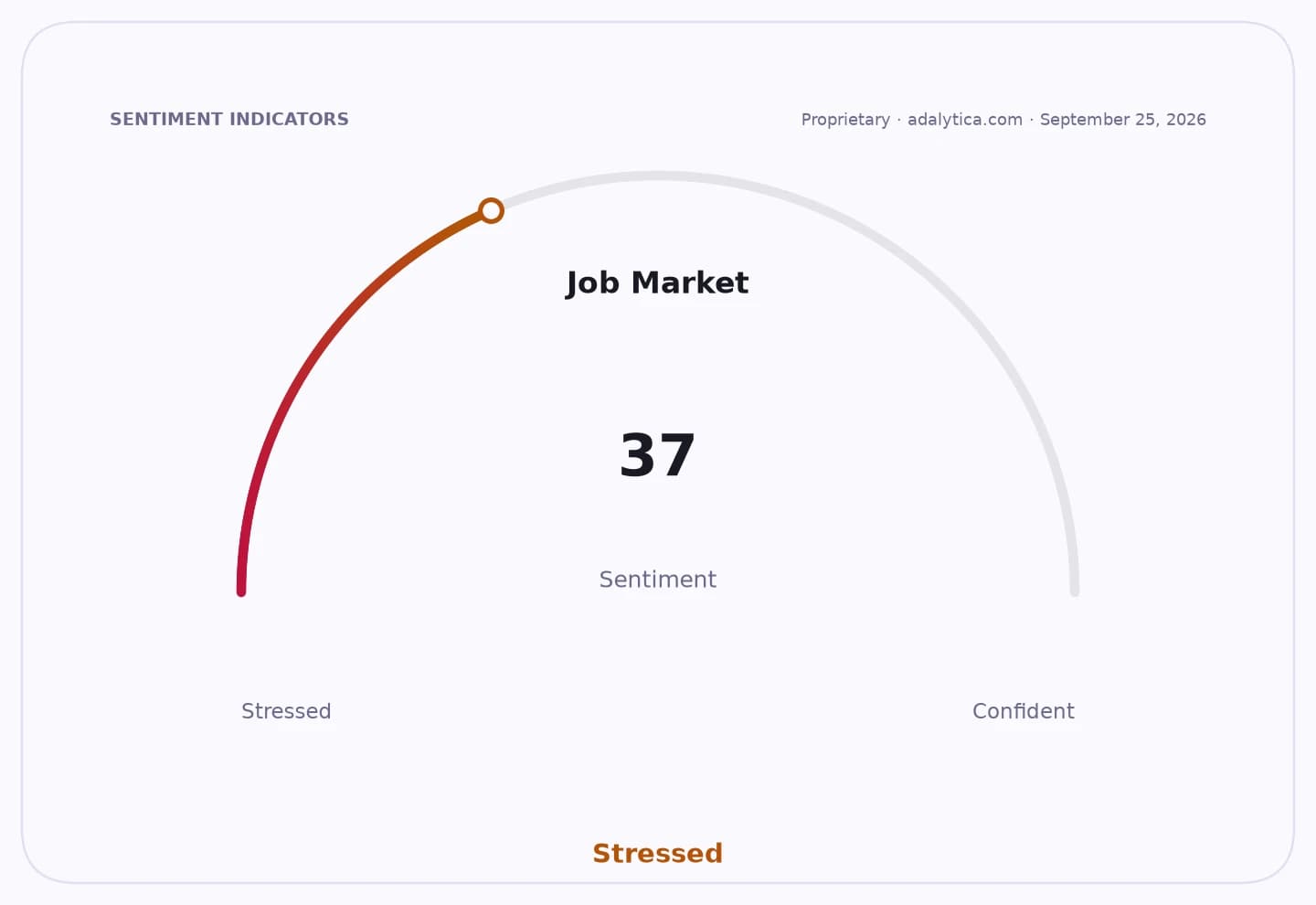
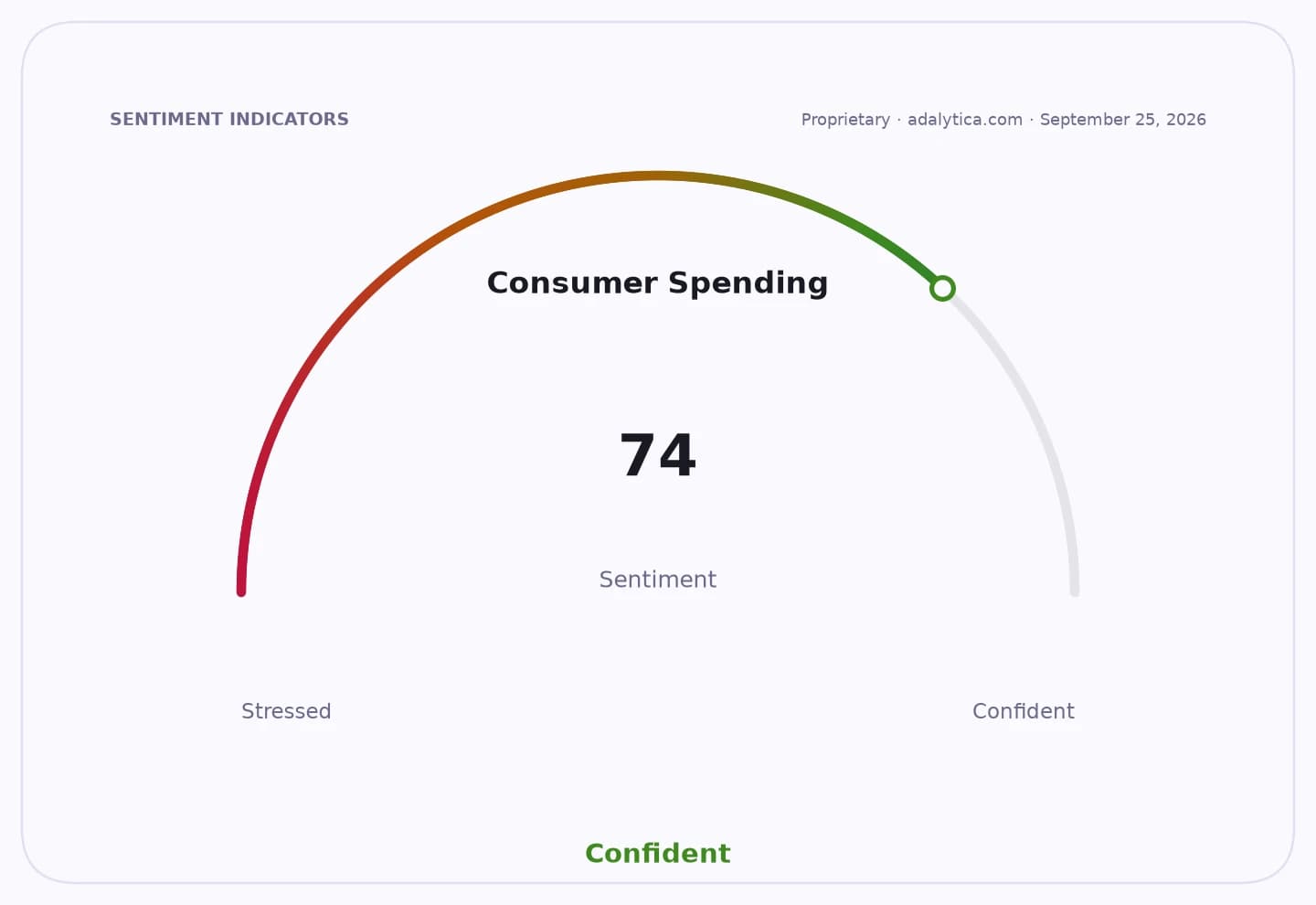
Consumer spending is getting a lift from stronger income and still-healthy markets, but the smarter question for households and investors is whether tapping savings today helps or hurts long-term wealth.
Spending Savings Can Help or Hurt Long-Term Wealth
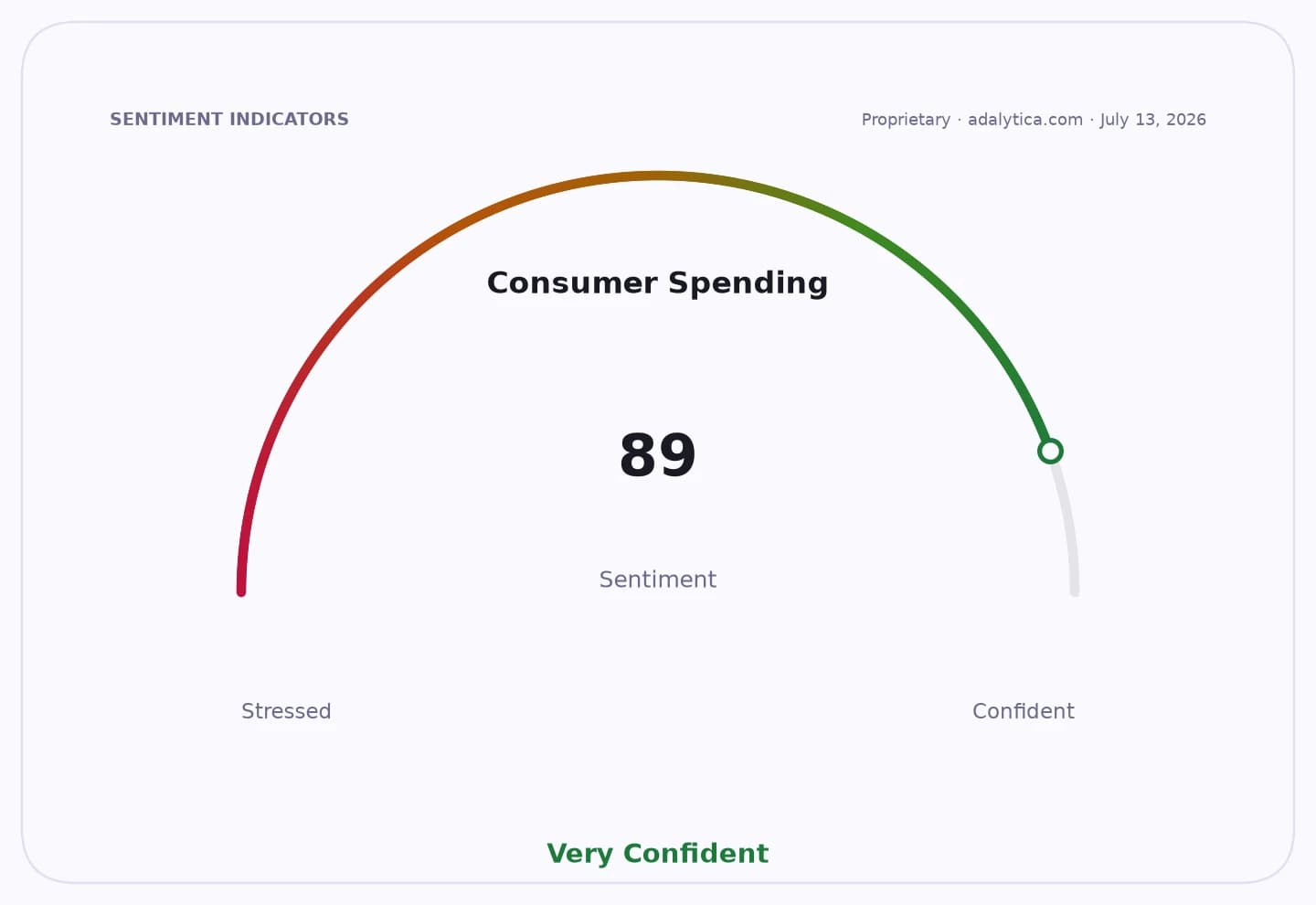
That matters because the latest data show U.S. disposable personal income climbing to $23.43 trillion in January 2026, while consumer sentiment has slumped to 44.8 by May and confidence around recession risk has fallen sharply as well. In plain English: people have more money coming in, but they feel less comfortable spending from savings unless they have a clear reason. That tension is exactly where good financial decisions are made.
Sentiment IndicatorsⓘProprietary · adalytica.com · July 13, 2026
This is a snapshot — live sentiment, awareness and momentum for 130+ markets update continuously in the dashboard.Open AlphaPulse
For investors, the takeaway is not just about whether shoppers open their wallets. It is about the quality of demand underneath the market. When consumers spend from savings, they can prop up retailers, travel companies and discretionary brands in the near term. But if that spending is driven by pressure rather than confidence, it can fade fast. If it is tied to durable needs — a home repair, education, healthcare, or a business investment — it tends to be more constructive for the economy and for companies with pricing power and recurring demand.
The market backdrop is telling. The S&P 500 has pushed up toward 749, above its 200-day moving average near 692, while the consumer discretionary ETF has also rebounded to around 116. That suggests investors are still willing to price in a resilient consumer, even as sentiment remains choppy. By contrast, consumer staples have outperformed more defensively, with the sector ETF hovering around 84.6 and holding above its long-term trend. In other words, the market is quietly splitting winners and losers based on whether spending is likely to stay strong or just look strong for a quarter or two.
RSXFS vs DPI — macro contextadalytica.com
Explore this data interactively — full history, time series and cross-market comparisons.Open AlphaPulse
That is why the decision to spend savings should be framed around time horizon, not impulse. If the purchase protects future cash flow, improves earning power, or avoids a bigger cost later, it can be a rational use of savings. If it is a one-off consumption splurge, it should be weighed against what that money could earn in a diversified portfolio over the next three to 10 years. For most investors, the compounding power of broad index funds, dividend growers and high-quality businesses still beats chasing temporary satisfaction.
There is also a broader policy lesson here. Governments across Europe are pushing defense spending higher, even as budgets stay tight. That kind of pressure reinforces the same personal-finance principle: money is finite, and every dollar has an opportunity cost. Households that preserve savings for emergencies, invest consistently and spend selectively are better positioned for volatility than those who drain cash because they feel momentarily comfortable.
So what should you do when you want to spend your savings? Ask whether the purchase is improving your future or just borrowing from it. In an economy where income is rising but confidence is fragile, that distinction matters more than ever. For long-term investors, the best answer is usually patience, discipline and a portfolio built to compound. Worth watching, but not something to rush.
| Entity | Gains | Losses |
|---|---|---|
| Consumers with stable income | ▲Financial flexibility | ▼Impulse spending risk |
| Retailers and discretionary brands | ▲Near-term sales lift | ▼Demand fades if caution returns |
| Savers and long-term investors | ▲Higher future compounding | ▼Short-term gratification |
| Defensive sectors like staples | ▲Relative resilience | ▼Less upside in a spending rebound |