Standard Chartered Raises U.S. Treasury Yield Outlook

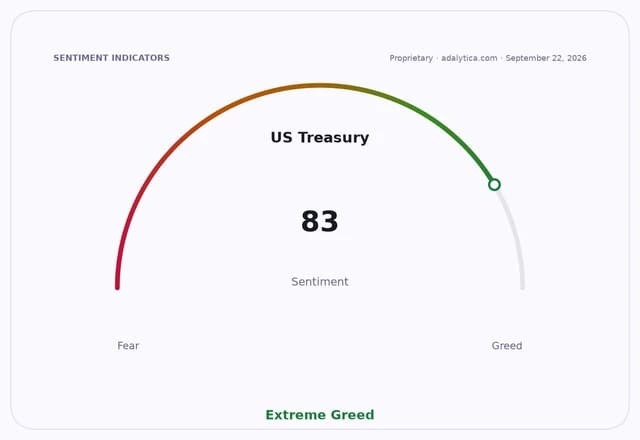
Standard Chartered is telling investors to brace for higher U.S. Treasury yields, and that call matters because it changes the cost of money for everything from stocks to currencies to corporate borrowing.
The bank lifted its 3-month target for the 10-year U.S. Treasury yield to 5% to 5.25%, up from earlier estimates, and nudged its 12-month view to 4.75% to 5%. That puts the bank squarely in the camp expecting the Federal Reserve to stay tighter for longer, even as markets continue to debate how many more rate increases are really coming.
For investors, the message is straightforward: higher yields are not just a bond-market story. They raise discount rates, pressure long-duration assets and can clip valuations for growth stocks, especially the kind of technology names that have been carried by enthusiasm around artificial intelligence. Standard Chartered said a 25-basis-point rise in the fed funds rate, used as a discount rate, could trim the S&P 500 and global equities by about 3% to 4%, though it still expects earnings growth to cushion the blow.
That distinction is important. Rising yields usually hurt equities when growth is weak, but they can be absorbed more easily when profits are still expanding. Standard Chartered’s view is that a lot of the Fed’s tightening is already priced in and that the central bank will deliver fewer hikes than markets currently expect, which helps explain why it still prefers a diversified basket of large-cap technology and leading semiconductor stocks. In other words, this is not a call to run away from the market, but a reminder to be selective and to focus on companies with real earnings power.
The U.S. rate outlook also feeds directly into currency markets. Standard Chartered remained constructive on the yen even after the Bank of Japan raised rates by 25 basis points to 1.25%, its highest level in three decades. The split 7-2 vote, however, revived concerns that Japanese policymakers may move more cautiously from here, which helped cap the yen’s gains. Still, the bank sees the yen strengthening over time as the interest-rate gap between Japan and other major economies narrows, and it expects the BOJ to keep lifting rates by 25 basis points each quarter through the second quarter of 2027.
That has big implications for global capital flows. A firmer yen can ease imported inflation in Japan, but it also squeezes exporters and forces investors to rethink long-held assumptions about carry trades and currency hedging. The yen was trading near 157 per dollar on Sept. 22, with momentum still weak by conventional technical measures, including an RSI reading below 40 and a bearish MACD crossover. That leaves room for a move higher if yield differentials keep narrowing.
Sterling, by contrast, looks boxed in. Standard Chartered expects the Bank of England to deliver less than the roughly 100 basis points of additional tightening priced by markets after leaving rates unchanged this week. With Britain’s labor market softening and the economy still balancing weak housing against sticky energy-driven inflation, the bank sees the pound stuck in a range.
The broader narrative is one investors should not ignore: higher-for-longer U.S. yields are still the anchor for global asset prices, but they are also starting to reshape the relative appeal of currencies, sectors and equity styles. For long-term investors, the takeaway is not to try to guess every move in rates, but to own businesses that can compound through them. That makes balance sheets, pricing power and earnings durability more important than ever.
| Entity | Gains | Losses |
|---|---|---|
| U.S. Treasury bond buyers | ▲Higher starting yields | ▼Price risk if yields rise further |
| Banks and cash-rich lenders | ▲Better asset yields | ▼Borrowers facing higher funding costs |
| Strong-earnings tech and semis | ▲Earnings offset rate pressure | ▼Long-duration valuations |
| Yen bulls | ▲Narrowing rate gap | ▼Slow BOJ tightening or renewed carry demand |