Steady Consumer Supports Quality Retailers
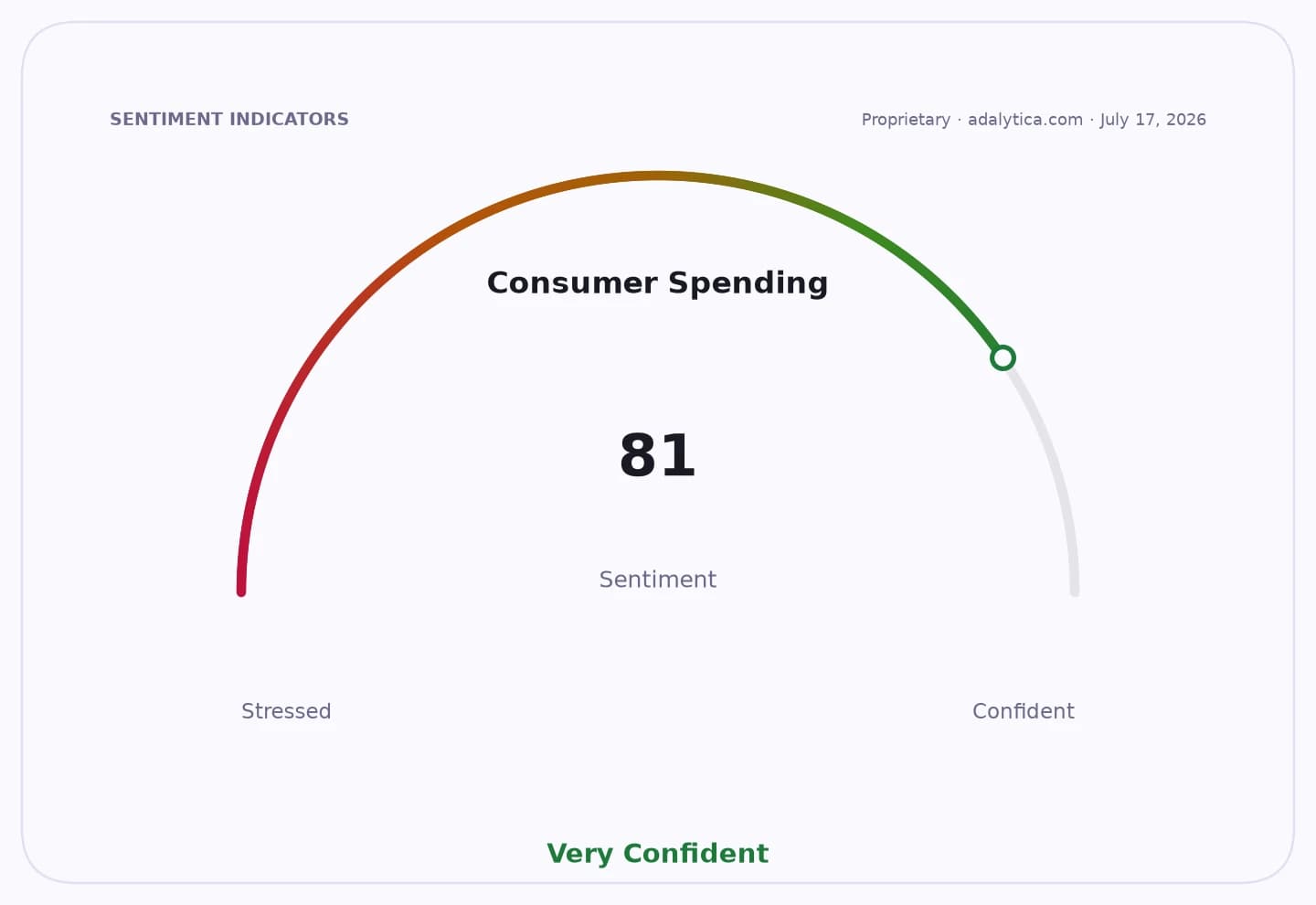
Consumer sentiment in the University of Michigan survey improved in July, but the bigger market message is that households remain far from euphoric even as unemployment stays low and equities push toward record territory. That combination matters because it says the U.S. consumer is not flashing recession, but neither is it signaling the kind of broad-based demand surge that would justify complacency on rates, margins or discretionary spending.
The Michigan headline has to be read alongside the labor market: the unemployment rate has hovered around 4.2% to 4.3%, a level that still supports spending even if confidence is uneven. At the same time, the survey’s broader pattern shows sentiment has been rebuilding from the extreme weakness seen earlier in the cycle, when readings collapsed into the 40s, but it remains well below the kind of levels that typically accompany full-throttle consumer expansion. In other words, the economy is still being held up by employment, not enthusiasm.
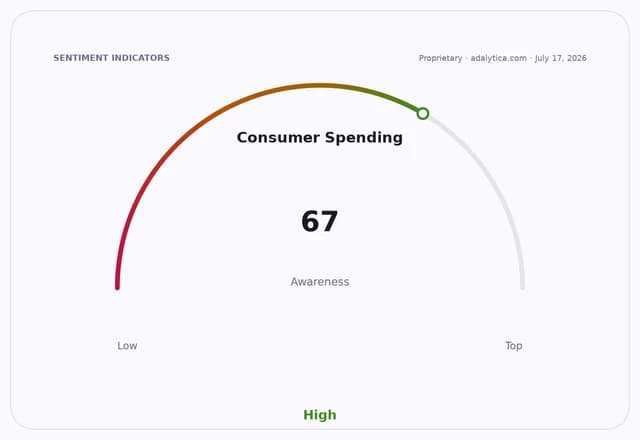
That distinction matters for investors. A consumer that is employed but anxious tends to keep spending, just more selectively. That is good for defensive retailers, value-oriented chains and operators with pricing power, but less helpful for the higher-beta names that need a reaccelerating consumer to justify multiple expansion. It also means the market should be careful about assuming a straight-line rebound in discretionary demand, especially with inflation memories still fresh and households sensitive to big-ticket purchases.
The equity tape is already hinting at that tug of war. The S&P 500 ETF has recovered sharply and sits above both its 50-day and 200-day moving averages, with momentum still positive by standard technical indicators such as RSI and MACD. But consumer-facing ETFs are telling a more nuanced story. Retail exposure has been firmer than earlier this year, while discretionary stocks are still lagging the broader market’s conviction. That divergence suggests investors are chasing stability in spending rather than a full consumer renaissance.
Our thesis is straightforward: the market underestimates how powerful a “steady but cautious” consumer can be for the right stocks. This is not the setup for blind cyclicals. It is the setup for companies that can win share from a value-conscious shopper, manage inventory tightly and use scale to protect margins if demand plateaus. Think Walmart, Target, Home Depot and selective discretionary leaders with strong brands and digital execution. If the Michigan data keeps improving without forcing the Fed to react aggressively, that is the sweet spot for quality retailers and the ETFs that own them.
The risk is that investors misread a small improvement in sentiment as a clean demand breakout. I don’t think that is the right frame. The more important takeaway is that consumers are not cracking even after a long period of uncertainty, which keeps the soft-landing trade alive and preserves earnings power across the parts of the market most tied to household balance sheets. If sentiment continues to climb while unemployment stays contained, retail sales and discretionary margins can stabilize fast enough to power another leg higher in the stocks that benefit from resilience, not exuberance.
For investors, that means staying positioned in the winners of a reluctant consumer cycle: quality retailers, logistics-enabled operators and broad consumer ETFs with lower earnings sensitivity. The next upside surprise will not come from euphoria. It will come from spending that keeps grinding higher despite fear.
| Entity | Gains | Losses |
|---|---|---|
| Walmart, Target, Home Depot | ▲Stable demand, share gains | ▼Weak discretionary chains |
| Consumer ETFs like XRT | ▲Better spending backdrop | ▼Highly leveraged retailers |
| S&P 500 / SPY | ▲Soft-landing support | ▼Recession trades |
| Fed hawks | ▲Less urgency to tighten | ▼Fast-rebound inflation bets |