Strait of Hormuz attack lifts oil and shipping stocks
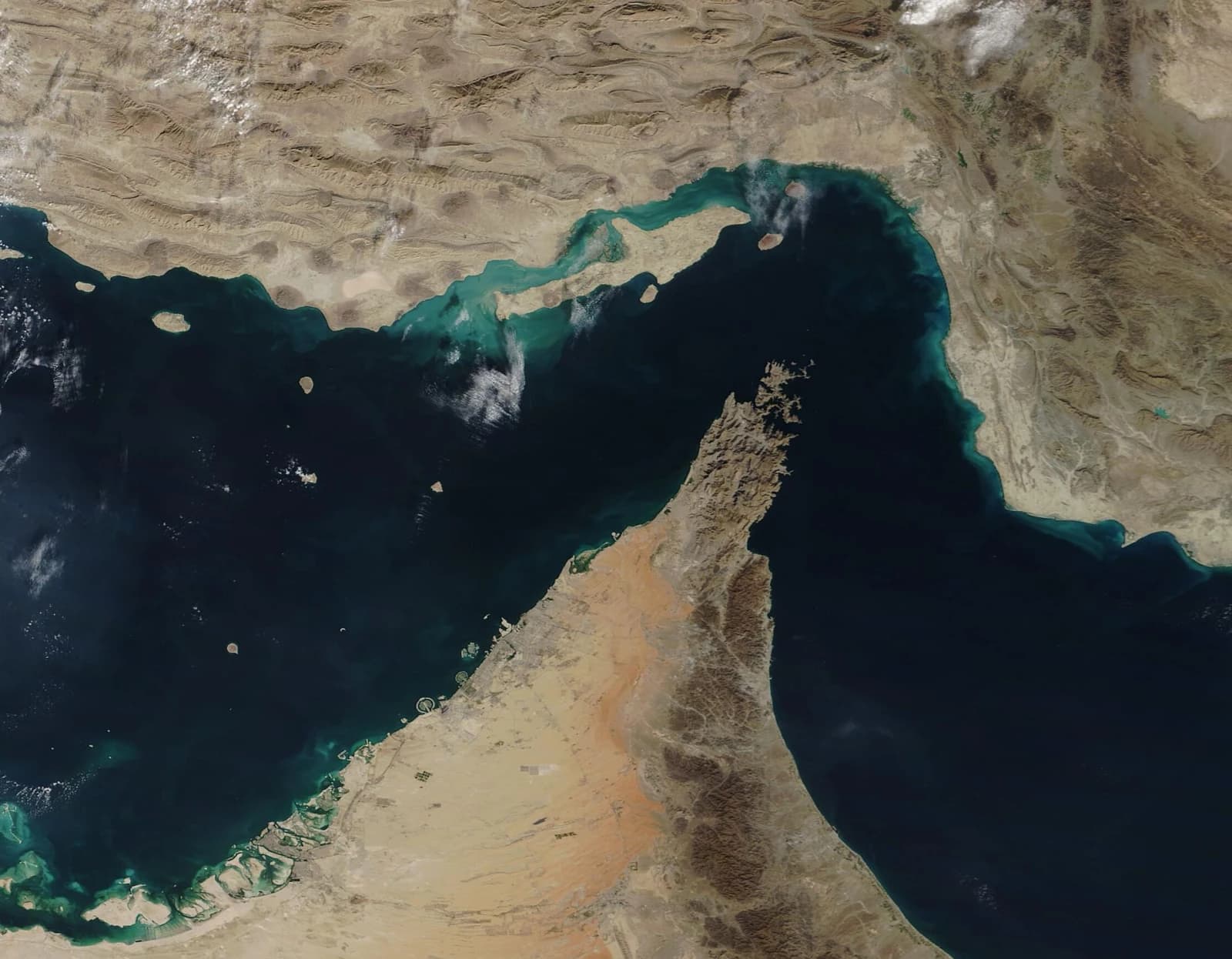
An attack on a merchant vessel in the Strait of Hormuz has jolted oil markets and underscored how quickly a narrow maritime chokepoint can turn into a global inflation shock.
The immediate economic problem is not just the fire in one ship’s engine room, but the risk that tankers and cargo carriers begin treating the strait as a war zone. That raises freight rates, insurance costs and the probability of delays through the waterway that handles roughly a fifth of the world’s seaborne oil flows. Even without a formal closure, the market can get the same effect through fear, rerouting and lost capacity.
Crude is already reacting. WTI is forecast to rise 2.7% to $87.05 a barrel on Aug. 12, extending a sharp move from recent lows, while the USO oil ETF traded at $127.30 on Aug. 12, up from $112.21 on July 8. That puts the fund well above its 50-day moving average of $120.88, a sign the rally is regaining technical traction even after a volatile run. Energy shares are following suit: the XLE energy ETF closed at $61.03 on Aug. 12, near its recent highs and above both its 50-day and 200-day moving averages.
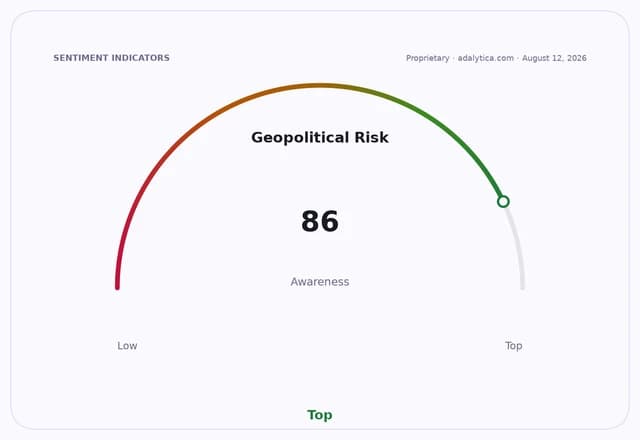
The bigger message for investors is that the market is again pricing geopolitical risk into the commodity complex. Adalytica’s Global Stability Sentiment remains in “Extreme Greed” territory at 89, even after a one-day pullback, which suggests traders may still be underestimating how fast shipping disruptions can spill into inflation expectations, central-bank policy, and positioning across energy and transport stocks.
The strait matters because it sits at the center of a chain reaction. If carriers demand higher war-risk premiums or simply keep vessels waiting, the cost of moving crude, refined products and dry bulk cargoes rises immediately. That is good for shipowners with exposed routes and bad for importers, refiners and consumers. It also strengthens the case for higher oil prices to persist beyond the first headline, especially if the disruption crimps inventory flows into Asia and Europe.
The market’s tell is in the shipping names. BDRY, the dry bulk shipping ETF, has climbed to $13.67 from $12.19 on July 20, reflecting tighter freight conditions and the possibility that broader rerouting will soak up vessel availability. International Seaways and other tanker-linked names should remain in focus if war-risk premiums stay elevated and available tonnage is drawn away from normal trade lanes.
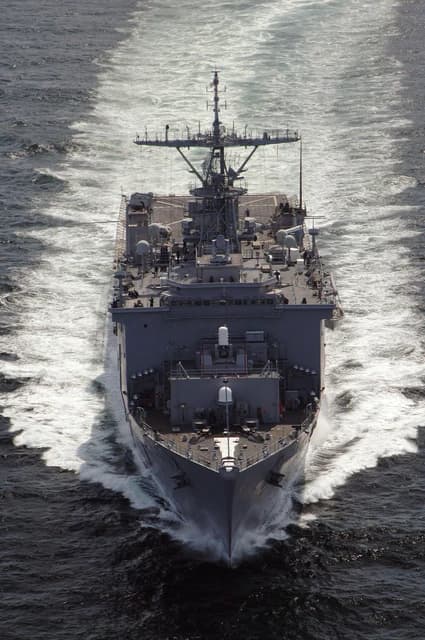
The investment setup is straightforward: the market underestimates how often geopolitical “incidents” in the Strait of Hormuz become durable pricing events. If attacks continue or the U.S. and Iran escalate their standoff, the beneficiaries are energy producers, tanker operators and select defense names. The losers are airlines, refiners, chemical users and import-dependent economies that absorb the higher cost of oil first. For investors, this is a moment to own the toll roads of global energy transport, not the users of the road.
| Entity | Gains | Losses |
|---|---|---|
| Oil producers | ▲Higher realized prices | ▼— |
| Tanker/shipping firms | ▲Higher freight and war-risk premiums | ▼Port delays and route risk |
| Energy ETFs like XLE | ▲Sector rotation into crude exposure | ▼Broader market volatility |
| Importers/refiners/airlines | ▲— | ▼Higher fuel and transport costs |