Strategy and Strive have restarted large-scale bitcoin buying, signaling that corporate treasury demand is back just as the cryptocurrency trades near an eight-month high and investor sentiment turns euphoric.
Strategy and Strive resume bitcoin buying
The two companies disclosed purchases totaling 2,305 bitcoin for $182.7 million, a fresh reminder that listed firms are again using balance sheets to accumulate the token rather than trim exposure. For investors, that matters because corporate buying has become one of the clearest marginal sources of demand in a market where price action is increasingly being driven by treasury allocations, ETF flows and momentum trading rather than everyday transactional use.
Strategy, the largest corporate holder of bitcoin, bought 950 coins for $75.7 million last week, its first purchase since August, while Strive added 1,355 bitcoin for $107.7 million. The buying came as bitcoin climbed to about $85,336, up nearly 5% in 24 hours and not far from a session high of $86,282. Strategy also spent $174 million repurchasing its perpetual preferred shares, underscoring that the company is once again balancing bitcoin accumulation with capital-structure management after a year in which it had paused purchases to preserve cash.
That shift is important because it suggests the biggest corporate crypto buyer is still willing to lean into weakness and volatility when market conditions improve. Strategy now holds 846,000 bitcoin worth roughly $72.7 billion at current prices, an enormous hoard that keeps the stock tightly linked to the token. Its shares rose 8% on Monday, while Strive’s stock briefly topped $30 on Friday, above most Wall Street price targets. That reaction shows equity investors continue to treat direct bitcoin exposure through listed companies as a leveraged expression of the crypto trade.
Strive’s rise is also notable. With 26,355 bitcoin valued at about $2.2 billion, it has become the fifth-largest corporate holder of the asset, a rapid ascent that reflects how some newer listed vehicles are using bitcoin accumulation as a core business strategy. For bitcoin bulls, that broadens the buyer base and reinforces the idea that the asset is maturing into a treasury reserve instrument. For skeptics, it raises the same old concerns: concentrated balance-sheet risk, dependence on one volatile asset and the possibility that companies may be forced to sell in a downturn.
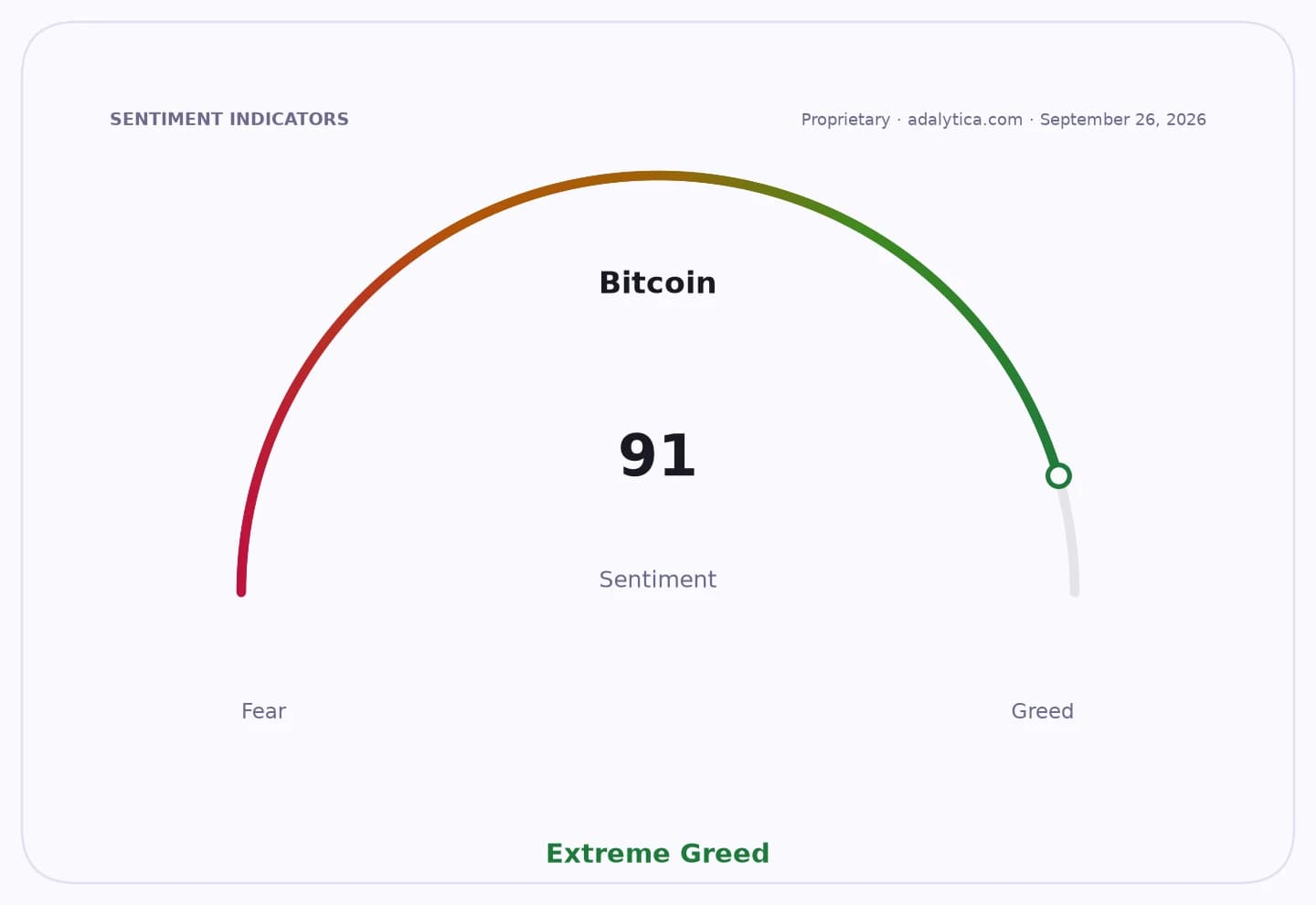
The broader backdrop has helped the trade. Bitcoin has rebounded sharply from its earlier year weakness, and Adalytica’s Fear & Greed Index shows extreme greed at 91, suggesting speculative appetite is running hot. Technical indicators also point to firm momentum: bitcoin is trading well above its 50-day and 200-day moving averages, while RSI readings remain elevated, a sign of strength but also of stretched conditions. Even so, the coin is still more than 30% below its October peak of $126,080, leaving room for both trend-following buying and sharp reversals.
The policy environment is less supportive than traders would like. Momentum in the crypto-friendly Clarity Act has stalled, while the Federal Reserve’s latest rate move did not materially change risk appetite. That leaves bitcoin’s near-term path heavily dependent on flows and sentiment rather than regulation alone.
For investors, the key question is whether this is the start of a durable corporate bid or just another burst of treasury-driven enthusiasm. If Strategy and peers keep buying, they can help stabilize the market and extend the rally. If they pause again, bitcoin may have to stand more on its own.
| Entity | Gains | Losses |
|---|---|---|
| Strategy | ▲Bitcoin exposure; share price lift | ▼Cash flexibility |
| Strive | ▲Treasury growth; market attention | ▼Balance-sheet risk |
| Bitcoin bulls | ▲Stronger demand; momentum | ▼If buying stalls |
| Skeptics/shorts | ▲— | ▼Higher prices; crowded positioning |