Strive’s latest Bitcoin purchase reinforces a broader shift in corporate balance sheets: publicly traded firms are increasingly using capital markets to turn cash, equity and debt into cryptocurrency reserves.
Strive Buys 3,311 Bitcoin, Lifts Holdings to 32,773 BTC
The company said it bought 3,311 bitcoin between Oct. 5 and Oct. 9 at an average price of about $84,500 per coin, lifting its total holdings to 32,773 BTC from 29,462 BTC previously. At current prices around $83,500, the haul is worth roughly $2.7 billion, making Strive the fifth-largest public Bitcoin treasury company, according to BitcoinTreasuries.Net, and putting it within reach of MARA Holdings’ 35,577 BTC.
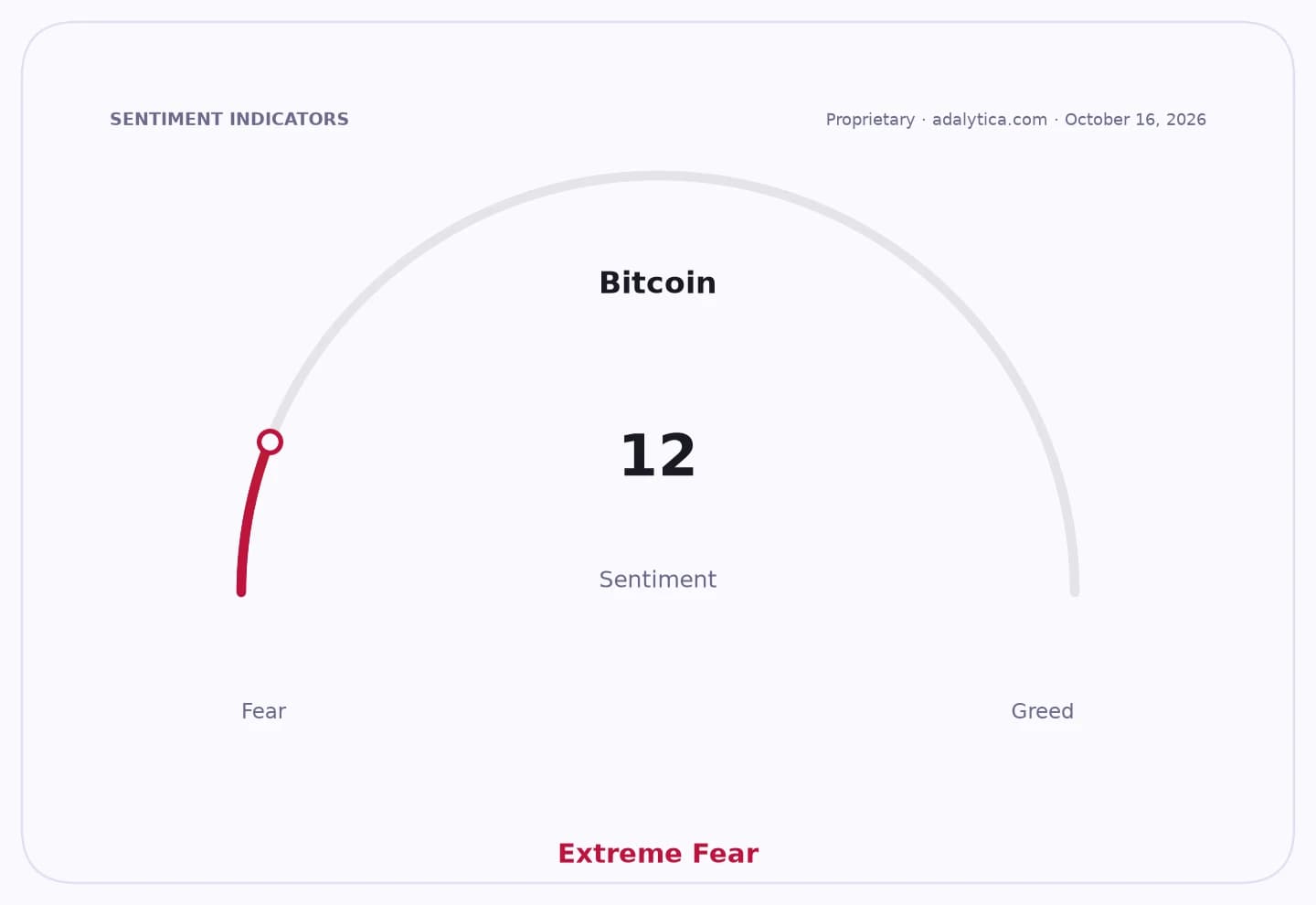
Sentiment IndicatorsⓘProprietary · adalytica.com · October 13, 2026
This is a snapshot — live sentiment, awareness and momentum for 130+ markets update continuously in the dashboard.Open AlphaPulse
The scale of the purchase matters because it shows the model is still attracting fresh capital even after Bitcoin’s sharp swings this year. Strive’s accumulation has been financed in part by warrant exercises that brought in about $208 million, while around 15.3 million warrants remained outstanding after the latest transactions. That means the company may still have access to additional funding, but it also faces the familiar trade-off for Bitcoin treasury firms: more capital raises can expand reserves, but they can dilute existing shareholders.
For investors, the story is no longer just about Bitcoin’s price direction. It is about leverage to Bitcoin wrapped in listed equities, with Strive, Strategy and Metaplanet competing to build larger inventories of the asset. Strategy, led by Michael Saylor, recently added 250 BTC to bring its holdings to 848,250 BTC, while Metaplanet lifted its position to 44,000 BTC. In that race, scale is both a strategic advantage and a valuation test, because the market is increasingly asking whether these companies can keep funding purchases without overextending their balance sheets.
Bitcoin’s own trading backdrop remains important. The token was changing hands around $83,500, up about 1% on the day, with trading volume rising 30.28% to $31 billion. Technical indicators suggest the market has steadied after a volatile stretch: Bitcoin remains above its 50-day moving average and near its 200-day average, while RSI readings show momentum has recovered from deeply oversold levels seen earlier in the year. That keeps treasury buyers in the market, but it also means they are still buying into a tape that can reverse quickly.
The broader implication is that corporate Bitcoin hoarding has become a financing story as much as a crypto story. If capital markets stay open and investor appetite for these vehicles holds, companies like Strive can keep adding coins and climb the rankings. If funding tightens or Bitcoin weakens materially, the same structure that amplifies upside could expose shareholders to sharper losses.
| Entity | Gains | Losses |
|---|---|---|
| Strive | ▲Larger BTC treasury | ▼Shareholder dilution risk |
| Bitcoin bulls | ▲Corporate demand support | ▼Higher volatility exposure |
| Strategy, MARA, Metaplanet | ▲Sector validation | ▼Rival competition for scale |
| Existing Strive shareholders | ▲Treasury optionality | ▼Capital-raise pressure |