Switzerland’s labor market is still doing the heavy lifting for the economy, with August unemployment holding at 3.0% and officials saying the underlying picture “remains solid” despite a gloomy global backdrop.
Switzerland unemployment holds at 3.0% in August

That matters because a resilient job market is the best defense against a broader slowdown. When hiring holds up, household spending stays intact, tax revenues are steadier and companies are less likely to slash investment in response to weaker demand. For investors, that combination usually supports domestic cyclicals, high-quality Swiss equities and the broader case that the country can absorb external shocks better than most of Europe.
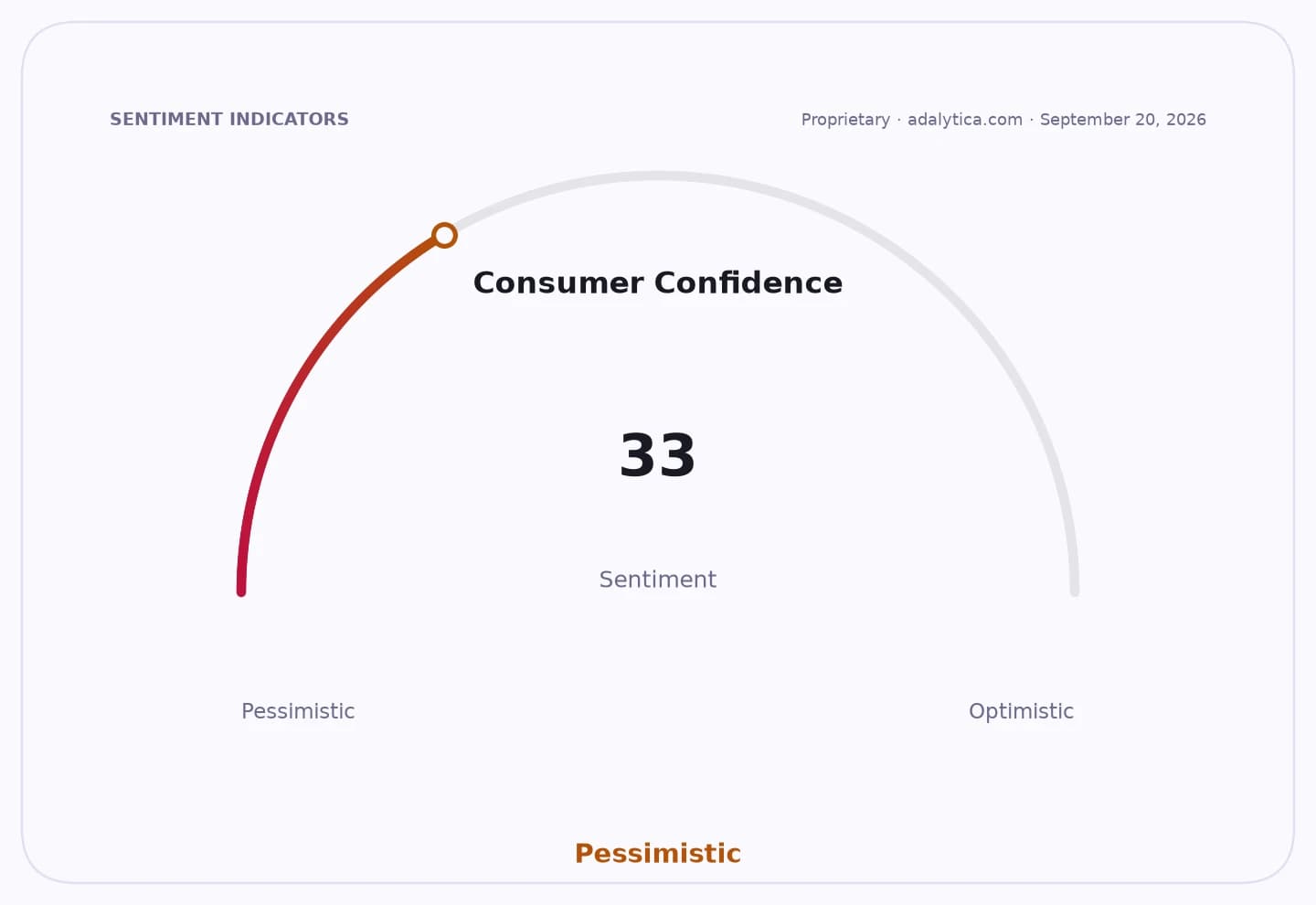
Sentiment IndicatorsⓘProprietary · adalytica.com · September 7, 2026
This is a snapshot — live sentiment, awareness and momentum for 130+ markets update continuously in the dashboard.Open AlphaPulse
The latest figures from the State Secretariat for Economic Affairs point to a labor market that is cooling only at the margins. Unemployment among 15- to 24-year-olds rose to 3.4% in August from July, adding 2,400 people to 14,700, but officials described that move as a normal seasonal pattern as graduates and school leavers enter the market in late summer. The key signal is that young workers are still finding jobs quickly: on average, those under 25 leave the unemployment rolls in a little more than three months, compared with more than nine months for workers over 55.
That speed of reabsorption is economically important. It suggests firms are still hiring, even if cautiously, and that the labor market is not showing the kind of broad-based deterioration that would normally precede a recession. It also explains why Switzerland remains relatively insulated from the kind of consumer retrenchment that hits harder when job losses spread across age groups and sectors.
A second positive sign is the decline in reduced-hours work, the Swiss version of short-time work that lets companies trim hours without cutting staff. Less use of that tool usually means employers are facing fewer immediate production stresses and are more confident about keeping workers on payroll. In a country heavily exposed to exports and industrial demand, that is an important read-through for margins and capital spending.
For markets, the message is straightforward: Switzerland continues to offer a rare mix of labor stability, policy flexibility and defensive earnings quality. The Swiss Market Index’s underlying support is still driven by companies with global revenue streams, but a firm domestic labor backdrop helps the local economy avoid becoming a drag on those names. The larger opportunity is in assuming that this stability is temporary; the data argue the opposite.
The market underestimates how much labor resilience can extend Switzerland’s growth runway. If unemployment stays near current levels and reduced-hours programs keep fading, the case strengthens for steady consumer demand, limited credit stress and a cleaner earnings outlook into year-end. For investors looking for defensive exposure with real earnings durability, Switzerland remains one of Europe’s most attractive hiding places — and, potentially, one of its better long-term compounders.
| Entity | Gains | Losses |
|---|---|---|
| Swiss employers | ▲More payroll stability | ▼Less urgency to cut costs |
| Swiss consumers | ▲Income confidence | ▼Little downside relief from labor slack |
| Domestic equities | ▲Stronger demand backdrop | ▼Less support from crisis-driven policy |
| Job seekers over 55 | ▲Stable hiring conditions | ▼Slower reemployment vs younger workers |