Taiwan Decoupling Risk Pressures Stocks
Taipei’s drive to cut economic ties with China is shaping up as a bigger risk to Taiwan’s economy and its flagship exporters than the political rhetoric suggests, because any sustained decoupling would hit trade, supply chains and the valuation premium built on Taiwan’s role in Asia’s manufacturing network.
That matters most for an economy whose corporate sector still depends heavily on cross-strait commerce, even as policymakers in Taipei seek to reduce strategic dependence on the mainland. The Democratic Progressive Party’s initiative may strengthen political autonomy, but economically it raises the probability of slower trade flows, higher operating costs and more fragmented production networks at a time when global growth is already fragile and investors are pricing in elevated geopolitical risk.

The market response in Taiwan equities has been muted but telling. The iShares MSCI Taiwan ETF, EWT, has retreated to $101.88 from a recent high above $111, while technical readings have softened, with the 50-day moving average still above the price but momentum indicators such as RSI and MACD rolling over. Taiwan Semiconductor Manufacturing Co., the economy’s bellwether, has also pulled back to $421.58 from late-June levels near $477.57. TSMC remains far above its 200-day moving average, underscoring the longer-term strength of the AI-led semiconductor cycle, but the near-term deterioration in momentum suggests investors are becoming more cautious about policy and geopolitical overhangs.
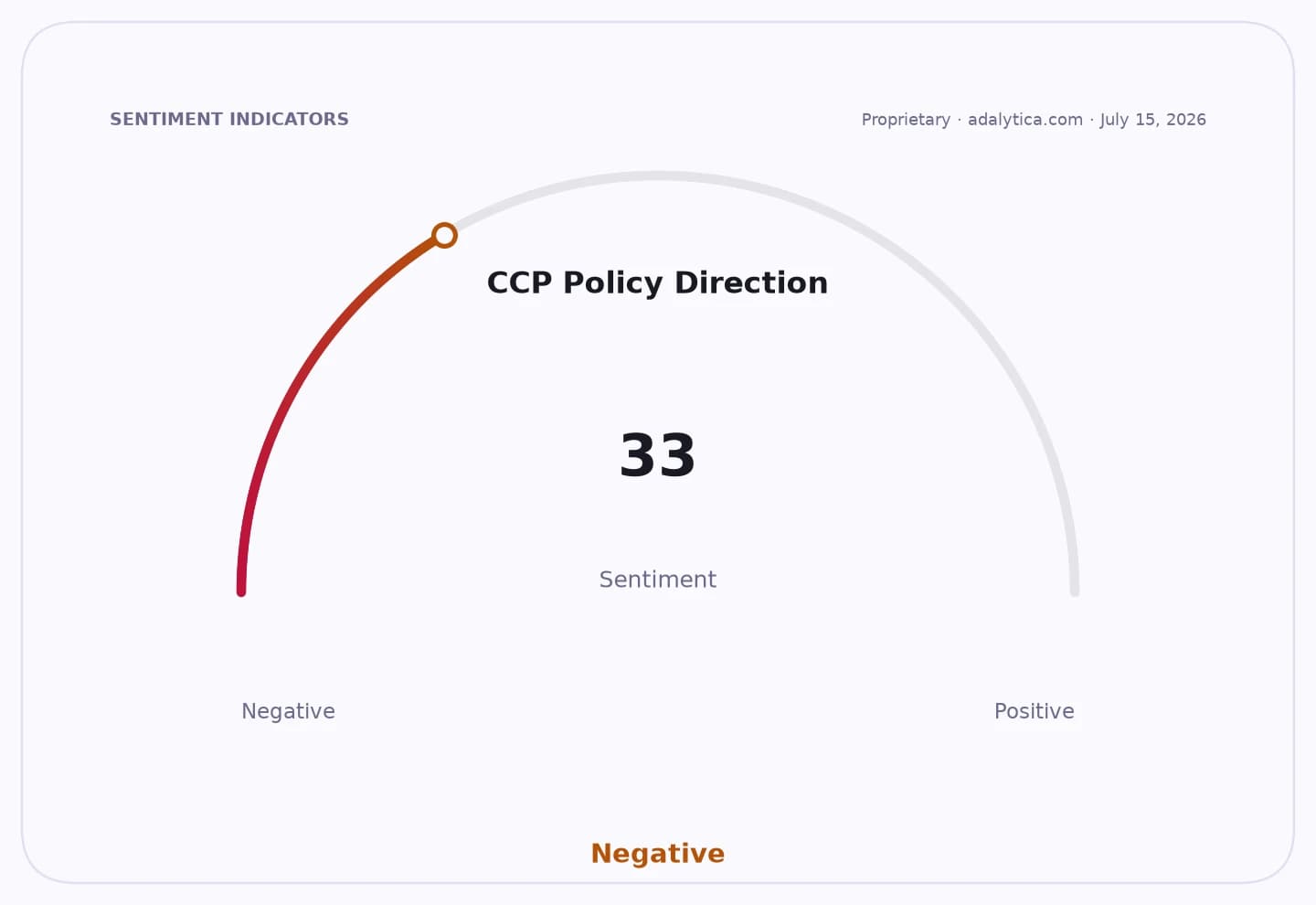
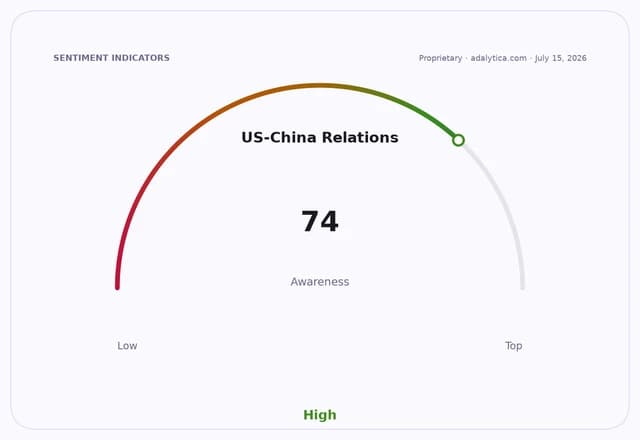
That caution is not confined to price charts. Adalytica’s China CCP Policy Direction Sentiment stands at 33, while its awareness gauge shows “Fear,” and US–China relations sentiment is also in “Fear” territory at 26. Global Stability Sentiment is in “Extreme Fear.” Those readings are not tradeable signals on their own, but they capture the rising market sensitivity to any move that could harden the economic divide across the Taiwan Strait.
For Taiwan, the economic stakes are substantial. China remains a major destination for Taiwanese goods and a critical node in the island’s industrial ecosystem, especially for electronics, components and contract manufacturing. Cutting those ties outright is unrealistic, but even incremental policy moves that discourage investment, supply-chain integration or cross-border commercial activity can ripple through exporters, logistics firms and industrial suppliers. The likely result is less efficiency, not just less commerce.
The bull case for the DPP’s approach is that Taiwan can insulate itself from coercion by diversifying trade toward the US, Japan and Southeast Asia, while using its semiconductor leadership to command strategic leverage. The bear case is that decoupling would raise costs, compress margins and leave Taiwan exposed to retaliation just as its businesses are trying to capitalize on the global AI hardware cycle.
That tension explains why TSMC and broader Taiwan equities remain important barometers of cross-strait policy. TSMC’s earnings power is still tied to secular demand for advanced chips, but the stock’s recent volatility shows how quickly investors reprice political risk when the narrative shifts from supply dominance to supply vulnerability. For portfolio managers, the key question is not whether Taiwan can survive reduced mainland exposure, but what it gives up in growth, scale and resilience if the separation becomes policy, not just rhetoric.
The next catalyst will be whether Taipei’s initiatives stay symbolic or turn into measures that affect investment approvals, trade channels and corporate operating flexibility. If they do, investors should expect Taiwan’s valuation premium to be tested, even if AI demand keeps the semiconductor cycle intact.
| Entity | Gains | Losses |
|---|---|---|
| DPP/Taipei policymakers | ▲strategic autonomy | ▼trade efficiency |
| Taiwan exporters and suppliers | ▲diversification opportunities | ▼mainland sales and margins |
| TSMC and Taiwan equities | ▲long-term de-risking narrative | ▼near-term risk premium |
| China-linked counterparties | ▲none | ▼business access and supply-chain depth |