Taiwan Drills Raise Tech Supply Chain Risk
China’s two-day live-ammunition exercise in the Taiwan Strait is a fresh reminder that the region’s most important flashpoint remains capable of jolting supply chains, trade policy and investor sentiment well beyond East Asia.
The immediate economic significance is not the drill itself, but the signal it sends: Beijing is willing to pair military pressure with diplomatic isolation to raise the cost of Taiwan’s autonomy. Papua New Guinea’s closure of its representative office in Taipei, after citing the “one China” policy, shows the same playbook extending beyond the strait into the contest for recognition. That combination matters because it tightens the perceived odds of miscalculation at a chokepoint for global electronics manufacturing and shipping routes.
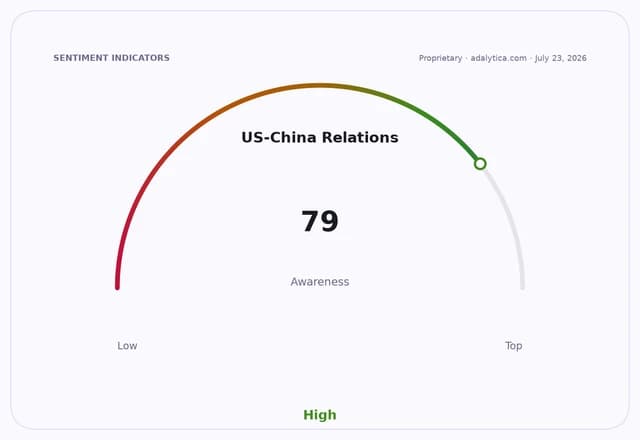
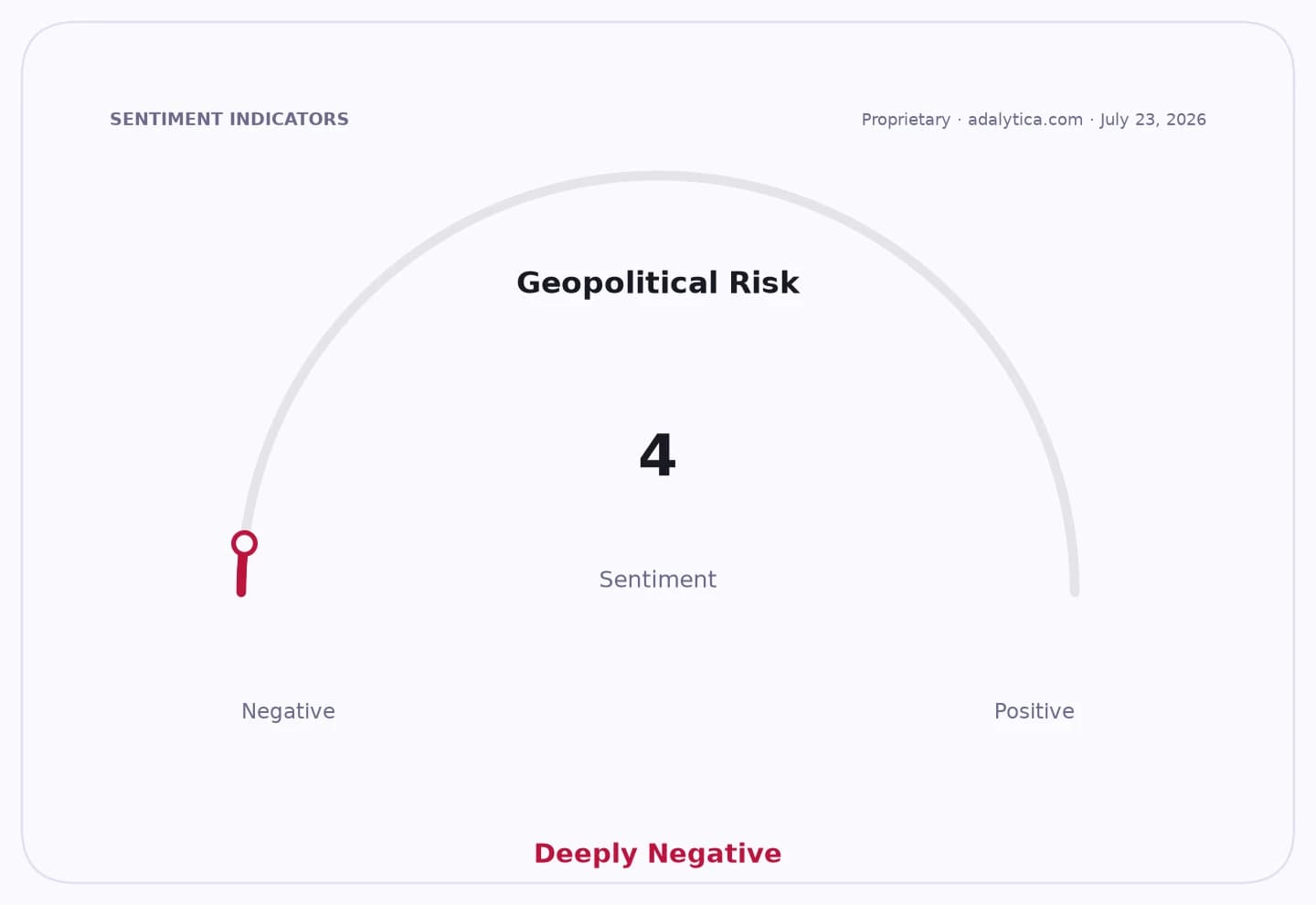
Markets have already begun to price a harsher backdrop. Adalytica’s Global Stability Sentiment gauge sits at 4, or “Extreme Fear,” while its US–China relations measure is also at 4, underscoring how quickly geopolitical stress has deteriorated. Those readings help explain why investors tend to react first through risk assets tied to Taiwan exposure, semiconductor supply chains and broader China trade links, rather than through direct regional defense trades alone.
For equities, the exposure is clearest in the semiconductor complex. Taiwan Semiconductor Manufacturing Co., the world’s most important foundry, remains close to its 50-day moving average but its recent price action shows a sharp pullback from earlier highs, with momentum indicators such as RSI easing from overbought levels. Nvidia and Apple, both deeply dependent on Taiwan-linked production and Asian demand, have also moved in ways that reflect elevated geopolitical uncertainty. Apple has explicitly warned that tariffs and supply disruptions can hit margins, while Qualcomm has said a prolonged China-Taiwan conflict could severely limit its business. For investors, the message is that the Taiwan risk premium is no longer theoretical; it is embedded in planning for inventory, sourcing, and valuation multiples.
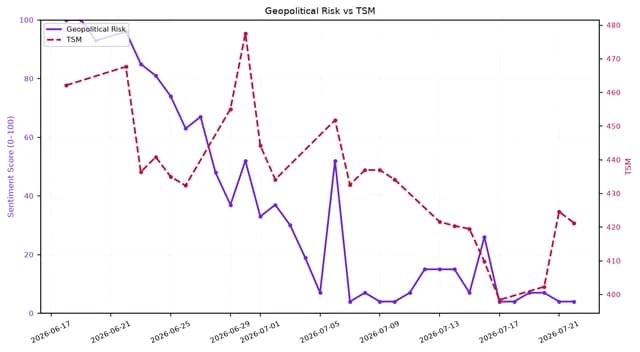
The bull case is that these drills are largely coercive signaling, not a precursor to immediate escalation, and that markets have repeatedly absorbed similar episodes without a structural break. The bear case is that repeated live-fire exercises normalize confrontation, increase the chance of an accident in crowded waterways and gradually harden Washington, Taipei and allied responses. That second path would be far more damaging because it would lift defense spending, pressure cross-strait commerce and deepen the strategic discount on Taiwan-related assets.
What to watch next is whether Beijing follows the exercise with more drills, sanctions or diplomatic moves, and whether Taipei responds with stronger defense coordination and appeals for external support. For investors, the key question is not whether this episode alone changes earnings, but whether it marks another step in a longer repricing of the China-Taiwan axis.
| Entity | Gains | Losses |
|---|---|---|
| China | ▲coercive leverage | ▼regional trust |
| Taiwan | ▲global attention | ▼security stability |
| Semiconductor supply chain | ▲defense spending demand | ▼disruption risk |
| US tech investors | ▲clearer risk pricing | ▼valuation pressure |