Taiwan’s decision to name just one African country eligible for eVisa access in 2026 underscores how tightly it is managing a limited but politically useful expansion of travel links as Beijing keeps squeezing its international space.
Taiwan's Selective eVisa Move Signals Cautious Outreach
The move matters because Taiwan has increasingly used visa policy as one of the few tools available to widen its commercial and people-to-people reach despite diplomatic isolation. A single-country eVisa rollout is not a tourism boom story in itself, but it signals a selective approach: Taipei is trying to generate incremental travel demand, strengthen visibility with partners outside its shrinking formal diplomatic network and keep its borders more accessible without making broad concessions.
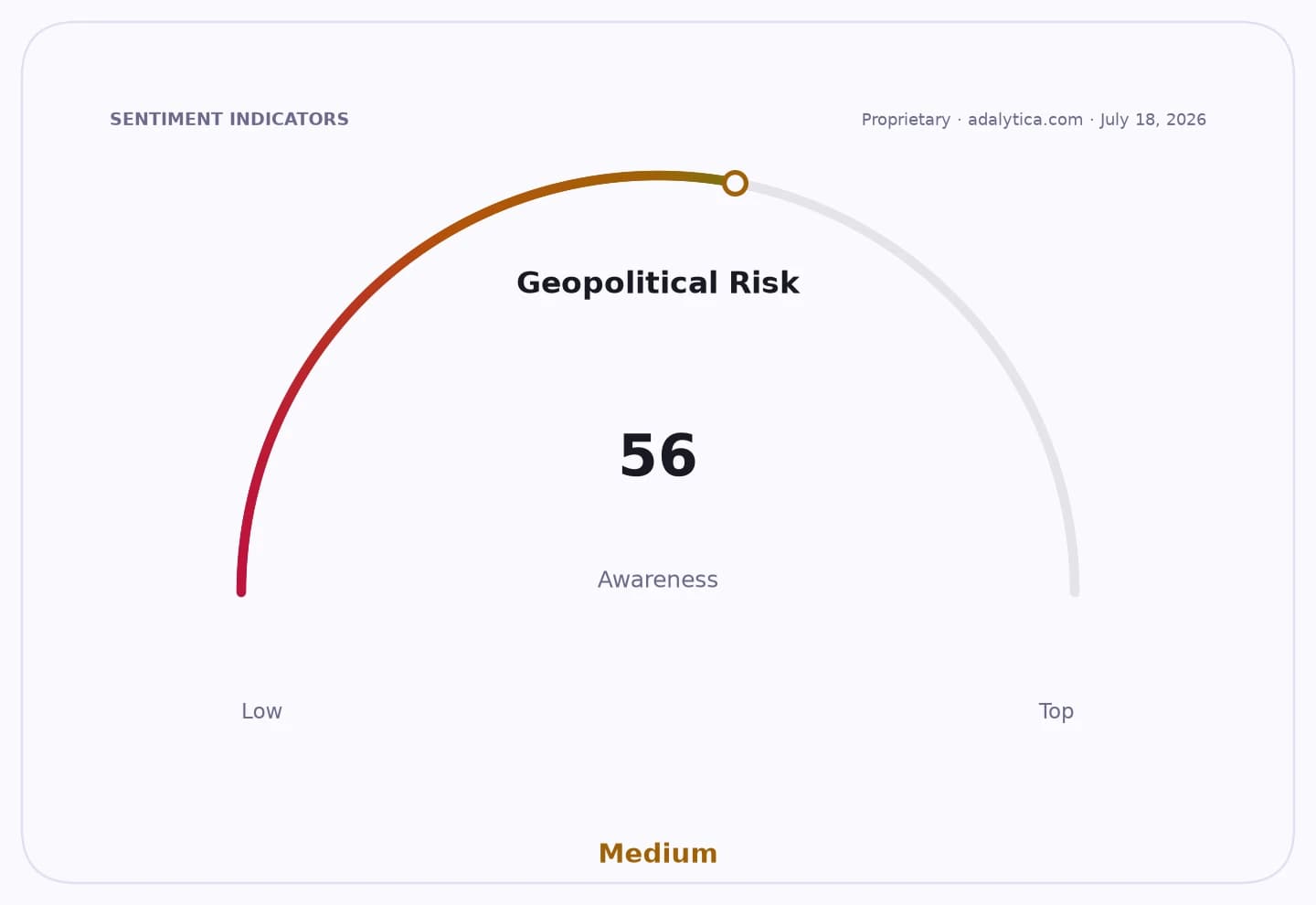
Sentiment IndicatorsⓘProprietary · adalytica.com · July 18, 2026
This is a snapshot — live sentiment, awareness and momentum for 130+ markets update continuously in the dashboard.Open AlphaPulse
The detail that the eVisa scheme is being limited to one African country also tells investors something about Taiwan’s priorities. Rather than opening the door widely, authorities appear focused on a controlled pilot that can be expanded later if demand, processing capacity and diplomatic risk all line up. That approach fits a government trying to balance economic openness with geopolitical caution. In practical terms, easier entry can support business travel, education links and modest leisure flows, all of which matter for Taiwan’s service sector and for firms exposed to cross-border mobility.
For the travel industry, the direct impact is likely to be modest at first. A single-country eligibility list will not move the needle for airlines, online travel agencies or cruise operators on its own. But it does fit a broader pattern in Asia of governments using visa liberalisation to compete for visitors and business spending. That is relevant for travel platforms, hotel chains and carriers that sell intra-Asia itineraries and rely on smoother border regimes to stimulate bookings.
The geopolitical backdrop is more important than the headline numbers. Taiwan’s external relationships have been under pressure as Pacific and other developing economies tilt toward Beijing, and any new visa access is as much about diplomatic signalling as tourism economics. By keeping the policy narrow while still advertising it, Taipei is effectively saying it wants more connections with the outside world, but on terms it controls.
Investors should read the move as a marginal positive for Taiwan-linked travel demand and a small offset to diplomatic headwinds, not as a structural catalyst. The main watchpoint is whether this one-country opening becomes a template for broader eVisa liberalisation in 2026. If it does, the economic effect could become more meaningful for travel volumes, service exports and the companies that facilitate cross-border mobility.
| Entity | Gains | Losses |
|---|---|---|
| Taiwan | ▲Wider travel access | ▼Limited geopolitical leverage |
| Eligible African country | ▲Easier entry | ▼Narrow policy scope |
| Travel providers | ▲Incremental bookings | ▼No major volume lift |
| China | ▲Continued pressure on Taiwan | ▼Taiwan’s soft-power outreach |