Taiwan shifts toward smaller warships and sea denial
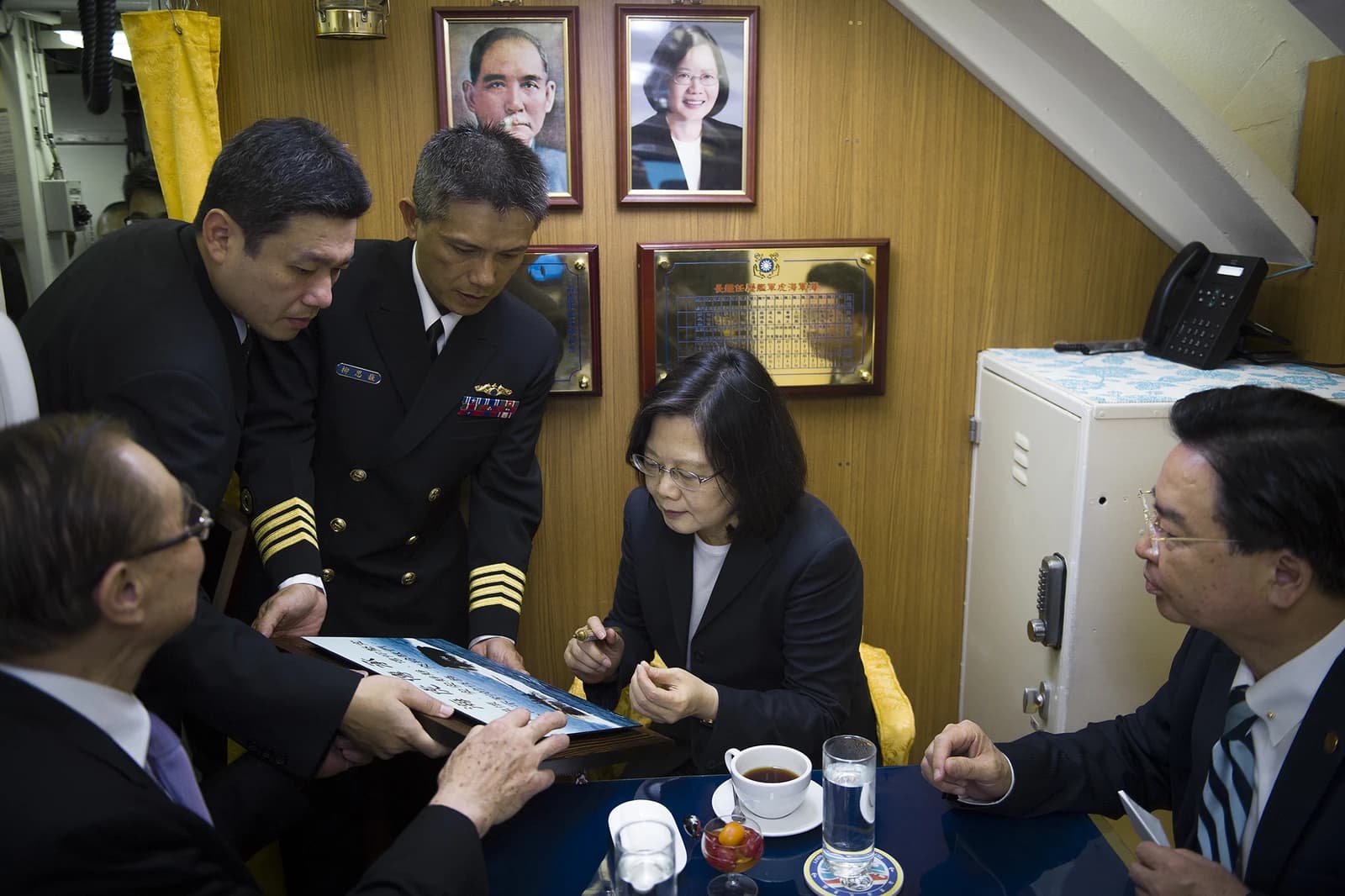
Taiwan’s safest path in a crisis may be to build less glamorous warships and more of them. In a Taiwan Strait shaped by drones, missiles and constant surveillance, the island’s large frigates and destroyers are becoming easier for China to find and hit, while a fleet of smaller, stealthier corvettes could survive long enough to do the one job that matters most: deny Beijing a quick amphibious crossing.
That matters economically because deterrence is the cheapest defense Taiwan can buy. A failed invasion would be catastrophic for trade, semiconductors, shipping and regional capital flows, but so would a defense posture built around a handful of expensive, irreplaceable ships that can be knocked out early. The article’s core argument is that Taiwan should stop spending scarce resources on prestige platforms and shift toward dispersed sea-denial forces that are harder to destroy and cheaper to replace.

The numbers underscore the mismatch. Taiwan is planning a new 7,000-ton warship and as many as 12 3,000-ton light frigates, even though the full shipbuilding program is projected at only about $1.5 billion a year. By contrast, the country’s own smaller missile patrol ships have cost less than $200 million each, while a single large warship could run around $2 billion. That is a brutal arithmetic lesson for any government trying to stretch a defense budget that is finally rising but still constrained.
For investors, this is a reminder that geopolitical resilience increasingly depends on industrial capacity, not just headline weapons systems. Taiwan’s defense buildup is likely to favor local shipyards, drone makers, sensor providers and command-and-control contractors over legacy platforms built for visibility rather than survivability. The broader lesson also reaches beyond Taiwan: in a world where ISR, electronic warfare and precision weapons make large assets vulnerable, the winners are often the companies and countries that can produce smaller systems at scale and iterate quickly.

The strategic case is reinforced by recent wars. Britain’s experience in the Falklands showed how the loss of a major warship can freeze an entire fleet. The U.S. Navy’s Operation Praying Mantis showed how deadly a good kill chain can be in confined waters. Ukraine’s Black Sea campaign then proved that a weaker power can still deny access through missiles, drones and external intelligence. Taiwan’s challenge is to copy the logic, not the hardware: build a fleet that can survive the first strike and keep shooting.
That is why the shift away from destroyers and frigates is more than a procurement debate. It is a test of whether Taiwan can align its defense spending with the reality of modern maritime warfare. President Lai Ching-te has already backed new missile patrol boats, and the island is also investing in maritime drones, better communications and AI-assisted decision support. If Taipei follows through and redirects money from prestige hulls to a distributed force, it could make a Chinese assault far more costly and uncertain.
For long-term investors, the takeaway is straightforward: the Taiwan Strait is pushing defense spending toward agility, survivability and mass. That is good for suppliers tied to drones, sensors, missiles and naval electronics, and less friendly to legacy thinking built around fewer, larger ships. In an era of heightened cross-strait tension, Taiwan’s better buy may be the boring one — a cheaper, smaller fleet that is harder to kill and far more useful in a real fight.
| Entity | Gains | Losses |
|---|---|---|
| Taiwan corvette builders | ▲More orders, scale, lower unit costs | ▼Prestige of large ships |
| Legacy destroyer/frigate programs | ▲Slower modernization spending | ▼Budget priority and relevance |
| Drone, missile and sensor suppliers | ▲Rising demand for sea-denial systems | ▼Larger surface-combatant makers |
| China’s invasion planners | ▲— | ▼A quicker, lower-cost crossing |