Tariffs Pressure Importers and Boost Dollar
The White House’s move to lift duties to 10% to 12.5% on many trading partners starting tomorrow is poised to raise import costs for a broad swath of companies and renew pressure on global supply chains, even as markets already show signs of re-pricing trade risk.
The economic significance is immediate: higher tariffs function like a tax on cross-border goods, and when they are applied across dozens of partners the burden is rarely contained to one industry or one country. Importers face thinner margins, retailers must decide whether to absorb the hit or pass it on, and exporters risk losing competitiveness in the U.S. market. That matters because the latest escalation comes on top of a separate 25% tariff on some Brazilian imports and a 50% levy on Canadian goods, deepening the sense that trade policy is again becoming a macroeconomic variable rather than a negotiating tool at the margin.
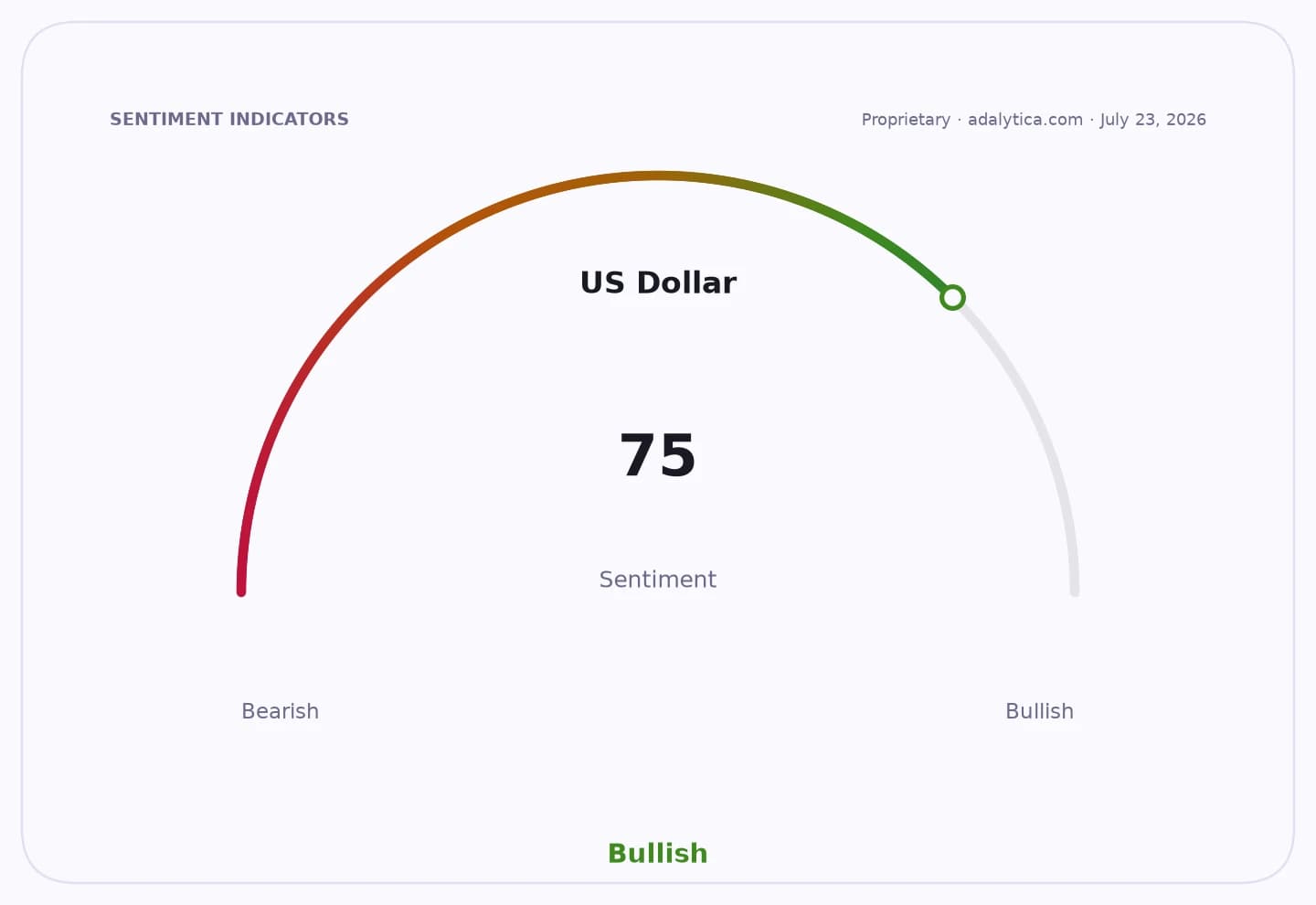
Investors are already treating it that way. The S&P 500’s recent pullback to 738.18 on Thursday came alongside a slide in the widely used technical gauge of its 50-day moving average, while the index’s RSI reading eased to 44.7, a sign that momentum has cooled after a strong run earlier in the year. The dollar, by contrast, has firmed: UUP closed at 28.56, near the top of its recent range, and Adalytica’s proprietary U.S. dollar trade signals show sentiment at 75, or “Greed,” up 24 points in a day and 74 points over 30 days. That combination suggests traders are leaning toward a stronger dollar and more defensive positioning as tariff risks mount.
The clearest losers are companies that depend heavily on imported merchandise or globally sourced inputs. Walmart has said less than one-third of what it sells in the U.S. is imported, but that is still a large enough exposure to matter when tariff rates climb across multiple suppliers. Target, Home Depot, Nike, Deere and Caterpillar have all flagged tariff sensitivity in recent filings, underscoring how the pain can spread well beyond the customs line and into pricing, inventory and demand. Caterpillar, for example, has already said tariff costs could run to $2.2 billion to $2.4 billion this year, a reminder that even large industrial groups with sophisticated supply chains struggle to fully offset these shocks.
The macro backdrop is becoming less forgiving. The 10-year Treasury yield edged up to 4.688% in the latest forecast, from 4.67% previously, while U.S. high-yield credit spreads remain relatively contained at 2.67 percentage points. That suggests markets are not yet pricing broad financial stress, but they are demanding more yield for risk and more compensation for policy uncertainty. If tariffs feed into goods inflation, the Federal Reserve could face a less comfortable mix of slower growth and stickier prices, especially if businesses begin to rebuild margins by raising prices.
For China-linked exposures, the signal is more mixed. FXI, the iShares China Large-Cap ETF, has stabilized around 34.46 after recent volatility, but it remains below its 200-day moving average and well off higher levels earlier this year. That points to a market still skeptical that Beijing’s exporters can absorb another round of U.S. trade pressure without some loss of volume or pricing power. In FX terms, the dollar’s recent strength also raises the odds that trade tensions will spill into currency volatility, widening the gap between winners that sell into a stronger greenback and losers that rely on dollar-funded imports.
The bull case is that the tariffs give Washington leverage in ongoing trade and labor disputes, while leaving room for exemptions, sector carve-outs or later negotiations. Some U.S. manufacturers could benefit if foreign goods become less competitive, and a stronger dollar could partially offset import inflation. But the bear case is more consequential: the tariff increase broadens the tax on trade, raises input costs across consumer and industrial sectors, and risks feeding a fresh round of retaliatory measures from partners already under strain.
For investors, the key question is not whether the duties matter — they do — but how quickly they move from a headline risk into earnings revisions and margin compression. The first evidence will come from retailers, industrials and multinational consumer names in the next round of guidance. If the White House follows through and partners respond in kind, the market will have to price not just a trade dispute, but a slower-growth, higher-cost regime.
| Entity | Gains | Losses |
|---|---|---|
| U.S. dollar | ▲Safe-haven demand | ▼None immediate |
| U.S. importers | ▲Limited protection for some domestic pricing | ▼Higher landed costs |
| Global exporters | ▲Potential negotiation leverage | ▼Weaker U.S. competitiveness |
| Retailers and industrials | ▲Possible domestic substitution | ▼Margin pressure and supply-chain costs |