Tencent, Baidu, Alibaba face China screen-time limits
Chinese officials are moving to limit social media use and screen time, a policy push that could reshape user engagement across the country’s largest internet platforms and add another layer of uncertainty for investors already focused on China’s tech rebound.
The immediate economic significance is that Beijing is again signaling a willingness to intervene in the digital economy not just through antitrust and data rules, but through direct constraints on how people use the products that drive advertising, gaming and e-commerce traffic. For companies such as Tencent Holdings, Baidu and Alibaba, the concern is not merely reputational: any formal effort to cap screen time or tighten platform design could pressure time spent in apps, reduce monetization opportunities and slow growth in the high-margin services that depend on repeat user attention.
Tencent is the clearest market proxy for the risk. Its shares have been trading close to the upper end of their recent range, with the stock around 61.52, above its 50-day moving average of 58.05, while momentum indicators remain positive but no longer overheated. That suggests investors have been pricing in improving fundamentals, not policy disruption. A rules-based clampdown on social media would challenge that setup by targeting the behavioral engine behind gaming, video and messaging engagement. The stock’s rally has also come with relatively light recent volume, underscoring how quickly sentiment could reverse if officials move from rhetoric to regulation.
Baidu and Alibaba face a different but related exposure. Baidu depends on user traffic and query frequency to support its ad business and AI services, while Alibaba’s commerce ecosystem benefits from habitual screen use that keeps consumers inside its retail and content loops. Both stocks have recovered in recent months, but the broader China internet trade remains highly sensitive to policy headlines. Baidu was last around 109.50, below its 200-day moving average of 125.26, even after a partial rebound, while Alibaba had climbed to 132.32 and was trading near the top of its recent band. That split reflects investor confidence that China’s large internet names can still generate cash, but also shows how little room there is for fresh regulatory friction before valuations are repriced.
The policy backdrop matters economically because screen-time limits would be aimed at one of the few sectors that still offers scale, operating leverage and consumer reach in China’s slower-growth economy. If authorities are trying to address public-health concerns, youth addiction or social stability, the cost would likely be borne by platforms that monetize attention and by advertisers and merchants that buy that attention. A more aggressive interpretation could also spill into device makers, app developers and even telecom operators if usage patterns change materially.
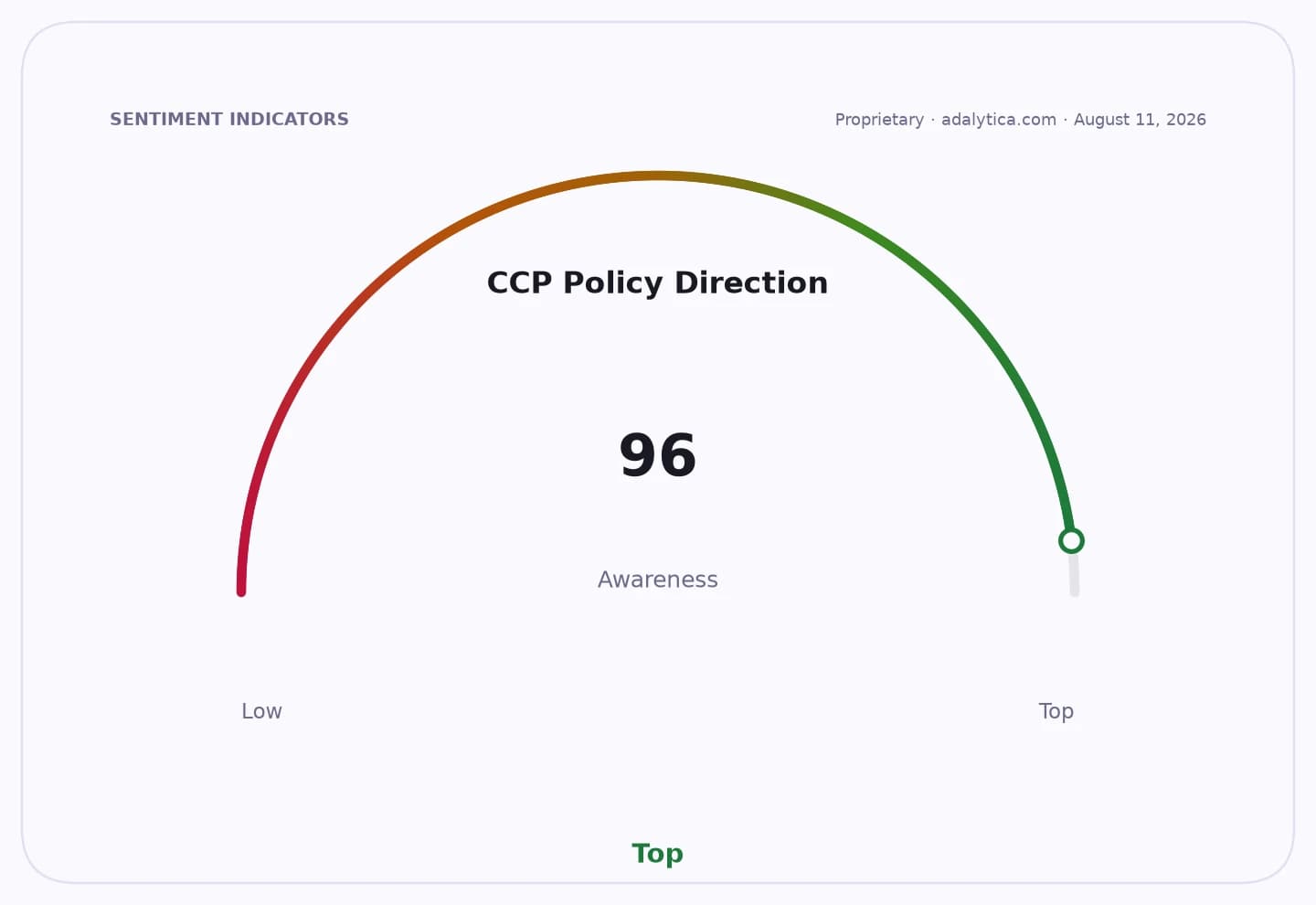
The market is reading the news against a broader backdrop of fragile US-China relations. Adalytica’s US-China relations sentiment gauge sits at extreme fear, while its China CCP policy-direction snapshot shows neutral sentiment but very high awareness, a combination that often precedes sharper volatility in Chinese equities. For investors, that means policy risk is not an abstract macro concern: it remains a live factor in pricing, especially for the internet leaders most dependent on consumer activity and regulatory goodwill.
The bullish case is that Beijing may stop at guidance, age checks or design nudges rather than hard limits that meaningfully reduce usage. The bearish case is that even incremental restrictions, once formalized, can ripple through engagement metrics, ad loads and the premium investors are willing to assign to China’s platform leaders. With Tencent, Baidu and Alibaba all still trading as policy-sensitive assets, the next move from regulators could decide whether the recent recovery in Chinese tech extends or stalls.
| Entity | Gains | Losses |
|---|---|---|
| Chinese regulators | ▲Social stability optics | ▼Platform flexibility |
| Parents/public-health advocates | ▲Lower screen exposure | ▼Less digital convenience |
| Tencent, Baidu, Alibaba | ▲None if rules tighten | ▼Engagement and monetization |
| Advertisers and merchants | ▲Potentially safer environment | ▼Reach and conversion efficiency |