Tencent WeChat Use and Share Price Weakness

Tencent’s WeChat is still one of the most important consumer platforms in China, and its grip on daily life is exactly why investors are watching the company more closely as Beijing and Washington keep pressure on big tech.
WeChat is no longer just a messaging app. With more than a billion users worldwide, it sits at the center of China’s online economy, handling chat, shopping, video, food delivery, ride-hailing and payments in one place. That scale makes Tencent a gatekeeper for consumer traffic, advertising, gaming and merchant services in a market where app ecosystems are tightly integrated into commerce.
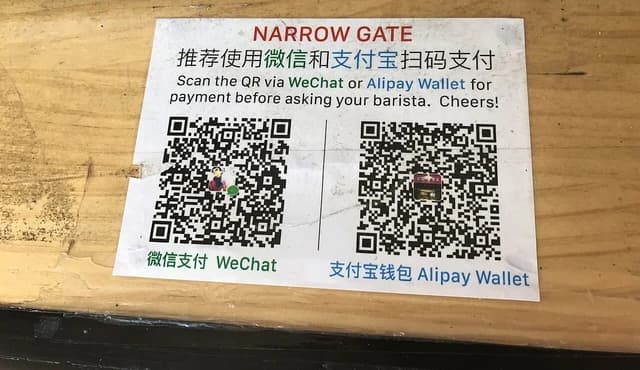
The platform’s reach also helps explain why Tencent matters well beyond its own shares. Any change in regulation, consumer behavior or cross-border politics that touches WeChat can ripple through China’s digital advertising market, mobile payments and the broader internet sector. For global investors, Tencent is often a proxy for Chinese consumer tech, while for domestic businesses it is a distribution layer that can determine whether products get discovered at all.
The company’s importance has only grown as Beijing pushes for tighter control over data, algorithms and platform power, even while it leans on tech champions to support growth and artificial intelligence development. That tension leaves Tencent balancing expansion against policy risk, especially in services that blend communication, commerce and finance.
Market data show investors remain cautious. Tencent’s Hong Kong-listed shares recently traded around HK$433.4, below the 50-day moving average of HK$454.2 and the 200-day average of HK$505.25, with the relative strength index at 40.4, suggesting the stock has not fully recovered from earlier weakness. U.S.-listed Tencent ADRs have also slipped to $55.79, well under their 50-day average of $58.01.
Alibaba’s retreat underscores the broader China tech backdrop. The stock has fallen to about $109.34 from a 50-day average near $117.77, showing that investors are still demanding proof that China’s internet giants can translate platform dominance into durable earnings growth.
The bigger story is that WeChat remains embedded in China’s economic plumbing. That makes Tencent one of the clearest beneficiaries of digital activity in the country, but it also leaves the company exposed to any slowdown in consumer spending, tighter regulation or further geopolitical friction between China and the U.S. The next catalyst will likely come from Tencent’s earnings, advertising trends and any fresh policy moves affecting platform operators.
| Entity | Gains | Losses |
|---|---|---|
| Tencent | ▲Sticky user engagement | ▼Regulatory scrutiny |
| WeChat merchants | ▲Built-in distribution | ▼Platform dependence |
| Chinese consumers | ▲One-stop digital services | ▼Less platform competition |
| Rival tech platforms | ▲— | ▼Traffic and ecosystem share |