Tesla China prices and recall pressure margins
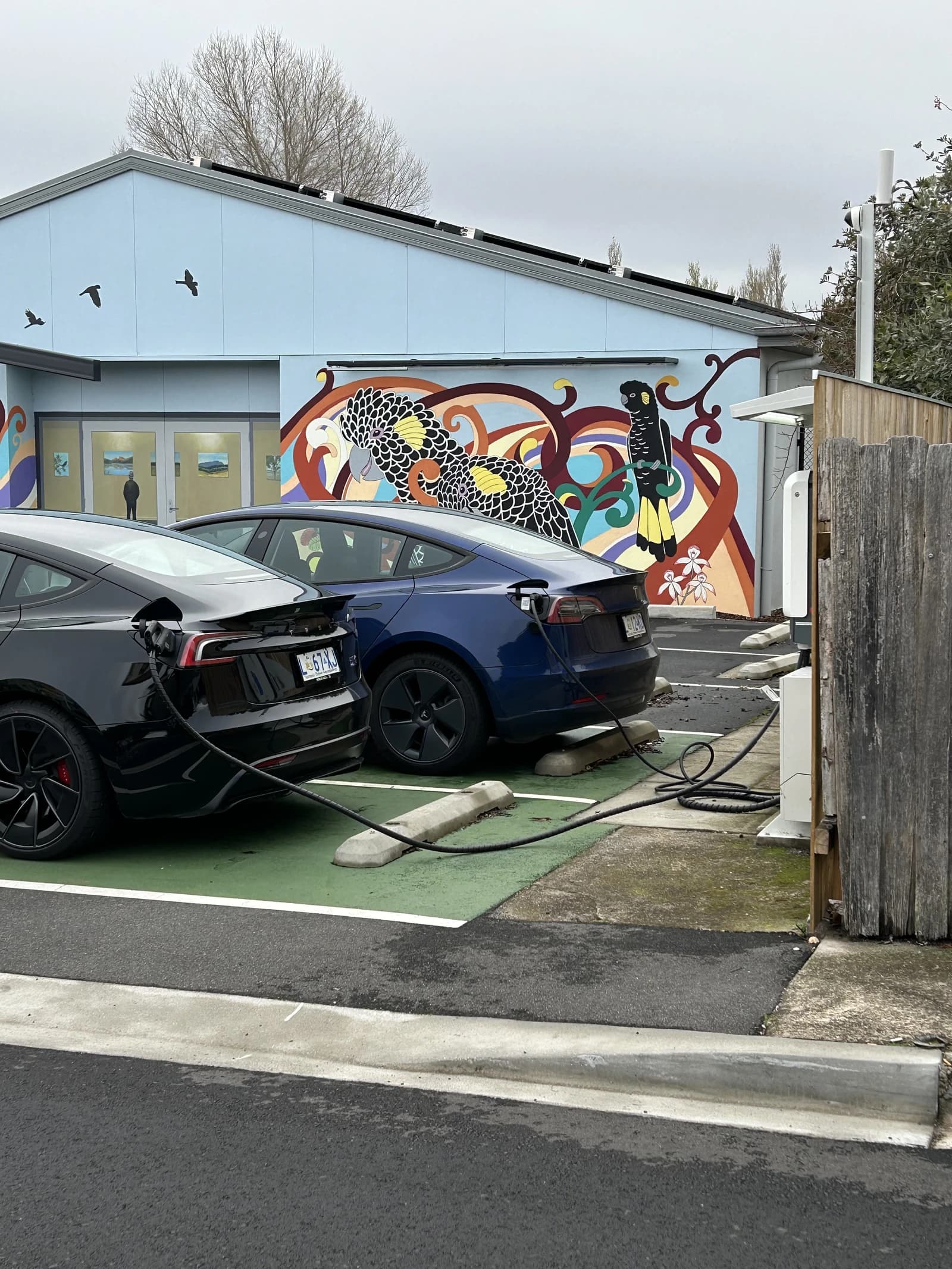
Tesla’s business in China remains central to the EV maker’s global growth story even as price cuts, tougher competition and a record recall underscore how dependent Elon Musk still is on the world’s No. 2 economy.
The company has cut prices on its Model 3 and Model Y in China to defend demand in a market where local rivals, led by BYD, have taken share and Tesla’s sales momentum has slowed. That makes China less of a growth engine than it once was, but still too important for Tesla to walk away from, given the scale of the market and the role Chinese manufacturing plays in the company’s cost base.
The latest pressure comes alongside a record recall of three million Tesla vehicles in China over a door-handle defect, a development that raises the stakes for regulators and consumers at a time when the company is also pushing new products, including Cybercabs, in the U.S. The combination of pricing pressure and quality scrutiny points to a business that is still expanding, but with margins and brand perception under strain.
For investors, the key issue is whether Tesla can keep volume growing without further sacrificing profitability. The stock has been volatile, and recent technical readings show it trading around $368.84, above its 50-day moving average near $356.86 but below its 200-day average around $399.22, while RSI at 56 suggests momentum is neither stretched nor washed out.
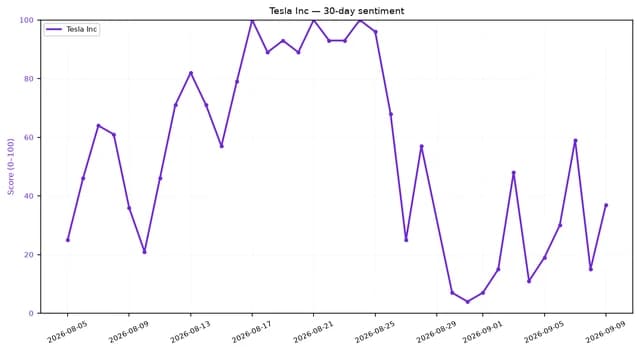
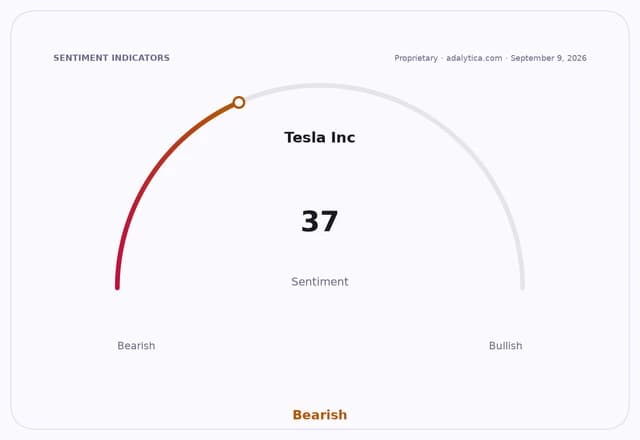
Adalytica’s Tesla earnings sentiment snapshot is neutral at 37, but awareness is elevated at 89, suggesting the market is closely focused on the name as traders watch for signs that China demand stabilizes or erodes further. The broader backdrop also includes a rising Chinese yuan signal and strong AI-related market attention, both of which keep the Tesla-China narrative tightly linked to cross-border trade, supply chains and policy risk.
The near-term catalyst is whether Tesla’s next sales and margin update shows the China price cuts are working without triggering a deeper erosion in profitability, especially as competition in the EV market keeps intensifying.
| Entity | Gains | Losses |
|---|---|---|
| Tesla buyers in China | ▲Lower Model 3/Y prices | ▼Margin pressure if discounts widen |
| Tesla | ▲Near-term demand support | ▼Profitability and brand scrutiny |
| BYD and other Chinese EV rivals | ▲A pressure-tested market share fight | ▼Less room if Tesla discounts bite |
| Tesla investors | ▲Potential volume stabilization | ▼Higher execution and margin risk |