Elon Musk’s suggestion that Tesla and SpaceX could one day be combined matters because it points to a bigger strategic question: whether the world’s most closely watched entrepreneur wants to build a single industrial platform spanning cars, energy and space.
Tesla and SpaceX Could Cooperate More Closely
That is not just headline material for retail traders. For investors, it raises the possibility of deeper links between two of Musk’s most valuable assets at a time when Tesla is under pressure to prove its profitability and SpaceX is beginning to look like a more mature business. The market is already treating Tesla as a high-conviction, high-volatility bet on autonomy, artificial intelligence and energy storage; any move that ties it more tightly to SpaceX would intensify that narrative rather than dilute it.
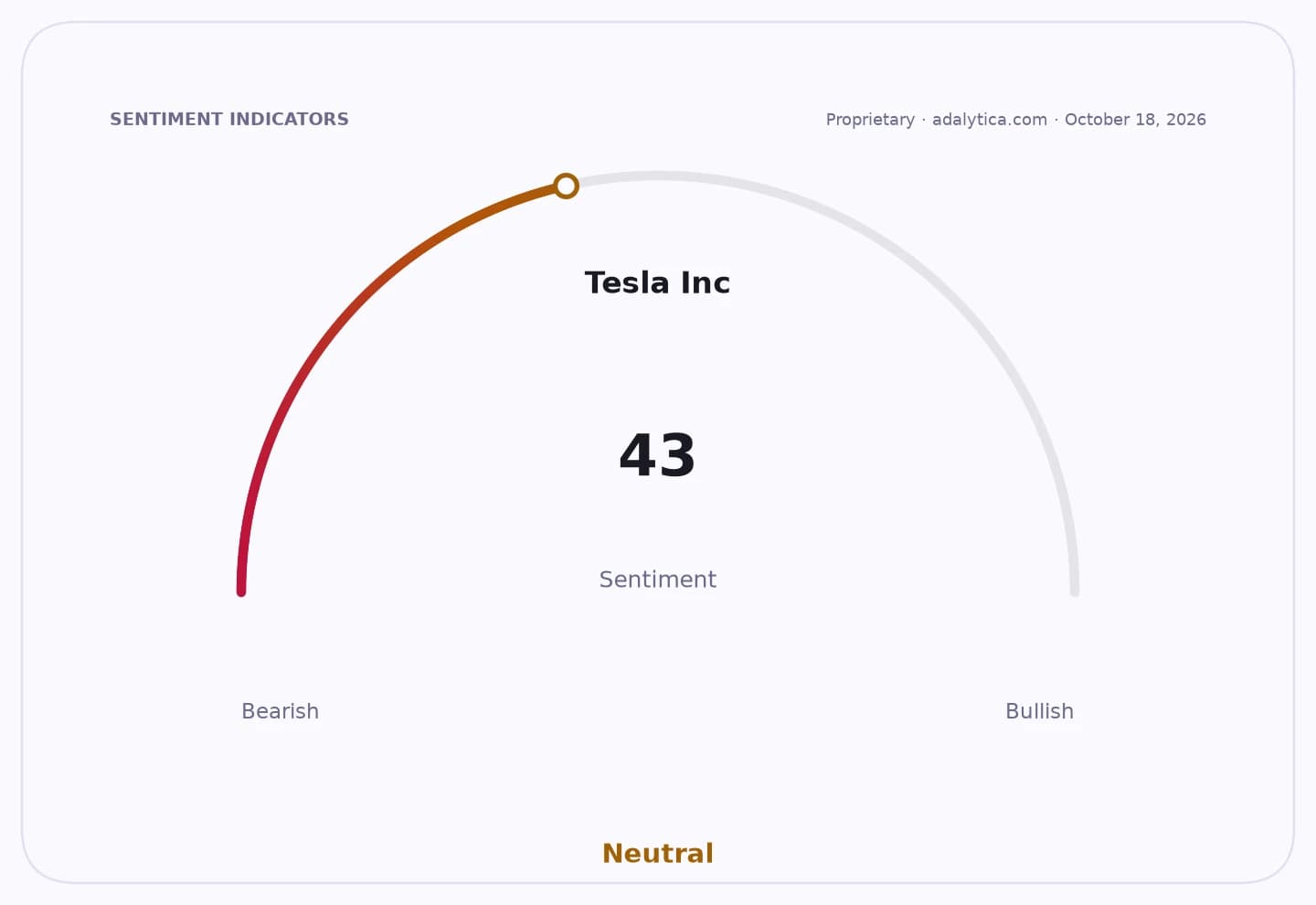
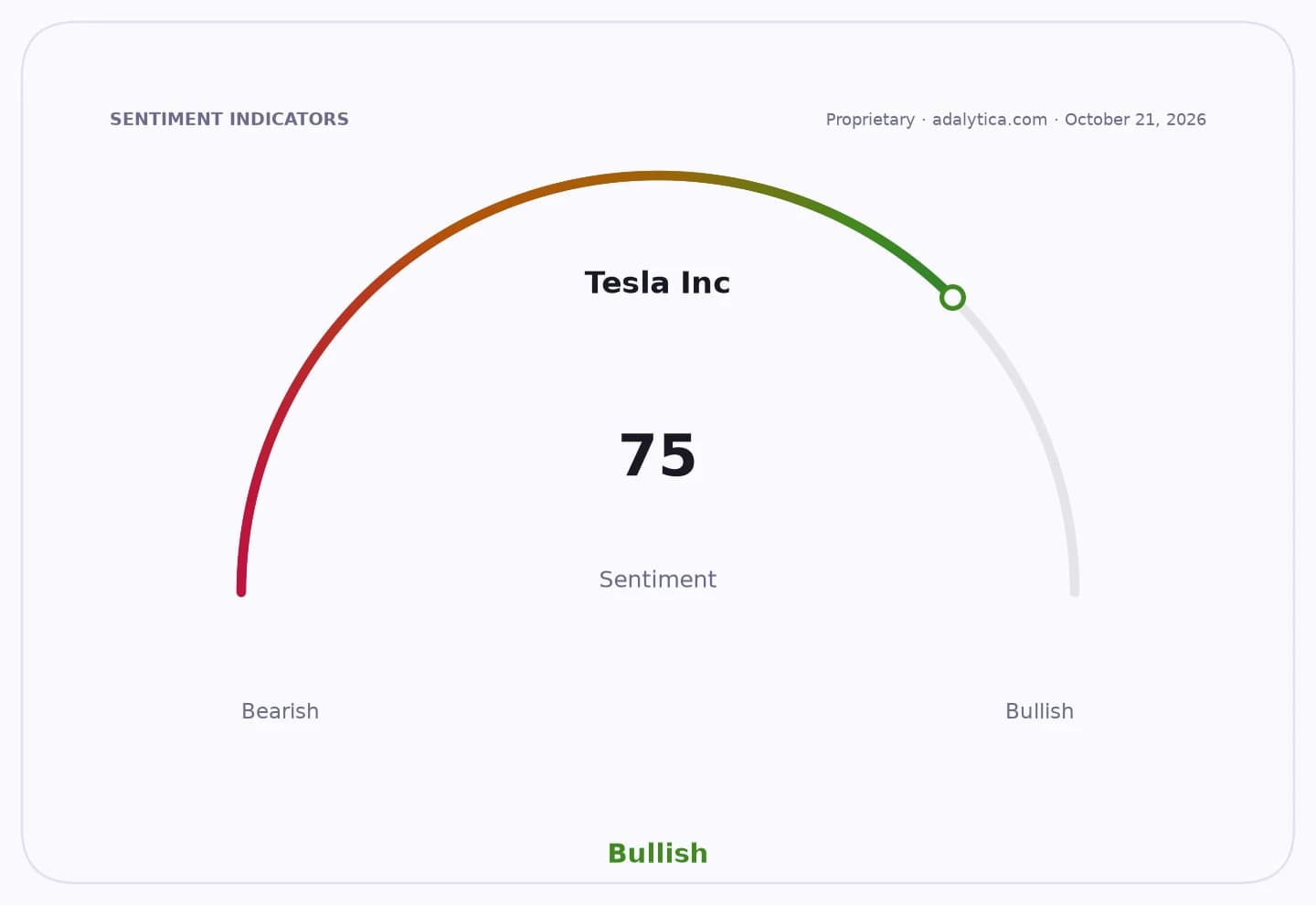
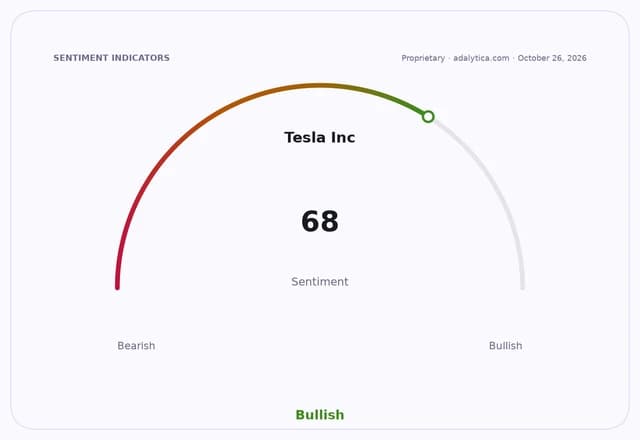
Sentiment IndicatorsⓘProprietary · adalytica.com · October 26, 2026
This is a snapshot — live sentiment, awareness and momentum for 130+ markets update continuously in the dashboard.Open AlphaPulse
Musk said the companies could cooperate more closely and that workers from both sides were already forming early teams, while stopping short of saying a full merger was necessary. That matters because even a loose combination could channel technology, talent and capital across businesses that already share a similar long-term ambition: extending computing, manufacturing and infrastructure into new frontiers.
Tesla’s stock has been trading well above its 50-day moving average, with its latest close at $372.22 after a recent run that left momentum readings much improved from earlier this year. The shares have also recovered from a sharp midyear slump, showing how quickly investor sentiment can swing when Musk’s growth story regains traction. Adalytica’s Tesla earnings sentiment snapshot shows neutral sentiment but extreme-greed awareness, a reminder that enthusiasm is high even when the earnings backdrop remains mixed.
That backdrop is important. Tesla’s latest results showed the company still grappling with profit pressure, even as investors keep betting that software, robotics and energy storage can eventually reshape the earnings profile. A link to SpaceX could reinforce the argument that Tesla is not simply a carmaker, but a broader platform company whose upside may come from cross-pollinating technologies across sectors.
SpaceX adds a different kind of appeal. It has long been the more obvious pure-play on rockets, satellites and the commercialization of space, but if it is moving toward stronger profitability, Musk may have more freedom to think about structure and capital allocation. The company’s growing demand for Tesla Megapacks also suggests the two firms already have practical business overlap, not just a shared founder and brand halo.
Still, a merger would bring complexity. Tesla is public, SpaceX is private, and combining them would invite scrutiny over valuation, governance and whether investors in one business want exposure to the risks of the other. Regulators and shareholders would also want to know whether the deal creates operating leverage or simply layers more empire-building on top of an already sprawling corporate structure.
For long-term investors, the more useful takeaway is not to chase a merger rumor, but to watch what Musk is really building: a network of businesses tied together by electrification, autonomy, AI and infrastructure. If Tesla and SpaceX move closer together, the real story will be whether that integration produces better cash flow, faster innovation and a stronger moat. That is what could matter for the next five to 10 years, and why the development is worth keeping on the watchlist.
| Entity | Gains | Losses |
|---|---|---|
| Tesla shareholders | ▲Broader platform upside | ▼More structural complexity |
| SpaceX investors | ▲Access to public-market capital | ▼Dilution of focus |
| Musk’s ecosystem | ▲Shared technology and talent | ▼Higher governance scrutiny |
| Competing automakers and aerospace firms | ▲None | ▼Stronger integrated rival |