Tesla, Trump Media Trade on Musk-Trump Politics
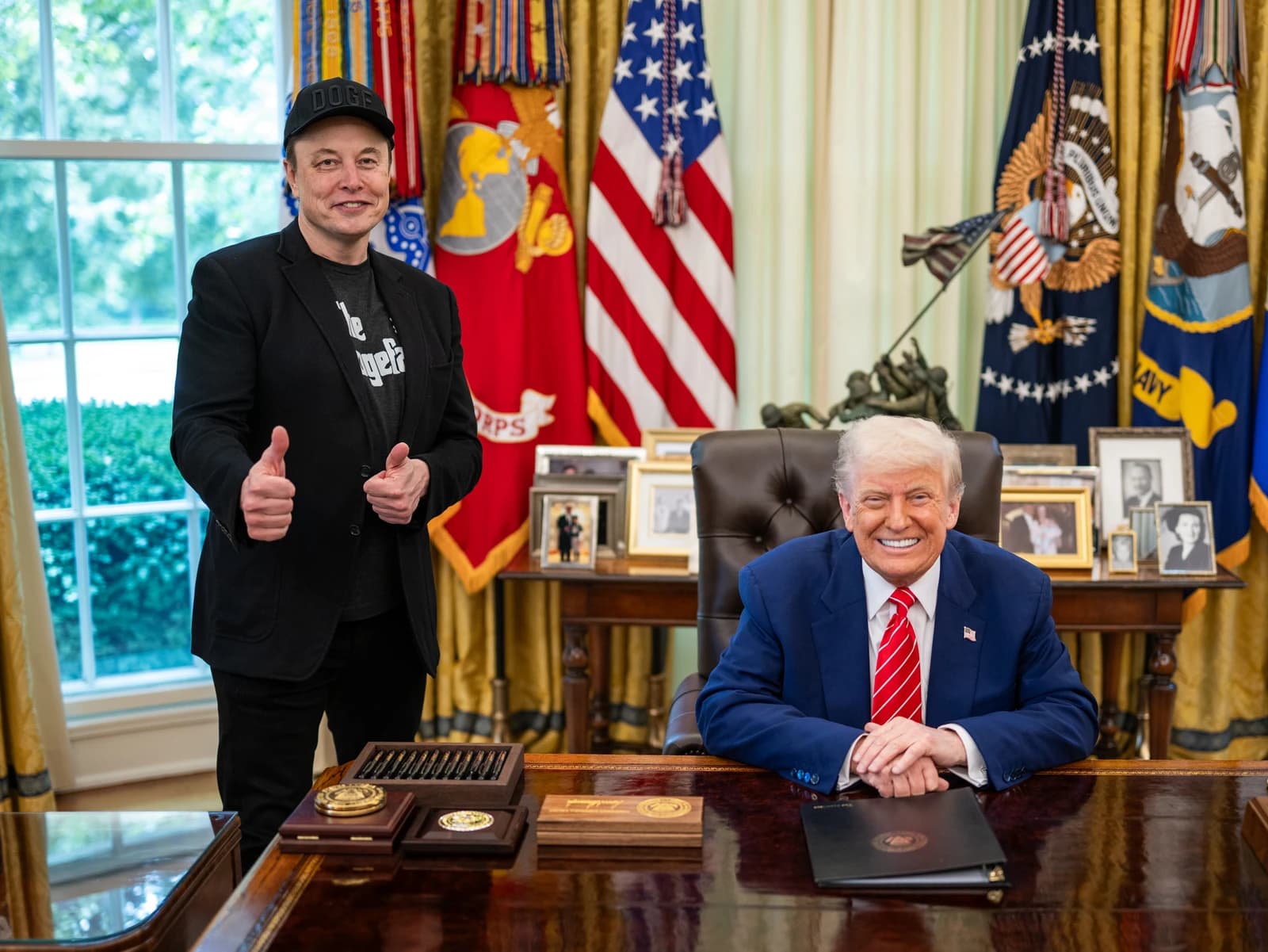
Elon Musk’s renewed friendliness toward Donald Trump is now a market factor, with investors repricing both Tesla and Trump Media around the possibility that political access could shape regulation, subsidies and capital flows in the months ahead.
The clearest economic significance is not the personal thaw itself, but what it implies for two highly politicized stocks and the policy backdrop facing electric vehicles, autonomous driving and digital media. Tesla has been under pressure, with shares closing at $339.96 on Aug. 13 after a sharp drop from above $490 in December, while Trump Media has hovered near $8.30, far below its earlier peaks and still trading like a speculative proxy for Trump-era politics.
For Tesla, the market remains focused on fundamentals, but politics can still move the valuation needle at the margin. The company is spending heavily on artificial intelligence, software and fleet-based monetization, even as profitability comes under strain, according to its latest quarterly filing. Its shares are still below the 200-day moving average of about $406.63 and well under the 50-day moving average of $372.71, though the recent rebound from the low $330s suggests traders are trying to bottom-fish after the stock became deeply oversold in early August, when the 14-day RSI fell to 33.6.
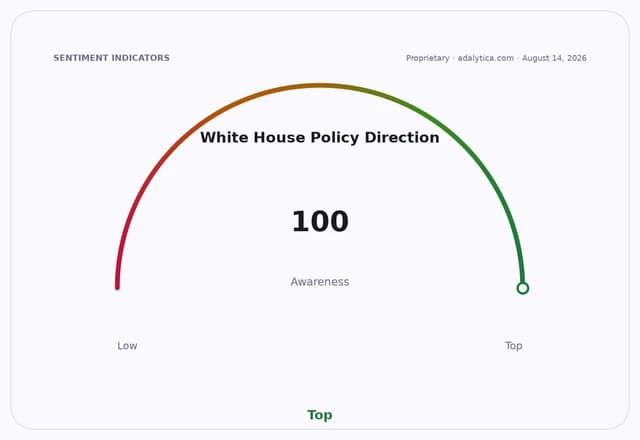
The broader policy context matters because the US is moving into a more openly political phase on EV incentives, industrial policy and regulatory enforcement. Adalytica’s White House Policy Direction sentiment gauge has jumped sharply to 68, with awareness at 100, suggesting the market is paying increasing attention to the direction of federal policy. That backdrop is particularly relevant for Tesla, Rivian and Lucid, which remain exposed to tax credits, clean-vehicle rules and the treatment of charging and autonomy standards.
Trump Media’s move is more straightforwardly political. Its stock has been battered and remains volatile, but a closer alignment between Musk and Trump could improve the company’s relevance as a Trump-linked trading vehicle and help keep retail interest alive. The risk, however, is that the trade becomes even more dependent on headlines rather than earnings power, which remains thin. In that sense, any Musk-Trump rapprochement may be less about operating performance than about narrative support.
Investors should not confuse the politics with durable fundamentals. Tesla’s long-term case still rests on margins, delivery growth, robotaxi progress and whether AI spending turns into monetizable software revenue. But in the near term, the market is clearly assigning a higher option value to political proximity, especially if a Trump administration is perceived as friendlier to domestic manufacturing, autonomy rollout or less aggressive oversight.
The setup leaves both bullish and bearish paths open. Bulls will argue that Musk’s influence and Trump’s openness to dealmaking could ease regulatory headwinds and keep Tesla’s policy risk premium in check. Bears will counter that the company’s valuation remains highly sensitive to execution, and that political betting cannot offset weaker fundamentals if demand or margins disappoint.
| Entity | Gains | Losses |
|---|---|---|
| Tesla | ▲Policy optionality | ▼Pure fundamentals-only valuation |
| Trump Media | ▲Retail attention | ▼Earnings-based credibility |
| Musk/Trump alliance | ▲Political leverage | ▼Perception of independence |
| EV rivals | ▲Clearer policy signals | ▼Subsidy uncertainty |