Tesla Vietnam Subsidiary and Starlink Trials
Elon Musk’s businesses are moving more aggressively into Vietnam, with Tesla setting up a local subsidiary and Starlink pushing ahead with satellite internet trials, as the country’s fast-growing EV market and manufacturing base become more important to the billionaire’s global expansion strategy.
The shift matters because Vietnam offers Musk two things Tesla and SpaceX increasingly need: cheaper production outside China and a market where demand for electric vehicles and internet connectivity is still expanding quickly. For investors, it adds another possible growth lane for Tesla while reinforcing the case that SpaceX is broadening its supply chain in Southeast Asia.
Vietnam is now the fastest-growing EV market in Southeast Asia, with sales more than doubling in 2025 and EVs accounting for nearly 40% of new car sales, according to the International Energy Agency. The IEA said vehicle electrification in Vietnam could exceed 80% by 2035, a backdrop that helps explain why Tesla is looking to tap the country’s rising middle class even as VinFast dominates much of the domestic market.
On the supply side, SpaceX has reportedly asked some of its manufacturing partners to move production into Southeast Asia, with Vietnam a priority location. Suppliers including Wistron NeWeb, Universal Microwave Technology and Shenmao Technology have set up operations in Ha Nam and Quang Ninh to make Starlink routers, 5G backhaul equipment and satellite metal housings, underscoring how Vietnam is becoming part of the hardware stack behind Musk’s satellite network.
That also speaks to a broader “China +1” strategy among global technology groups seeking to reduce geopolitical and supply-chain risk. For SpaceX, diversifying assembly and component sourcing in Vietnam could lower costs and help it offer Starlink hardware at more competitive prices globally.
Vietnam’s regulatory stance is also helping. The government has moved to allow controlled trials for satellite internet, giving Starlink a clearer path to market while creating an entry point for other foreign technology firms. For Tesla, a formal presence in Vietnam could eventually support sales of Model 3 and Model Y in a market where buyers are increasingly open to premium EVs.
Musk’s own public attention has added to the momentum. On Sept. 12, he reposted material about Starlink’s handover of 254 satellite internet kits to underserved areas, schools and health stations in Vietnam, a message that drew more than 4 million views and signaled that the country has become visible inside the billionaire’s ecosystem.
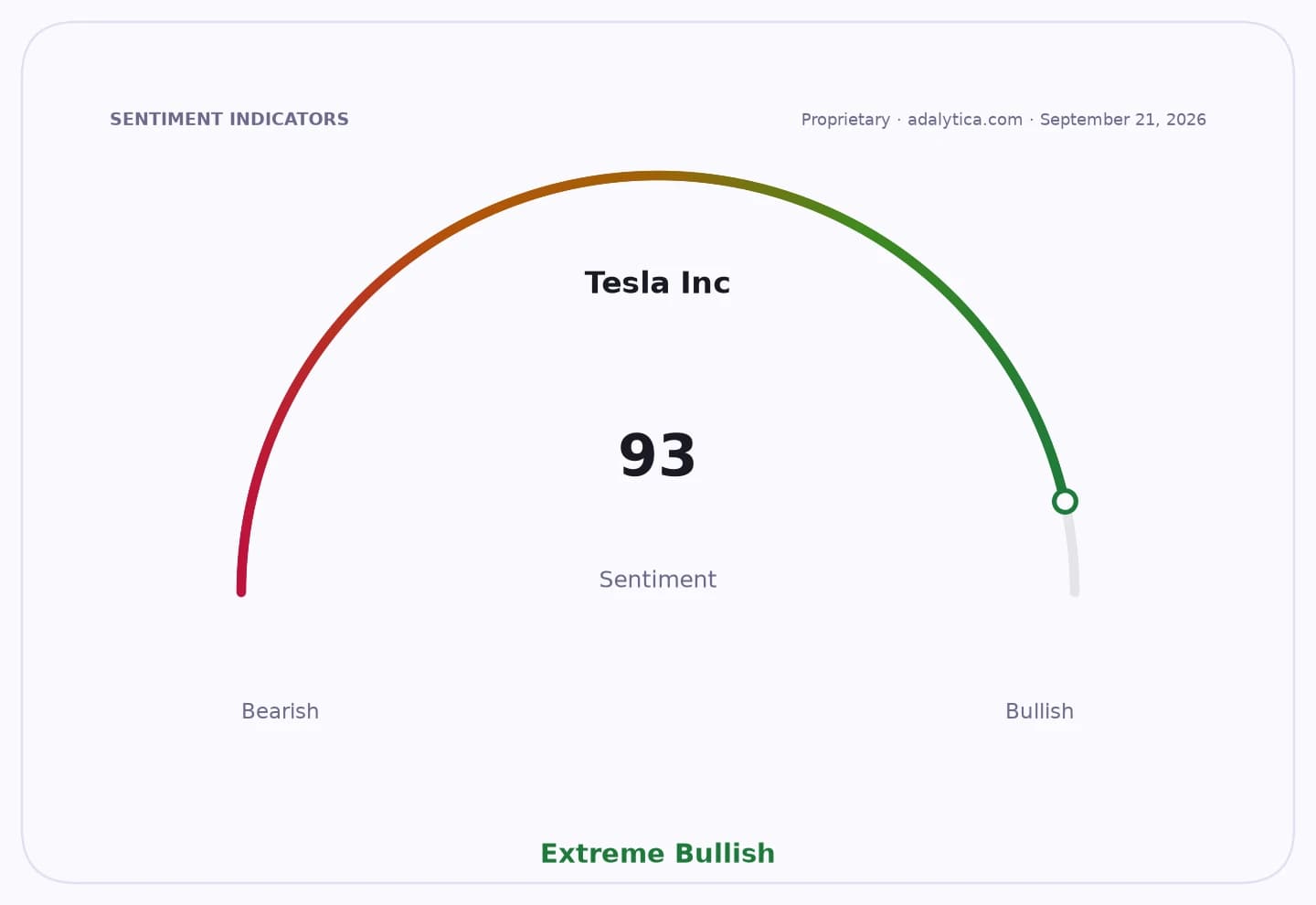
Tesla shares were last trading at $375.30, above the 50-day moving average of $349.60 but below the 200-day average of $397.06, while RSI readings near 53.5 and a positive MACD point to improving momentum without the stock being technically overextended. Adalytica’s Tesla earnings sentiment gauge shows “Extreme Greed” at 93, suggesting investors are already leaning bullish on the stock as new international growth options emerge.
The next catalyst is execution: how quickly Tesla can turn its Vietnamese subsidiary into sales, and whether Starlink’s local trials translate into a broader commercial rollout that deepens Musk’s footprint in one of Southeast Asia’s most strategically located markets.
| Entity | Gains | Losses |
|---|---|---|
| Tesla | ▲New EV market access | ▼Reliance on crowded premium segment |
| SpaceX/Starlink | ▲Lower hardware costs | ▼Exposure to rollout delays |
| Vietnam | ▲Investment and tech transfer | ▼Pressure on local rivals |
| VinFast | ▲Market validation for EVs | ▼Tougher premium competition |