Tether reports $1.5 billion quarterly profit
Tether said it earned $1.5 billion in profit in the quarter, underscoring how the world’s biggest stablecoin issuer is still benefiting from high-yield reserves and persistent demand for dollar-linked crypto liquidity.
The result matters because Tether’s business model is effectively a large-scale carry trade: it holds highly liquid assets backing USDT while earning interest on those reserves. When rates stay elevated and stablecoin balances remain sticky, profits can rise quickly with relatively little operating cost. For crypto markets, that makes Tether not just a payments utility but a central source of liquidity and balance-sheet firepower across trading venues, DeFi, and cross-border transfers.
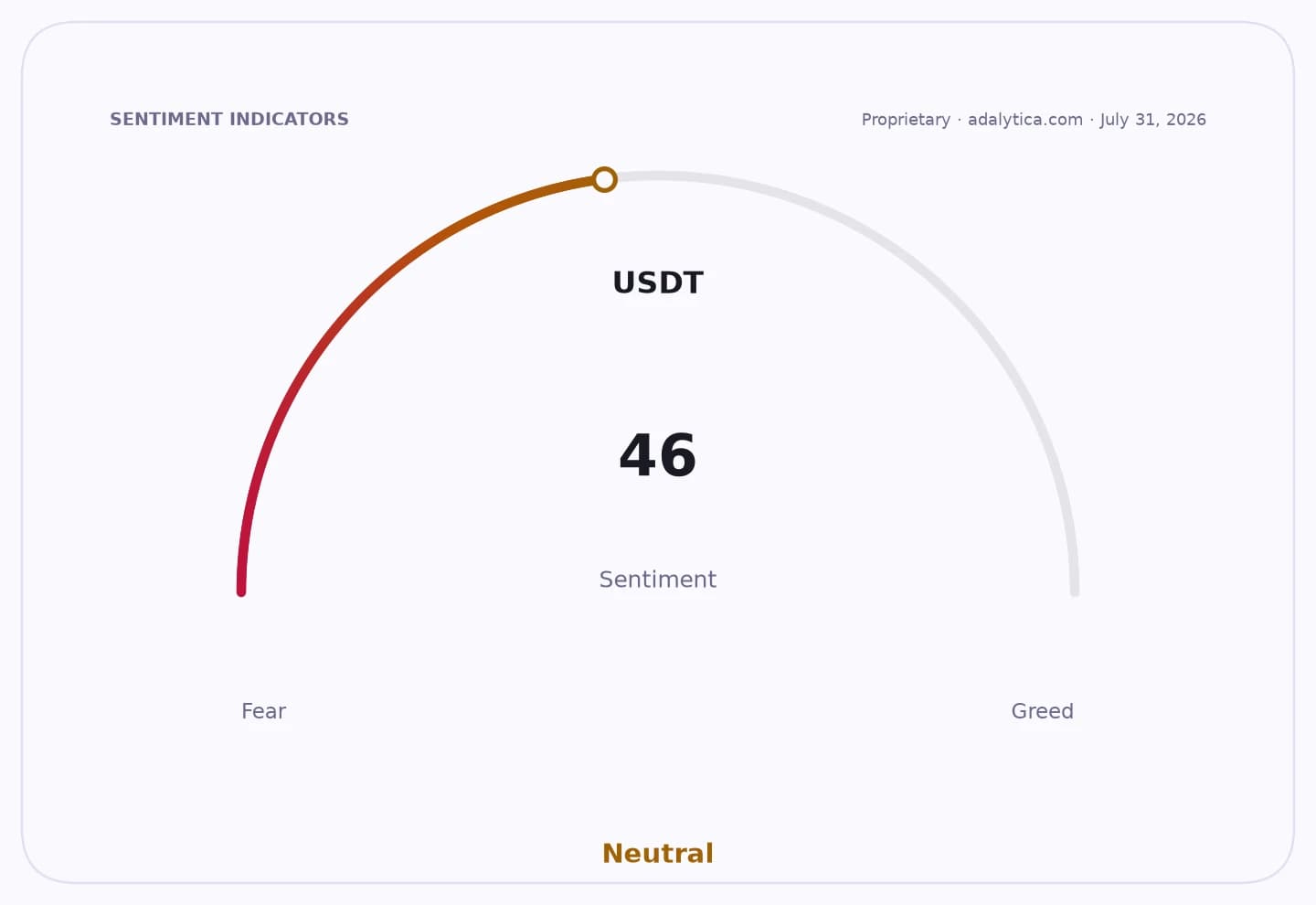
The earnings also arrive at a time when sentiment around USDT is mixed rather than euphoric. Adalytica’s USDT trade signals show neutral sentiment at 46, with awareness marked as fear, suggesting investors are not pricing in unqualified confidence even as the issuer reports strong profitability. Bitcoin sentiment is also neutral at 46, which points to a market still waiting for a clearer catalyst despite ample stablecoin liquidity.
For investors, the key issue is durability. A billion-dollar-plus quarterly profit strengthens Tether’s ability to absorb redemptions, support its reserve structure and expand into adjacent businesses. It also reinforces the company’s strategic importance in crypto markets, where USDT remains a dominant trading and settlement asset. The bull case is straightforward: strong earnings, high margins and entrenched network effects. The bear case is that much of the profit is rate-dependent, and any fall in short-term yields, reserve mix changes or regulatory pressure could quickly compress returns.
The broader implication is that stablecoins are no longer just plumbing for crypto trading; they are becoming cash-generating financial infrastructure. That helps explain why Tether’s results matter well beyond crypto speculators: they speak to dollar demand in digital markets, the profitability of reserve-backed tokens and the resilience of the sector’s most systemically important issuer. Investors will now focus on whether Tether can sustain this level of earnings if rates ease and whether USDT’s market share remains intact as rivals and regulators press harder.
| Entity | Gains | Losses |
|---|---|---|
| Tether | ▲Higher quarterly profit | ▼Lower rates over time |
| USDT holders | ▲Deeper liquidity buffer | ▼More scrutiny on reserves |
| Crypto traders | ▲More market liquidity | ▼Fewer cheap funding conditions |
| Stablecoin rivals | ▲Industry validation | ▼Share pressure from USDT |