Treasury Yields Rise as Bond Funds Fall

The U.S. Treasury’s attempt to steady the bond market has not stopped long-term yields from pressing toward three-year highs, underscoring how little room policymakers have to push back against inflation fears, hawkish Federal Reserve policy and a market that is still demanding more compensation for duration risk.
That matters because higher Treasury yields feed straight into borrowing costs across the economy, from mortgages and corporate debt to the government’s own financing bill. It also raises the stakes for a Treasury that appears to be leaning on purchases of longer-dated debt to blunt a selloff, even as traders question whether the scale of intervention is large enough to matter for more than a few sessions.
The 10-year Treasury yield was last around 4.75%, while the 2-year was at 4.34%, leaving the curve only modestly inverted and signaling that policy rates may stay restrictive for longer than investors had hoped. The move higher has persisted despite earlier efforts to cushion the market, suggesting that the supply-demand balance in rates is still being driven by macro forces rather than official buying.
Long-duration bond funds have borne the pressure. TLT, the iShares 20+ Year Treasury Bond ETF, fell to $81.87 on Sept. 1 from $82.81 on Aug. 27 and is trading below both its 50-day and 200-day moving averages, a conventional technical sign of continued weakness. TMF, the leveraged long-bond ETF, slid to $30.55 from $31.33 over the same period, deepening losses for investors positioned for a rally in duration. IEF, which tracks intermediate Treasuries, also eased to $92.10, reflecting a broad bid-ask imbalance in government debt rather than an isolated move at the long end.
The policy backdrop is awkward for Washington. Treasury purchases of longer-dated debt can help smooth liquidity and temper disorderly moves, but they do not change the inflation outlook that is driving yields higher. If traders believe the Fed will stay restrictive, or that fiscal issuance remains heavy, then official buying can delay rather than reverse the market’s reassessment of fair value.
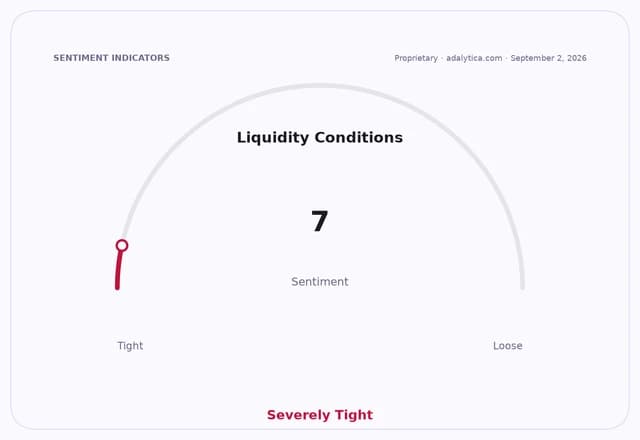
That dynamic is showing up beyond Treasuries. Adalytica’s Financial System Liquidity Sentiment gauge has dropped to 7, labeled extreme fear, from 96 in mid-August, while the S&P 500 trade-signal snapshot shows awareness in extreme fear territory even as sentiment itself remains neutral. In other words, the market is not pricing a systemic panic, but it is clearly bracing for a liquidity squeeze in rates and risk assets if Treasury support proves temporary.
For investors, the immediate implication is that duration remains vulnerable unless the Treasury expands its program materially or inflation data softens enough to let the Fed sound less hawkish. Bulls can argue that any official backstop will eventually cap yields and attract buyers to beaten-down bond funds. Bears will say the opposite: that intervention may merely provide a short-lived floor while real yields stay elevated and volatility remains high.
What to watch next is whether the Treasury returns with a larger purchase plan, whether Fed officials push back against any perception of rate suppression, and whether yields keep climbing despite official support. If they do, the market will be saying that policy can slow the bond selloff — but not overpower it.
| Entity | Gains | Losses |
|---|---|---|
| Treasury officials | ▲Short-term market calm | ▼Credibility if yields keep rising |
| Bond bulls | ▲Cheaper entry points on pullbacks | ▼Ongoing mark-to-market losses |
| Borrowers | ▲Potential relief if yields are capped | ▼Higher financing costs if rates rise |
| Fed hawks | ▲Inflation-fighting stance reinforced | ▼Pressure if markets expect intervention to dominate policy |